
Vuksanovic: Collision between the West and Russia produces divisions within OSCE; I do not expect a better picture after the summit in Skopje
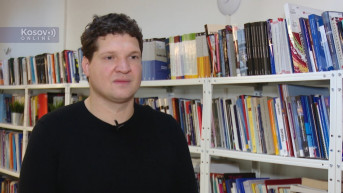
Vuk Vuksanovic, a senior researcher at the Belgrade Centre for Security Policy (BCSP), assesses that there should not be too many expectations from the OSCE summit in Skopje, and the roots of the problems should be sought in "Cold War divisions."
"Regardless of this meeting, the OSCE as an organization has been in crisis for a long time. Those who had hopes that it could be some stabilizing security organization in the Euro-Atlantic area got a cold shower because we see that this organization is burdened with a whole series of other issues, starting from daily functioning to the budget, who will be the next chair, etc. The cause of the problem is the growing division and collision between the West and Russia. In such a context, we expect to get a new picture of a divided organization and a divided Euro-Atlantic area from Skopje when this meeting ends," Vuk Vuksanovic says for Kosovo Online.
According to him, the root of the problems in the functioning of the world's largest intergovernmental organization dealing with security issues dates back to the "Cold War era."
"Since the Cold War era, when today's OSCE then functioned as the Conference on Security and Cooperation in Europe (CSCE), this organization has been burdened with divisions. During the Cold War, the Soviet Union saw it as a way to weaken unity within NATO, while the United States perceived it as a dimension of human rights, and thus they saw a way to undermine the Soviet Union. Later, we saw that the West and Russia clashed over some other issues, where Russia accused the West of not respecting the OSCE provisions regarding the inviolability of borders, while the West accused Russia of not respecting the norms related to democracy and human rights. Now we see that with the current war in Ukraine, Russia and the West are even more entangled over the issue of the inviolability of borders in Europe. So, this probably won't be the end of the OSCE. Maybe the organization will continue to function, but like any multilateral organization, it is dependent on the international balance of power. This means that with such a relationship between the most powerful states in the Euro-Atlantic area, I believe that unfortunately, this organization will be an empty shell, and that will be one of the images we will see from this meeting in Skopje," Vuksanovic emphasizes.
When asked if it can be predicted who would benefit the most from this summit, our interlocutor says it is challenging to assume, but generally, small countries - the hosts draw benefits from such significant world gatherings.
"Perhaps at this moment, this ministerial meeting means even more for the Government of North Macedonia than for any of the other member states and participants in this meeting. Very often, multilateral gatherings like this one actually mean much more to small countries like North Macedonia than to major players. For small countries, multilateral diplomacy is still a way to promote themselves and present themselves to powerful players in a somewhat more positive sense. In that regard, maybe it's not bad news for the government of North Macedonia, but from this meeting, I don't expect the kind of conclusions that they would change," Vuksanovic says, adding that he expects that despite serious global challenges, the OSCE summit in Skopje will also discuss security challenges in the Balkans.
"Since this meeting is still held in the Western Balkans, Western Balkan issues will certainly be on the agenda, and there will probably be mentions of issues such as the Belgrade-Pristina dialogue and potentially the situation in Bosnia and Herzegovina, especially considering the fact that other conflict theaters for which the OSCE is responsible are not going in a good reputational direction for this organization. I primarily mean the collapse of the Minsk 2 ceasefire that preceded the current war in Ukraine, the situation in Nagorno-Karabakh, and others, such as the one in Moldova. Considering that these conflict zones in the post-Soviet space for which the OSCE is responsible certainly do not favor this organization, Balkan issues will probably find a somewhat stronger place on the potential agenda," Vuksanovic emphasizes.


0 comments