
Kozarev pointed out to the participants of the OSCE conference in Warsaw the difficult situation of Serbs in Kosovo
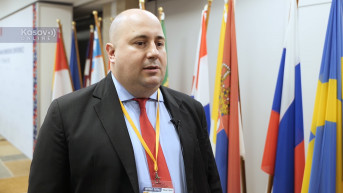
The Secretary General of the Ministry of Foreign Affairs of Serbia, Dusan Kozarev, today in Warsaw, at a specially organized presentation on the sidelines of the OSCE Conference on the Human Dimension, pointed out to the participants the situation in Kosovo and the pressures faced by the Serbian people on the ground.
Kozarev emphasized that the security situation in Kosovo is a cause for deep concern, highlighting that only a strong international presence, with a firm insistence on the rule of law, can guarantee the safety of all citizens in the southern Serbian province, according to a statement from the Ministry of Foreign Affairs of Serbia.
He stated that the non-Albanian population is facing various forms of institutional and religious discrimination, violence, violations of the right to participate freely in the electoral process, expropriation of property, and economic uncertainty on a daily basis.
He specified that since Albin Kurti took over the leadership of the provisional self-government institutions in Pristina, in just under four years, the number of ethnically motivated attacks and incidents against Serbs has increased by 50 percent, with 547 attacks occurring between January 2021 and today, 27 of which were against children. Seven individuals have been shot, including an 11-year-old child, and there have been 79 arbitrary arrests of Serbs, while the Kosovo Police have used excessive force over a hundred times.
Particular concern was raised about the situation of the Serbian people in Kosovo following Pristina's decision to abolish the dinar as a means of payment, considering that Serbs and Serbian institutions in Kosovo survive and function thanks to financial support coming from central Serbia.
He emphasized that the latest in a series of brutal violations of the basic rights of Serbs was the recent raid by the Kosovo Police into institutions in northern Kosovo, which provide essential public services and ensure the provision of salaries, pensions, healthcare, and social protection.
According to Kozarev, these actions aim to ethnically cleanse Serbs and non-Albanian populations, as evidenced by the fact that in the past year, 15 percent of the Serbian population has left Kosovo.
Kozarev pointed out that Pristina is obstructing the dialogue on normalization of relations in the most blatant manner and is avoiding the formation of the Community of Serb Municipalities, given that the agreements reached specifically foresee financial support for Serbs through the competencies of the Community of Serb Municipalities.
During the presentation, Kozarev presented Belgrade's seven-point plan, which includes measures aimed at protecting Serbs in Kosovo, maintaining dialogue as a key instrument for normalizing the situation on the ground, and eliminating the consequences of Pristina's harmful actions.
He conveyed that Belgrade is ready to engage in constructive dialogue and cooperate with the EU and international partners to contribute to regional stability.
The event on the sidelines of the conference in Warsaw is part of Serbia's global diplomatic campaign to protect the rights of the Serbian people in Kosovo.
In addition to Kozarev, the guests were addressed by the Minister without portfolio responsible for gender equality, prevention of violence against women, and the economic and political empowerment of women, Tatjana Macura. Tomorrow, at the plenary session that will close this year’s conference, Assistant Minister of Foreign Affairs Katarina Lalic Smajevic will speak.
Among the guests were representatives from Spain, Slovakia, Slovenia, the United States, Azerbaijan, Austria, Estonia, Georgia, Bulgaria, Croatia, Cyprus, Bosnia and Herzegovina, North Macedonia, ODIHR, and the civil sector.

0 comments