
Krstic: Due to the US political scene, Biden claims there is a possibility of the war in Ukraine spilling over to other regions, such as Western Balkans
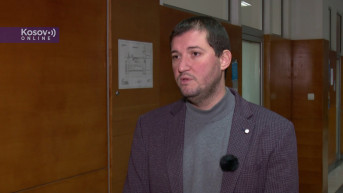
Milan Krstic, an associate professor at the Faculty of Political Sciences, stated in an interview with Kosovo Online that US President Joe Biden was attempting to depict a potential domino effect if Ukraine was not supported, suggesting that the conflict could spill over into other regions, such as the Western Balkans.
He believes that Biden's message, indicating that withholding aid to Ukraine would result in changes in Europe and the Balkans, is driven by domestic political considerations.
"It seems that this statement is given in the context of the conflict of various opinions within the executive branch, led by President Biden and Congress, especially the House of Representatives, where Republicans have the majority, all about whether to continue funding the war in Ukraine. This is one of the debates relevant in the context of the upcoming presidential elections. Therefore, President Biden is now trying to raise the stakes, to depict how there will be a domino effect if, allegedly, Ukraine is not supported and how the conflict could spill over into other regions. So, the fear is actually heightened to win this domestic battle, which then has foreign policy repercussions because Ukraine is highly dependent on Western funding," Krstic highlighted.
When asked to comment on whether he thinks Biden's stance is invoking war, as interpreted by the President of the Republika Srpska, Milorad Dodik, Krstic is firm that this is not the case.
"I think Dodik is making that statement for domestic reasons, so this is not a call to war, but it is, as I've already said, a kind of political exaggeration. In theory, this is called securitization or hypersecuritization when you designate something as an extreme security threat and attribute greater existential significance to it, as if it were a huge threat of war, more than it probably is at this moment, in my opinion. Dodik uses it, on the other hand, to show how such a statement is a threat to stability in the region, it's the same thing, just in the mirror," our interlocutor said.
Krstic emphasized that after Banjska, America's approach to the security situation in the region had been slightly recalibrated, and that it was one of the reasons why the "Javelin" had been put into procedure, i.e., the reason for the decision to deliver these anti-tank missiles to Kosovo.
"The 'Javelin' has not been officially delivered yet. America is now more focused on trying to create some balance on the ground. Of course, it is far from possible to create a balance on the ground and far from being legal, given UN Security Council Resolution 1244. I think that this decision is not good for stability in the region, but it is an indicator of a changed perception that did not come immediately after Banjska but is probably a long-term consequence of what happened in September in Kosovo and Metohija," Krstic concluded.



0 comments