
The Biden administration sees the EU as a priority in the future of the Western Balkans
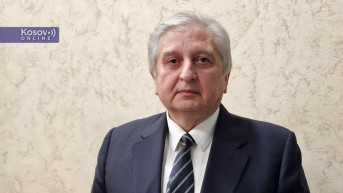
Writing for Kosovo online: Zeljko Sain, Politika's special correspondent from Skopje
As a priority in the future of the Western Balkans, after the collapse of the SFRY, the American administration cites the European Union. This position was confirmed by US Secretary of State for Foreign Affairs Blinken during the recent visit of Macedonian Prime Minister Dimitar Kovacevski, as well as Blinken's senior advisor Derek Chollet.
Upon his return from the US, Prime Minister Kovacevski came full of positive energy and was encouraged by the Biden administration. The right-hand man of US President Biden - the Secretary of State for Foreign Affairs, as host to Kovacevski, emphasized that North Macedonia was a very important strategic partner for America and a very important entity as the thirtieth member of the North Atlantic Alliance. Translated from diplomatic language, the US is a strong wind at the back of the authorities of North Macedonia at a time when a war is being waged on the soil of Europe, in Ukraine, and at a time when the opposition is blocking Euro-Atlantic integration by its decision, not wanting to support the re-change of the Republic of North Macedonia Constitution, which is a condition for the continuation of accession negotiations.
The US Deputy Assistant Secretary of State for the Western Balkans, Gabriel Escobar, emphasized in an interview for "Voice of America" that his boss Blinken had had a long conversation with Kovacevski on the topic of Euro-Atlantic integration, and that they were asking the opposition to support the Euro-Atlantic path of North Macedonia, not to support Prime Minister Kovacevski. He mentioned corruption, which is a serious problem for the entire region, as an important subject that will be dealt with by the American administration and the administration of North Macedonia, "Secretary Blinken and Prime Minister Kovacevski in Washington talked for a long time on several topics, including how to reduce corruption and strengthen the rule of law.” As he emphasized, the US Embassy in Skopje and the Government of North Macedonia were in daily contact. The important message that Kovacevski brought from the US was that the fight against corruption was a US priority and that they were ready to introduce sanctions for that fight. Let's keep in mind that this message arrives at the exact moment when the Ministry of Justice formed a working group that is preparing a text on changing the Constitution of the Republic of North Macedonia, to which the members of the opposition parties did not respond, as well as that this position of the US does not apply only to North Macedonia, but also to the whole West Balkans.
Bearing in mind the statements of three important figures of the US, Blinken, Chollet, and Escobar, who are in direct connection with the Western Balkans, as well as the fact that it is one of the most militarily powerful countries in the world, it would be necessary to analyze in detail what kind of application the possible sanctions announced by them could have if it does not stand in the way of corrupt activities. The US, as before, can sanction corruption by blocking bank accounts in the world, until it enters the US, in which it will most likely receive the support of the EU countries as well.
On the other hand, Chollet pointed out that none of the parties to the Brussels Agreement for the normalization of relations between Belgrade and Pristina adhered to the implementation of the agreement. When it comes to this issue, Escobar expressed the expectation that some issues should be closed by the summer, and the parties to the Brussels Agreement were informed of this.
When Escobar in "Voice of America" mentioned the introduction of sanctions on the Western Balkans region by the US, if the rule of law was not strengthened and did not stand in the way of corruption, it also referred to the members of the "Open Balkan" initiative, as well as to the countries that oppose this initiative. Let us recall that the "Open Balkan" initiative is strongly supported by the US, and the EU only has a diplomatic approach to this initiative, which is strongly listened to by Kurti's followers and even the Muslim line in Bosnia and Herzegovina. Montenegro will make its decision on accession after the parliamentary elections, in order to avoid any suspicion of corruption that may cause sanctions.
The government of North Macedonia is encouraged by the support of the US in the continuation of Euro-Atlantic integration and by the message to the opposition that it should not support Prime Minister Kovacevski, but Euro-Atlantic integration. At this moment, what is also important for North Macedonia is the attitude towards the Brussels agreement, with caution in order not to fall into the trap that was imposed in Rambouillet, where it was demanded that NATO has the right to use the territory of Serbia without the North Atlantic Alliance bearing any responsibility, similar to the agreement with the Republic of Macedonia before the Prespa Agreement was signed and the name of the country was changed.
The provocations that appear every day in Kosovo have been a tried-and-tested system of provocation since the first demonstrations, at the beginning of the second half of the last century, with the fact that now the organizers are stronger, because behind them are the Quint countries, which recognized the independence of Kosovo, which is in contradiction to Resolution 1244, according to which KFOR is located on the territory of Serbia.


0 comments