
Kurti: The Government does not accept the formation of the CSM as a condition for membership in the Council of Europe
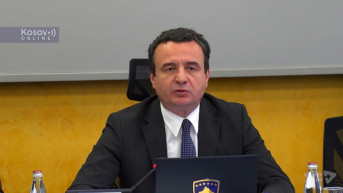
The Kosovo Prime Minister confirmed that there was conditioning for Pristina's membership in the Council of Europe with the formation of the Community of Serb Municipalities, Reporteri writes.
As Kurti stated, his government does not accept such conditionality. He mentioned that Kosovo had not accepted the draft statute proposed by European Special Envoy Miroslav Lajcak.
"The government has worked and done everything to meet the conditions to become a full member of the Council of Europe. We want the deserved membership. We deserve membership in the CoE because we share common values and meet the necessary standards. Membership is seen particularly in terms of benefits for citizens, especially minority communities, by providing access to the European Court of Human Rights. The government did not accept Miroslav Lajcak's draft statute, which was rejected on October 26, 2023, and two days before that, I submitted documents for that draft statute. The government does not accept the conditioning for membership in the CoE by establishing the Association. Discussions about normalizing relations with Serbia take place in Brussels, not in Strasbourg. Articles 7 and 10 cannot be removed from the agreement," Kurti said.
The Prime Minister added that Kosovo deserved CoE membership because it met the necessary standards and assessed that the request for the establishment of the CSM to enable Kosovo's path to the CoE was absurd.
"On one hand, Kosovo progresses year by year in democracy indices, rule of law, judicial reform, civil liberties, and political rights evaluated by prestigious independent international institutions. On the other hand, we have a legal system with advanced minority rights and a constitution that unilaterally accepted obligations arising from the Council of Europe, such as the European Convention on Human Rights, the Convention on Minority Rights," the Kosovo Prime Minister stated.
According to him, this has facilitated Kosovo in successfully passing through all stages of membership in the CoE.
"After this whole journey accompanied by continuous progress and positive evaluations from the Council of Europe itself, in recent weeks, we have faced a new situation, which has nothing to do with membership standards in this organization. After the condition to implement the Constitutional Court's decision, a condition that entered the rule of law field within the Council of Europe, we heard that European capitals are now conditioning the finalization of the accession process by sending a document to the Constitutional Court. This document brought to us by Lajcak, together with diplomatic advisors of Quint countries, was not accepted," Kurti recalled.
He reminded that Kosovo accepted that the draft statute of the Association, brought by Lajcak and Quint diplomatic advisors in October last year, becomes part of the Basic Agreement and Implementation Annex, but Serbia's refusal led to it not being formalized.
"If the package of agreements had been accepted and signed in Brussels on October 26, only then could that draft statute be sent to the Constitutional Court. Lajcak's and other Quint officials' draft charter did not become official because it was rejected. As a document, it is non-paper. The Government of Kosovo cannot send documents that it has not accepted and that are not official. This demand toward us has been and remains absurd, even though attempts were made three times to introduce this demand as a precondition for membership. Twice in the Committee on Political Affairs and Democracy, but also during the parliamentary session, but it was rejected. This demand is not only not principled but has also been rejected by the CoE itself," Kurti said.
Kurti added that, besides the guarantees offered in the letter of commitment together with President Osmani and the President of the Assembly Konjufca, this could not be demanded.
"We thought that obstacles to membership in this organization would come from countries that have not yet recognized Kosovo, but we did not think that democratic states, which have supported Kosovo for development and democracy and previously stood with us for liberation and independence, would become obstacles," Kurti said at today's government session.
He also mentioned that continuous efforts were being made to put him in a position to make decisions about the Central Bank of Kosovo. As he emphasized, the governor of the CBK does not report to him but to the Kosovo Assembly, and he added that "he cannot be above the governor."
"As for the dinar, which we did not ban as such but as a means of payment, that was done by the Republic of Kosovo, not the Government of the Republic, as the Central Bank of Kosovo did so with a new regulation. They are even higher than us and ahead of us on the further path. Like the elections organized in the north, we had the CEC above us and ahead of us, as well as the CBK. There have been constant efforts to put me in a position where I also decided for the CBK, for their decisions, and so on. This happens in dictatorial states, and we are a democratic state. The CBK governor voted in the same hall where I voted. He does not report to me but to the Kosovo Assembly; I cannot be above the governor. We must preserve our republic and the division of power, which is essential for democracy itself. They are responsible for the issues that the CBK decides on and the implementation plans with phases and deadlines. We are here to support them, not to lead them," Kurti said, as reported by Klan Kosova.

0 comments