
Kurti: Kosovo has not banned the dinar, the CBK regulation does not prevent Serbia from financially assisting the Serbian community
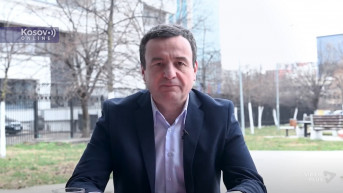
Prime Minister of Kosovo Albin Kurti addressed in the Serbian language and stated that the priority of the Kosovo Government was to provide social assistance to those in need, regardless of their ethnic background as well as that the Serbian dinar was not banned in Kosovo and that the regulation of the Central Bank of Kosovo did not prevent Serbia from financially assisting the Serbian community.
Kurti emphasized on Facebook that the Kosovo Government was the government of all citizens and that Kosovo was the home of all communities living there.
"War, followed by the wrong policies of those who were at the helm of the state, left people neglected, poor, and exposed to criminal organizations and gangs, while they took care of their luxurious lives and those who collaborated with them. Over the past three years, we have done our best to fight crime with smart steps, and policies based on the rule of law. We have elevated our country to a higher level of democracy, which also means respect for human and civil rights," Kurti stated.
He added that citizens who desired peace and prosperity must trust each other and move forward to defeat crime, religious, racial, and ethnic hatred, as well as ethnic and social divisions and fake news, which, as he noted, were "necessary to achieve nationalist and chauvinistic goals and narrow political victories".
"We are all aware of the campaign launched on false grounds against independent institutions such as the Central Bank of Kosovo, aimed at preserving already consolidated methods of money laundering and financing terrorism by sending money in bags across the Serbia-Kosovo border. As of February 1st of this year, the Central Bank's regulation for cash payments has come into effect. This regulation does not apply to the dinar, nor does it mention it as such. Therefore, the Central Bank aims to formalize payment and related procedures, not to prove that its goal is to remove the dinar or any other currency from Kosovo. The Central Bank clearly indicates that the euro is the only means of payment in Kosovo, and in this regard, every transaction must be in euros as the only official currency in Kosovo. The Central Bank's regulation does not prohibit Serbia from financially assisting citizens of the Serbian community in Kosovo. Any suggestion to the contrary is false propaganda aimed at creating ethnic tensions. The Central Bank's regulations ensure the legality and transparency of money imported into Kosovo, based on the Constitution and the monetary policy of the European Union," Kurti adds.
He emphasizes that Kosovo has not banned the dinar, just as it has not banned the dollar, pound, or Swiss franc.
"The only difference is that as of February 1st, money cannot cross the border in bags, as it cannot be done in any democratic state, but can come through bank accounts held in euros. This policy protects citizens from threats of organized crime, arms trafficking, and money laundering. The previous method of importing and cross-border transportation of money allowed criminal groups to illegally receive imported money, thereby strengthening their influence on the people, intimidating the masses, and encouraging criminals by the head of the Serbian state. Crime must be defeated, and money laundering and illicit enrichment must be stopped to facilitate the financing of terrorists and disrupt peace. The Central Bank of Kosovo has offered facilities to the National Bank of Serbia for the conversion of dinars into euros. The Central Bank of Kosovo has facilitated the opening of euro-denominated bank accounts for those who have not yet done so, free of charge. Just imagine how much opening a regular bank account will mean for a small portion of the population who have not yet done so, the flow of money through accounts will enable the recording of legitimate deposits and withdrawals, which will be the potential basis for obtaining loans or starting businesses, receiving assistance from Kosovo institutions, economic independence for women, inevitably leading to new opportunities for a better life," Kurti states.
Kurti says that Kosovo has created schemes for financial aid and social assistance for families, pregnant women, and mothers with children.
"This kind of assistance will never stop and will only increase, in line with economic growth and budget planning. Every month, over 33,000 members of the Serbian community receive pensions from Kosovo, 2,205 families receive social assistance, 4,244 families receive child benefits, and 1,372 families receive benefits for pregnant women and mothers with children. All of this is done through bank accounts opened in euros. Through them, assistance to the Serbian community sent by the Government of Belgrade can be deposited, received in euros, and registered through a bank account for transparency and legality. In this way, the amount sent from Belgrade will exactly match the money you will receive in Kosovo," he notes.
He added that the Government would do everything in its power to ensure a smooth transition.
"The most important thing is to understand and believe that establishing the rule of law is inevitable, sending money through bank transactions is uncompromising, and enjoying previously acquired rights freely. Freedom is guaranteed to all citizens to receive any financial assistance that comes through legal channels," Kurti concluded.

0 comments