
Kurti: Let's go back to the application of the Basic Agreement; in the center of which is recognition, not the CSM
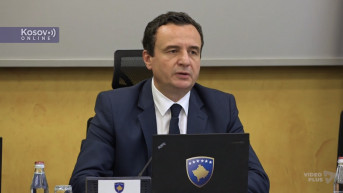
Kosovo Prime Minister Albin Kurti emphasized in an interview with Deutsche Welle that he hoped that after the continuation of the dialogue in Brussels on September 14, things would return to the "right track", that is, the implementation of the Basic Agreement, which had at its center the "de facto" recognition of Kosovo, and not the Community of Serb-majority Municipalities.
When asked what could be expected on Thursday, after the meeting with the President of Serbia in Brussels, Kurti replied that he hoped to get back on track - with the implementation of the Basic Agreement, which meant a clear sequence of its implementation.
That order, he says, is the first six sentences of the preamble, 11 articles, and 12 points of the Brussels and Ohrid Agreement, which should be fully implemented as soon as possible.
"And every time there is a violation of the agreement, Borrell and Lajcak would have to complain about it, not like on April 24, when Serbia voted against Kosovo's membership in the Council of Europe and even though this was a violation of Article 4 of the agreement we concluded. Not a single voice or whisper could be heard from Brussels," Kurti said.
Stating that last week marked one year since the Special Envoys of Germany and France, Jens Plotner and Emmanuel Bonne, together with the European Envoy for Dialogue Miroslav Lajcak, presented the Franco-German initiative, which became the EU's proposal for an agreement on the normalization of relations, he said that that agreement in the center had "de facto" recognition.
"One year is not a short period and during this year we were constructive and creative. Next week it will be six months since the High Representative for Foreign and Security Policy Josep Borrell said in Ohrid that 'we have an agreement' because the implementation Annex had also been accepted. So, six months is not a short period, and here we are today, on the eve of the meeting on September 14, and we have not implemented the agreement," the Kosovo Prime Minister said.
When asked what he offered, given that it seemed that he was a troublemaker, because many in the West interpreted that he was blocking the establishment of the Community of Serb-majority Municipalities and did not offer a way out of the crisis in the north, Kurti said that he would not say that the West was homogeneous in its attitude towards the Government Kosovo.
"Even there there are very different voices about what is happening and what should be done, but we must not forget the fact that we were ready to sign the agreement on February 27 in Brussels, as well as on March 18 in Ohrid, and the Serbian side is that which refused to sign it," he states.
He says that Kosovo is committed to de-escalating the situation in the north.
"I have to state that de-escalation took place in practice. We should not have another escalation, but a potential re-escalation has its roots only in Belgrade, and never in Pristina," Kurti asserts.
He is convinced, he says, that injustice has been done to Kosovo.
"We have accepted an agreement with 11 articles and six points of the preamble; the agreement on the Community of Serb-majority Municipalities from 2013 is considered one of the 39 points of the agreement. Article 10 of the Basic Agreement that we made says that the 39 previous agreements that are valid and binding must be implemented, but there are 39 of them, not just two," he adds.
When asked whether a compromise would be reached in Brussels on two open issues - the situation in the north and the formation of the CSM, Kurti states that according to the proposal of Martti Ahtisaari, the Constitution of Kosovo was drawn up, which is in favor of a compromise, but that on the other side, "in Serbia, the Constitution of Vojislav Kostunice".
In this sense, he adds, asking Kosovo to compensate Serbia for the loss of territory during, as he says, "the genocidal and fascist regime of Slobodan Milosevic", is a great injustice.
"I am the Prime Minister of all the Serbs in Kosovo, as well as of the Albanians, Roma people, Egyptians, Ashkali, Turks, Bosniaks, and Gorani people - 93 percent are Albanians and 4 percent are Serbs. I am the Prime Minister of all, I listen to the rights they seek and the needs they have, but I cannot accept the demands of territorial ethno-nationalism. I told President Vucic and European mediators that I did not accept territorial demands. I accept demands for the rights of citizens, not for new structures that want to have executive power and a President like Dodik," Kurti said.
Answering the question of what are the starting points to reach a real compromise, Kurti states that the Basic Agreement at the center has de facto recognition and must be implemented immediately, without delay, completely and unconditionally.
He points out that the CSM is not at the center of this agreement, but recognition is.
"I do not deny that my predecessors made agreements, but those agreements were either not implemented by Belgrade, or they did not pass the test of the Constitutional Court of Kosovo. I offered in Ohrid to write a draft of the statute of the CSM, which is the only provision of the Serbian community, in relation to Article 10 and previous agreements, with three pillars - constitutionality and the judgment of the Constitutional Court of Kosovo, Federica Mogherini's letter saying that there cannot be a third level of government with executive power and the position of Derek Chollet and Gabriel Escobar for the coordination of those municipalities. The President of Serbia rejected such a thing," Kurti said.
Commenting on the EU's punitive measures against Kosovo, and the fact that Germany, which has always been very close to Pristina, introduced additional sanctions, Kurti says that Kosovo has excellent bilateral relations with Berlin.
"From 2022, compared to 2021, we have a 42 percent increase in exports to Germany and a 60 percent increase in German investments. These are sanctions that harm us, harm us in terms of the Stabilization and Association Agreement, harm us in terms of loans and grants and they harm us in terms of high-level meetings," Kurti said.
He points out that the meeting of his minister Nenad Rasic in Brussels was cancelled.
However, as he says, they did not call the measures sanctions, but called them "measures", so that they would not have to vote on them in the European Union.
"If they were put to a vote, I am convinced that the vast majority of countries would not support it, but they used the method of tacit consensus, with an email sent from Brussels, and they introduced measures against us. These measures undermined the dialogue and I believe that as soon as possible are removed, the better for the European Union, which represents values, and for Kosovo, which needs development," Kurti added.
He states that he has taken three specific steps in order to abolish the measures and adds that he reduced the presence of the police in municipal buildings in the north by 25 percent, then by another 25 percent, i.e. gradually and proportionally to the removal, as he adds, of violent extremists or their arrest.
He adds that he has taken the step of drafting an administrative instruction that creates opportunities for early elections in four municipalities in the north of Kosovo so that within a few months there will be new mayors.
Kurti also said that they had postponed the elections in the north by four months, they had postponed the deadline for the registration of political parties by five days so that Serbian lists could participate in the elections.
"They left the institutions, they boycotted the elections with bad intentions, they made a mistake, which not all of us should pay for. Those who make mistakes pay, not those who value the rule of law and democracy. Kosovo is a champion in the Balkans when it comes to the fight against corruption, the rule of law, political rights and civil liberties, the organization of elections, the collection of taxes according to the IMF, and the freedom of the media. Why, we would have to be punished because of the Serb List, which may have regretted it," Kurti says.
When asked what he offered the Serbs to win their trust, Kurti reminded that the Serbs in Kosovo, who made up four percent of the population, had 10 reserved seats in the Assembly of Kosovo, which, he said, they did not use, while 17 percent of municipal councilors from 38 municipalities were Serbs, 10 out of 38 municipalities had a Serbian majority, and the Serbian language was official everywhere in Kosovo.
"So, we have a treatment for the Serbian minority that is not available anywhere in Europe. Look at what is happening with the Albanian minority in Serbia. In the hospital in Vranje, which covers Presevo and Bujanovce, none of the 70 employees are Albanian, nor is there a University in Bujanovac; addresses are disabled for them, which is a kind of bureaucratic and silent ethnic cleansing. But we do not measure ourselves against Serbia, we measure ourselves by European standards, and that is why we want to join the Council of Europe. Kosovo Serbs would be interested in becoming members of the Council of Europe in order to use the European Court of Human Rights rights, but Serbia voted against it. Therefore, the interests of the Serbs in Kosovo and the interests of Serbia do not match," Kurti says.
Commenting that if the situation in the north is not resolved, the best solution would be an international protectorate for the north, Kurti says that he sees it as "the nationalism of the masses as fuel for the dictator's war machine that existed 30 years ago in the Balkans".
"Citizens do not commit violence, violence is committed by certain structures that imitate Wagner's Group. We have declared two organizations as terrorists, the so-called 'Civil Defense' and the 'North Brigade', which threaten my ministers and me every week, so the problem is in certain structures, not in the citizens. Today, the Serbs should be protected from Serbia. This year alone, around 15 Serbian cars were burned because they changed the license plates to those of Kosovo. From whom should we protect them, Belgrade must protect them. Kosovo is a democratic state, while Serbia is an autocratic state, Kosovo is with the EU and NATO, while Serbia is with Russia," Kurti claims.
He states that the Kosovo Police is successfully fighting crime, and in this sense, he states that they have closed 16 illegal roads in the north and a dozen laboratories for drugs and cryptocurrencies.
"I offer law, order, justice to all citizens without distinction, and international factors must help us because Serbia is with Russia," Kurti said and added that the arrival of the Russian Ambassador from Belgrade to the "border point between Kosovo and Serbia", while above him was a MiG-29 fighter plane, while the Serbian Army had been conducting an "inspection below" showed that he had not been there just to deal with Serbia.
"As for these violent extremists, their fascist militias, they are very afraid of the Kosovo Police, that's why they demand that the Kosovo Police leave the north, but the north is an indivisible part of Kosovo, the essence of our territorial integrity," Kurti said.
He points out that the EU should not tolerate those who did not impose sanctions on the Russian Federation and at the same time should ask Serbia to recognize Kosovo, and not to destabilize Bosnia and Herzegovina and "take its hands off" Montenegro.
According to him, Belgrade led a destabilizing policy, dissatisfied with the breakup of Yugoslavia, which it had caused.
"Yugoslavia was created at the beginning of the 20th century and was destroyed at the end of the 20th century, for the same purpose, for a 'Greater Serbia'. Now they are dissatisfied, and neither Bosniaks, Montenegrins, nor Albanians should pay for their dissatisfaction. That is why it is imperative that the EU has a plan to integrate the Western Balkans into the big European family as soon as possible for those who want to integrate," Kurti said.
He added that those who accepted European values and standards should be rewarded.
"These measures against us should have been removed an hour ago, and sanctions should have been imposed on Serbia, from the withdrawal of investments from EU member states to the return of the visa regime because, as you know, they give many passports to Russians who go to Serbia," Kurti said.

0 comments