
Kurti's reference to Ahtisaari's plan - returning to a document that does not legally exist
In a series of attempts to justify why, even after almost ten years, Pristina did not fulfill its obligation to form the Community of Serb-majority Municipalities, Kosovo Prime Minister, Albin Kurti said that he did not understand why Ahtisaari's plan was not enough for the Serbs in Kosovo, when, as he stated, it protected many rights of the Serbian minority in Kosovo. Kurti's reference to Ahtisaari's plan, according to the interlocutors of Kosovo Online, had no basis, because that plan had never been accepted by Serbia, nor had it been confirmed by the UN Security Council.
Let us remind you that on February 2, 2007, the Special Envoy of the United Nations, Martti Ahtisaari, presented to the authorities in Belgrade and Pristina a comprehensive proposal for a solution to the status of Kosovo, but that draft solution was rejected by the Assembly of Serbia with a Resolution adopted on February 14, 2007, judging that it violated the sovereignty and territorial integrity of Serbia as an internationally recognized state.
On the other hand, the activists of the Self-Determination Movement, whose current leader is Albin Kurti, protested Ahtisaari's plan in Pristina on February 10, 2007, and two people died in those demonstrations.
The Professor of Constitutional Law, Vladan Petrov, reminds that Ahtisaari's plan is a historical act that does not legally bind anyone, especially not the Republic of Serbia, which has never accepted it. He assesses that it is pointless to return to such acts because they do not legally and politically exist and represent only a failed attempt in the process of finding an acceptable solution.
"For almost ten years, the First Brussels Agreement has been on the table, which the Constitutional Court of Serbia declared to be a 'foundation in the process of negotiating and defining the final status of Kosovo and Metohija' but Kosovo didn’t. Referring to Ahtisaari's plan at this moment is as meaningful as it would be if the Serbian side were to refer to the Constitution of the SFRY from 1974 and the widest autonomy for Kosovo and Metohija. And maybe it is not so meaningless because according to the Constitution of Serbia, it is predicted that the Republic of Kosovo would have essential autonomy. It is precisely this concept, which has not been defined to date, that could be determined in terms of content in future negotiations if they ever take place, because it is more than clear that only the Republic of Serbia is ready to substantially negotiate. This can best be seen from the fact that it has fulfilled all the obligations from the Brussels Agreement, while the other side, "Kosovo", pretends that the agreement no longer exists and that its implementation has been exhausted by fulfilling the obligations of the Republic of Serbia," Petrov says for Kosovo Online.
Our interlocutor also asks the question of why a Community like the CSM, which is overlooked by the Brussels Agreement, can bother anyone.
Petrov reminds that the Brussels Agreement above all binds the European Union, which is its signatory.
"Accordingly, all current and future proposals for the normalization of relations should be in line with or based on the Brussels Agreement. If this is not the case, then it must be explicitly stated because in that case, the question arises as to what happens to the obligations from of that agreement that Serbia fulfilled", Petrov says and adds that any agreement is possible only on the condition that it is negotiated beforehand, that both sides negotiate, perhaps with someone's mediation, but any imposition from above, as he believes, only exacerbates the existing situation.
By the way, from Kurti's package of "arguments" for contesting the CSM in the previous period, it was also possible to hear that the formation of the CSM had never been a request of the Kosovo Serbs, but of Belgrade. Also, his position is that if Serbia really wants the CSM, the first thing it should do is recognize the independence of Kosovo.
Retired diplomat Zoran Milivojevic says that with the statement emphasizing Ahtisaari's plan, Albin Kurti repeats that he ignores the Brussels Agreement.
"He thereby made it known that he did not accept the obligations that Pristina had undertaken even after the visit of Derek Chollet to Kosovo and, I would say, verbal pressure from the West. In addition, referring to Ahtisaari's plan has no basis because it was never confirmed by the United Nations Security Council nation and does not have any legal force. The CSM results from Pristina's obligation based on the Brussels Agreement, which was also signed by the EU, which is why that agreement has an international legal character and has greater force than the internal act of any state or entity under international protectorate such as Kosovo," Milisavljevic says.
As he adds, Kurti is referring to Ahtisaari's plan because the starting point is still that "it is about Kosovo as a recognized state".
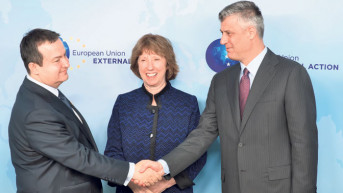
That the formation of the CSM was necessary had been indicated yesterday by Derek Chollet, an adviser to the State Department who visited Pristina and stated that the issue was "urgent".
The US Special Envoy for the Western Balkans, Gabriel Escobar, also stated that the CSM was a legal obligation of Kosovo and that it could not avoid this responsibility. Escobar said that the CSM was an international legal obligation of Kosovo, Serbia, and the EU, which had led the process, and the US had decided to support it.
"Therefore, a party or an individual cannot run away from that responsibility," Escobar said.
0 comments