
Lajcak responded to Kurti's accusations: When someone doesn't like the message, they blame the messenger
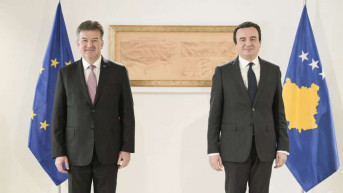
Special EU Envoy for the Belgrade-Pristina dialogue, Miroslav Lajcak, responded to Kosovo Prime Minister Albin Kurti's accusations that he leaned more towards Serbia's interests in the dialogue process, and stressed that the dialogue had no alternative and that when someone didn't like the message, they often blamed the messenger.
When asked if Kurti's accusations could be a problem for the future of the dialogue, Lajcak emphasized that there was no European future without normalizing relations and dialogue.
"When you don't like the message, you try to attack the messenger. This is how it works. The dialogue has been here since 2011. There have been different governments in Kosovo and Serbia, different EU representatives, but dialogue is the only way because the fact is very simple – there is no European future without normalization," Lajcak said.
Following the recent failed round of dialogue in Brussels, Kurti stated at a press conference in Pristina that there appeared to be coordination between Serbian President Aleksandar Vucic and Lajcak.
"The absence of the EU in the region over the past few years created a space that others exploited, but the EU is now serious; discussions are ongoing, and preparations for new members are underway," Lajcak emphasized.
Lajcak also said at the 2BS Forum in Budva that the conflict in Ukraine had revived the enlargement process and had made it political once again, with demanding technical criteria.
Lajcak noted that for the first time, he saw the EU more ready for the Western Balkans than the region was ready for the Union.
Lajcak stated that over the past years, the EU had neglected the political part and reduced enlargement to a technical process, which resulted in retrograde tendencies in the region and a decline in trust in the EU.
"The absence of the EU in the region over the past few years created a space that others exploited, but the EU is now serious; discussions are ongoing, and preparations for new members are underway," Lajcak emphasized.
Lajcak pointed out that President of the European Council Charles Michel's statement in Bled, that the EU and member states should ensure they were ready for membership by 2030, was an important indication.
"This is not the first deadline we've heard, but my message to you and the region is to take this moment seriously; there is momentum. We might find ourselves in a situation where Ukraine and Moldova take advantage of this opportunity, and the Balkans do not," Lajcak said.
He added that the EU wanted to show that it was not turning to the east and turning its back on the Balkans.
"The EU wants to demonstrate that we are equally committed to the Balkans, but we need good examples and positive, successful stories from the Balkans," Lajcak said.
He stated that there was no European future without a good relationship between Serbia and Kosovo, and normalization of relations could not happen without dialogue.
Lajcak added that as long as there were problems in bilateral relations, countries could not enter the EU.
He reiterated that the EU was ready for those who were ready in the Balkans, and the region had to "seize the moment."
He said that everyone in the Western Balkans complained that the EU had double standards and exerted too much pressure, but it was best to assess the progress that countries had made.

0 comments