
Latinovic: "Unplanned external players" – the biggest challenge for the new European administration

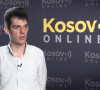
Former ambassador to the OSCE, Branka Latinovic, assesses that the Western Balkans will remain a focus for the next European administration and that the failure to conclude the dialogue between Belgrade and Pristina should not be attributed solely to the EU, but also to "unplanned external players."
"The issue of the Western Balkans, in the context of EU enlargement and the accession of the region's countries, is a long-term one and has been on the agenda for many years. Certainly, everything that happened in Eastern Europe, the war in Ukraine, has accelerated this agenda to incorporate the region into the EU with corresponding plans, dynamics, and conditions that need to be implemented," Latinovic told Kosovo Online.
She mentioned that the outgoing European Commission had been dedicated to the dialogue between Belgrade and Pristina, as evidenced by the appointment of special envoy Miroslav Lajcak, and that the high representative for foreign, security, and defense policy, Josep Borrell, had also been involved in the negotiation process.
However, Latinovic emphasized, they did not succeed, and the reasons, as she claimed, should also be sought in "unplanned external players."
"The entire tools and tactics of international organizations and actors have changed. The rhetoric is not what it was in the 1990s, and this altered approach needs to be viewed in the context of new realities and circumstances. Did they succeed – no. Did they have ambitions – yes. Did they have political will and desire – I think they did. Now, other factors influenced this. Of course, we should not exclude the involvement of some unplanned external players," Latinovic highlighted.
She stated that, in this light, the actions of Kosovo's Prime Minister Albin Kurti should be observed as well.
"Personally, I believe that Kurti's stubbornness in refusing any agreement, or always finding some excuse to avoid reaching an agreement related to the continued use of the dinar on the territory of Kosovo, is not just a sign of his stubbornness and persistence, but probably other factors are backing him and encouraging him to persist. On the other hand, the representatives of the European Commission themselves do not have the instruments or means to encourage or regulate it differently. They tried with some mild sanctions, which in practice were hardly applied," Latinovic explained.
Therefore, she adds, the task of the next European Commission is to create a package of measures to prevent such obstruction and ensure that Pristina fulfills what has been agreed.
"It remains to be seen how the next European Commission will package this issue, or create a package that will enable the normalization of relations in a way that Pristina fulfills its obligations, primarily related to the Community of Serb Municipalities, but also everything else related to it," Latinovic concluded.


0 comments