
Curcic: Election of the head of the European Commission in autumn, with no impact on the Belgrade-Pristina dialogue process
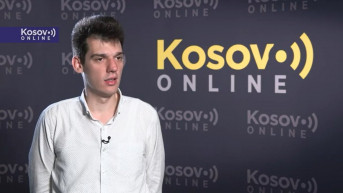
Researcher at the Institute for European Studies, Petar Curcic, assesses that it is not realistic to expect the name of the new head of the European Commission before autumn, and regardless of who assumes that role, it won't lead to dramatic changes in the approach to the Belgrade-Pristina negotiations because they will uphold the logic of European, not national interests.
"It is not realistic to expect a candidate's name until autumn this year because after the elections, there will likely be a 'long hot summer' for vacations, and various political options will probably be considered. Of course, the composition of the European Parliament will largely determine the outcome of the winner: whether it will be someone from the European People's Party or another party, although it seems that the EPP will win in these elections," Curcic stated for Kosovo Online.
Commenting on speculations about who could be the new Head of the European Commission after the European Parliament elections, with three names currently "on the table": current head Ursula von der Leyen, as well as the Prime Ministers of Croatia and Greece, Andrej Plenkovic and Kyriakos Mitsotakis, Curcic says that it is very difficult to predict at this point because after the elections, a long and complicated procedure follows, where first all 27 EU member states must give their advisory opinions, and then the European Council proposes personnel solutions to the European Parliament.
However, he does not rule out the possibility that von der Leyen could get another term, citing precedents in EU practice such as Walter Hallstein, Jacques Delors, or Jose Manuel Barroso serving two terms as the Head of the European Commission.
"Considering Germany's strength both in the European People's Party and in Europe, it seems that she could probably renew that mandate. If she stays, I don't believe things would change dramatically, especially since her Commission initiated the Ohrid Agreement process and a new stage in relations between Belgrade and Pristina," Curcic said.
Asked about the chances of the Croatian or Greek prime ministers, this researcher says that the previous practice shows that the Head of the European Commission has never been elected from Southeast or East Europe – outside the zone of founding EU countries.
"So far, it hasn't happened that the President of the European Commission was someone from Southeast or East Europe or Greece, so I don't think it's realistic to expect that it will be Mitsotakis or Plenkovic. Despite what Plenkovic has done for his country, an important thing in European integration, entering the Schengen and Eurozone, these are primarily politicians from smaller countries. Also, Plenkovic is now very inclined to collaborate with far-right parties, and it is questionable how utilitarian that is after the elections. The results will show later, but right now, this rightward shift in Croatia isn't something that could be positively evaluated in the current balance of power," Curcic explained.
Asked how the selection of a candidate from these regions could help or hinder the Belgrade-Pristina dialogue process, Curcic said that national interests should be distinguished from European interests.
"Greece probably won't change its stance on the decision not to recognize Kosovo's independence anytime soon. However, there is the European perspective, and then there is the perspective of national states, EU members, because we have seen in the case of Dora Bakoyannis that, despite being a Greek citizen, she didn't act based on her country's national interests but on the interests of European institutions. There is the logic of national states, and then there is the logic of European institutions," Curcic concluded.


0 comments