
Le Figaro: The Serbs in Kosovo as the last of the Mohicans
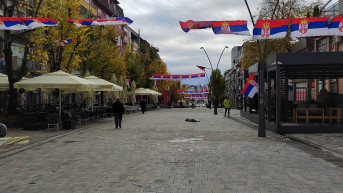
Only a minority of the Serbs still lives in urban areas in Kosovo, including about 30,000 in the northern part of Kosovska Mitrovica, and those who live in Pristina, Prizren, or Pec can be counted on the fingers of both hands, the French newspaper "Le Figaro” writes in an extensive report about the Serbs in Kosovo.
The rest of the Serbs, about 80,000, live south of the Ibar River, in rural areas, and are scattered throughout Kosovo, where several hundred streets and squares have changed their names since the end of the conflict, while several hundred monuments to KLA members have been erected, Danas reports.
"We recognize the Serbs by their muddy shoes at rare meetings within the community organized by the international community and civil society," the director of the Cultural Center of Gracanica, Zivojin Rakocevic, said bitterly.
Rakocevic makes great efforts to organize an exhibition, a film screening, or an event from time to time, in order to "feed the spirit and have a semblance of a normal life".
The director of Radio Gorazdevac, near Pec, Darko Dimitrijevic told the French newspaper that the term enclave was often mentioned, although he thought the term ghetto was more suitable.
Le Figaro points out that about 30,000 Serbs once lived in Pec, the seat of the Serbian Orthodox Patriarchate, and now only one priest, two elderly couples and a few nuns live there.
Gorazdevac also lost its population, in 2000 the village had 1,200 inhabitants, and today there are barely 750 people.
"I still believe that coexistence is possible. But in recent years the situation has worsened. The Serbs live between the hammer of Pristina and the anvil of Belgrade. The majority of Albanians denies the Serbian culture in this territory and wants a monopoly of power. We are also a nuisance to Belgrade, which has come to terms with our disappearance," Dimitrijevic said.
Retired teacher Momirka Vukmirovic is the only Serbian woman who returned to live in the village of Vitomirica near Pec, which today is inhabited by Albanians and Bosniaks.
After the liturgy in the monastery of Visoki Decani, which is guarded by KFOR soldiers, she said that she had been in Vitomirica for two months and that she had not had any problems so far.
"Neighbors who came from BiH and whom I knew from before, sometimes come to visit me. We sit down, drink coffee, and talk about the good old days and those that are gone. I have no contact with the Albanians in the village. There is only Idriz, a young neighbor whom I have known since he was little and who promised to come to see me," the teacher said.
She expressed her belief that it was possible to live together and added that it should not be ignored if it bothered someone, the French newspaper added.
All Serbs from the village of Osojane fled in 1999 for fear of reprisals, but many returned in 2001 to rebuild almost all the destroyed buildings. They were then "pioneers of what was hoped to be a great return movement," Le Figaro said.
Danilo Djuric, a thirty-year-old guide in Zubin Potok and a rap composer, fears that soon he will no longer be able to stay in the village.
With no prospects for the future, most young people his age have already left.
"The Serbs in the south wanted to integrate into Kosovo. We had high hopes when Albin Kurti became prime minister in 2021, but nothing happened. Pristina wants to get rid of us and establish absolute control over the north at any cost, while Belgrade and the Serb List, connected to organized crime, are pursuing a policy of arsonists and a firefighter, and are using us as pawns in negotiations," Djuric said.
Marko Jaksic, a judge in the northern part of Kosovska Mitrovica, has the same attitude, where there is graffiti "This is Serbia".
He said that he had resigned from his position in November, as done by all civil servants in the north of Serbia.
Jaksic (39) said that at the end of December, he had also been at the barricades at the administrative crossings.
"I tried to participate in integration, in various commissions, but it is clear that a multi-ethnic Kosovo where the Serbs would have equal rights exists only on paper. Despite everything, Serbian President Aleksandar Vucic is ready to sign a historic agreement with Pristina. That is betrayal," Jaksic said.
Would the Community of Serb-majority Municipalities provided for in the agreement be a solution? For Kabet Vout from the organization Aktiv in Mitrovica, which is dedicated to articulating and identifying the problems faced by minorities, it is certain that "that institutional umbrella would allow them to protect their rights and make them feel safer."
Jaksic points out that with the arrival of Albin Kurti in power; there was an increase in tensions.
"A few years ago, it was easier for people to cross the Mitrovica Bridge. The Albanian language was heard in the north and Serbian in the south. It was not reconciliation, but normalization. With the coming to power of Albin Kurti, intransigence appears again, the multiplication of police interventions, with masks and rifles," Jaksic said.
According to his words, a "nationalist current that does not listen to non-Albanian communities, or Serbs, or Gorani, or Roma, or Bosniaks, or even civil society" has imposed itself.
"It encourages impunity, as was the case with the decision of the Constitutional Court, which ruled in favor of the Orthodox monastery Decani, which demanded the return of its 23 hectares of property, but Pristina still refuses to implement that decision," Jaksic added.
Kosovo is still undermined by instability after 15 years
After 15 years after the Declaration of Independence, Kosovo had been undermined by instability, and two decades after the end of the conflict between the forces of Belgrade and the KLA, tensions with Serbia were still present, the French newspaper “Le Figaro” assessed and added that the lack of perspective had contributed to the mass exodus of the population.
"Despite attempts at dialogue, which has been conducted since 2011 under the auspices of the European Union (EU), relations between Pristina and Belgrade have been going from one crisis to another for years. While the war in Ukraine has been raging for almost a year, the West is determined to stabilize this potential front in the Balkans," Le Figaro said.
For this reason, European and American envoys have been traveling to Belgrade and Pristina for several months, advocating for the achievement of "a new temporary agreement aimed at preventing new tensions", which should be officially accepted as soon as possible.
The document does not envisage the obligation of Serbia to "formally recognize the independence of its former province" the newspaper writes - which Belgrade has always refused. On the other hand, Serbia should no longer block Kosovo's accession to international organizations.
Le Figaro reported the recent statement by Serbian President Aleksandar Vucic that Serbia would suffer sanctions and isolation if it rejected the plan. As the paper added, Vucic had not mentioned that the award was intended to provide significant financial support, especially for infrastructure.
Pristina, on the other hand, demands that Serbia recognize Kosovo as an independent state, and "asks for an apology for the crimes committed by Serbian forces during the 1998-1999 conflict. However, now the stumbling block is the formation of the Community of Serb-majority Municipalities, as foreseen by the Brussels Agreement of 2013.
Kosovo Prime Minister Albin Kurti refused to take that step, fearing that it could serve as an introduction to territorial autonomy for the Serbs, or even lead to the potential division of Kosovo.
It seemed that the American pressure, very intense in recent weeks, had borne fruit, Le Figaro said.
In addition to the repeated visits of the EU's special representative for dialogue between Belgrade and Pristina, Miroslav Lajcak, and the American envoy for the Balkans, Gabriel Escobar, the American ambassador to Kosovo, Jeffrey Hovenier, persistently repeated that the US was waiting for Pristina to fulfill its obligations, with the risk of sanctions being imposed on it and its prime minister expelled from negotiations.
On the same day that the President of Serbia called for the acceptance of the West's plan in his parliament, the Prime Minister of Kosovo stated that "the formation of the Community of Serb-majority Municipalities can be foreseen", but he also set his conditions.
The former president of the Self-Determination Movement, Visar Ymeri, stated that for Western countries, the formation of the Community of Serb-majority Municipalities was unconditional and urgent.
"Kurti brought upon himself the international community with his intransigence and anti-Serb rhetoric. Especially the US, which was the initiator of NATO's attack and the biggest supporter of Kosovo's independence," Ymeri said.
Ymeri points out that Kurti's ratings are certainly still strong, but declining.
"His firm views on Serbia brought him (Kurti) enormous support from the Albanian population, but he did not fulfill the obligations based on which his party won 50.2 percent of the vote two years ago," Ymeri said.
For the Kosovo Albanians, the priority at that time was "turning the page" after two decades of rule by KLA veterans and punishing their excesses - corruption, ubiquitous crime, and economic stagnation, the French newspaper said.
The international community also showed criticism at the time, aware that expectations were high.
"He (Kurti) is first and foremost a dogmatic nationalist," an unnamed Western diplomat said and later pointed to Kurti's "difficulties in reforming a dysfunctional administration plagued by the nepotism of his predecessors."
After two years in power, Kosovo has not changed much. The fight against corruption and organized crime has produced results at certain levels, but it has not affected the oligarchs who still occupy strategic positions.
The educational, as well as health system, continue to show their limitations, and the social policy has not undergone deep transformations.
Regarding the promised dialogue with the Serbs, despite several attempts to establish communication channels, Kurti's "visibility is reduced to insisting on the establishment of Kosovo's sovereignty and control of the north of the country, with the multiplication of muscular police interventions," Le Figaro stated.
The French newspaper added that the room for maneuver of the Kosovo authorities was also decreasing due to "the monopoly of the Serb List and its pressure on the Serbian citizens of Kosovo with the support of Belgrade."
In an extensive text, Le Figaro states that in this delicate context, the trial of Hashim Thaci, the former ruler of Kosovo, accused of war crimes and crimes against humanity against Serbian and Albanian civilian victims should begin before the Special Court in The Hague.
The indictment against him, as well as the indictment against his former right-hand man, Kadri Veseli, made his Democratic Party of Kosovo (PDK) to realize that it needed a change. An example to follow is that of the center-right and pro-European Democratic League of Kosovo (LDK), which is more popular thanks to its leadership representing the new generation.
Le Figaro reported that the LDK with the new dynamics of its leader Lumir Abdixhiku had won good results in the municipal elections held in the fall of 2021.
That party won in Pristina and retained power in Peja. Perparim Rama, the new mayor of Pristina, wants to restore ties between communities.
"My slogan is - Pristina for everyone," Rama said, an architect who spent his entire career in London before running for office.
Le Figaro also states that many in Kosovo fear that visa liberalization with the EU, which is expected by January 1, 2024, will contribute to an even more massive exodus of people.
According to Visar Vokrri, program director of the Riinvest Institute, it will be difficult to prevent a new wave of departures. Inflation reaches 12 percent annually, the wealth gap is increasing, investments are at a standstill, and imports are ten times higher than exports.
"Mass transfers of money from the diaspora always sustain Kosovo. And again, that money is only used to support consumption and does not support long-term economic growth," Vokrri said.
Throughout Kosovo, in Mitrovica as well as in Pristina, everyone dreams of a peaceful country; tired of endless fights, young people give up building their lives there. Even those who are better off are fleeing, as everywhere in the region, Le Figaro added.
"If the long-awaited liberalization of the visa regime with the Schengen area is finally approved, some are already predicting that a third of the population could pack their bags and quickly leave Kosovo," the French newspaper said.


0 comments