
Less: It's no secret that London has been sympathetic to Pristina more than other Western actors
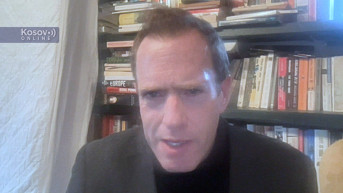
Timothy Less, a collaborator at the Center for Geopolitics at the University of Cambridge, believes that the United Kingdom's policy towards Kosovo aligns with the positions of the United States and the European Union, however, he also acknowledges that there are certain differences, emphasizing that it is "no secret that official London has long been sympathetic to the position of Pristina, perhaps more so than some other Western actors."
As examples of specific differences between the UK and other Quint countries regarding Kosovo, Less points out that official London "seems to support police actions in northern Kosovo and insists that the Community of Serb Municipalities must be in line with the Kosovo Constitution and not become a second Republika Srpska."
"These minor differences in approach should not be exaggerated. The United Kingdom has the same fundamental interest as the United States and the European Union when it comes to Kosovo, which is to prevent a relapse of instability that could destabilize Bosnia and the wider region," Less notes.
He also states that the shared interest of the United Kingdom, the US, and the EU is to prevent increased Russian influence.
"The United Kingdom backs the efforts of the EU and the US to reach an agreement between Serbia and Kosovo rather than pursuing any kind of alternative policy towards the two sides," Less says.
Regarding the absence of the British government envoy for the region, Stuart Peach, during last week's visit of EU, US, French, German, and Italian envoys to Belgrade and Pristina, while British Member of Parliament Alicia Kearns was in Pristina, who has been supportive of Kurti's government and critical of Belgrade, advocating for sanctions against Serbia, Less believes that "no special message was sent by that."
"It certainly doesn't imply that the debate on Kosovo's status should be resolved in Kosovo's favor rather than through negotiations. I think it is indicative of two things. The first is that, after Brexit, the United Kingdom is not taking the lead in efforts to resolve the Kosovo dispute, which is formally in the hands of the EU and the US. The United Kingdom is instead now focused on ensuring security in Kosovo via NATO. The second thing is that Alicia Kearns has decided by herself, unilaterally, to back Kosovo in its dispute with Serbia. This is what I can see from the British government's reactions to her statements, which sees her more as a problem than as part of any solution," Less notes.
When asked about the claims that London is among Kosovo's strongest allies, including Prime Minister Kurti himself, Less says:
"I think to say that London is a strong ally of Kosovo is just a statement of London's long-standing policy towards Kosovo. Namely, that it supports Kosovo's independence and appreciates its loyalty in relation to questions such as Russia and Ukraine. As for Albin Kurti, I saw that Vjosa Osmani thanked Alicia Kerns for being a strong ally and for supporting the people of Kosovo, which is not surprising. But I am not aware of any government officials giving Mr. Kurti their explicit support, and I am also not expecting this for as long as he continues to obstruct the dialogue."



0 comments