
Li Ming: Beijing a reliable partner for Belgrade, ready to expand cooperation with new government
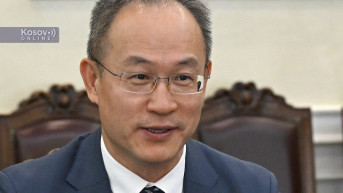
Chinese Ambassador to Belgrade Li Ming said that China and Serbia were “ironclad friends” and that this friendship had been strengthened through trials and adversity and forged in blood. Regardless of changes in the international environment, he said, China has always viewed and developed its relations with Serbia from a strategic and long-term perspective. China is a long-term, stable and reliable economic and trade partner of Serbia and has for many years remained its second-largest trading partner.
According to Li Ming, between 2013 and 2025, bilateral trade between China and Serbia increased more than fivefold, while Serbian exports to China increased as much as one hundredfold.
“We are ready to work together with Serbia’s new government, on the basis of mutual respect, equality and mutual benefit, to nurture our traditional friendship, consolidate mutual political trust and expand practical cooperation, in order to deepen the China-Serbia Comprehensive Strategic Partnership and continuously build the China-Serbia Community with a Shared Future in the New Era,” Li Ming said in an interview with Politika.
He stressed that the China-Serbia Free Trade Agreement gives Serbian products access to China’s vast market of 1.4 billion people, while high-quality and cost-effective Chinese goods help alleviate inflationary pressures in Serbia and reduce the cost of living for its citizens.
China, he said, has been Serbia’s largest source of foreign direct investment for several years. By the end of June 2026, the value of Chinese investment had exceeded €7 billion, accounting for one-third of the total stock of foreign investment in Serbia.
According to Li Ming, more than 100 Chinese companies currently operate in Serbia, providing more than 40,000 jobs, while Chinese companies have for years ranked as Serbia’s three largest exporters.
“In infrastructure, major projects such as the Belgrade-Budapest railway are helping improve Serbia’s transport connectivity. In mining and metallurgy, major projects represented by Zijin Bor and the HBIS steel mill in Smederevo have revitalized long-established industrial facilities, preserved thousands upon thousands of jobs and are increasingly moving toward greener and more sustainable development. In the energy sector, Chinese companies are actively participating in Serbia’s green transition and deepening cooperation in clean energy. Three wind farm projects are currently under construction, with a combined investment value of approximately €1.05 billion. In scientific and technological innovation, China-Serbia cooperation is rapidly expanding into new areas such as artificial intelligence, the digital economy and new energy sources. In recent years, the Chinese side has also organized training for almost 1,000 participants from Serbia, helping improve skills across various sectors, including agricultural technology, cultural tourism, environmental management, infrastructure, energy and metallurgy,” the Chinese Ambassador said.
He stressed that Chinese companies have long valued the vitality and development potential of the Serbian market and expect Serbia to continue creating a fair, transparent, non-discriminatory and predictable business environment for investors from China and other countries, while protecting the legitimate rights of foreign enterprises in accordance with the law, thereby ensuring mutual benefit.
Asked about the role of Asia-Pacific Economic Cooperation (APEC) in the contemporary global economy and the objectives China expects to achieve by hosting this major international gathering, Li said that, as the highest-level, most comprehensive and influential economic cooperation mechanism in the Asia-Pacific region, APEC had always served as a “major engine” of global economic growth and an “anchor of stability” in maintaining regional stability.
APEC’s 21 member economies, he noted, account for almost 40 percent of the world’s population, more than 60 percent of global GDP and nearly 50 percent of world trade.
Over more than three decades, he said, the average tariff rate across APEC economies has fallen significantly, from 17 percent to five percent, while regional trade has increased fivefold and investment twelvefold.
“Average per capita income in the Asia-Pacific region has risen significantly, and one billion people have successfully emerged from poverty. These are historic achievements that have attracted worldwide attention. In recent years, amid insufficient momentum in the global economy and growing instability and uncertainty, the Chinese economy has remained stable and played a key role in driving economic growth globally and across the Asia-Pacific region. China is now the largest trading partner of 13 APEC economies, while its share of APEC’s total GDP exceeds 30 percent,” Li Ming said.
He noted that this year marks the 35th anniversary of China’s accession to APEC and said that, over the past 35 years, China had consistently remained faithful to APEC’s original objectives and mission, actively promoted trade and investment liberalization and facilitation, driven development in the Asia-Pacific region and improved the well-being of its people.
According to Li, the 33rd APEC Economic Leaders’ Meeting will soon be held in Shenzhen under the theme “Building an Asia-Pacific Community for Common Prosperity,” focusing on three priority areas: openness, innovation and cooperation.
The event, he said, represents an opportunity for the APEC “China Year” to write a new chapter in Asia-Pacific cooperation.
Around 300 activities are expected to be held, the Chinese diplomat said, with the aim of expanding opportunities for establishing a Free Trade Area of the Asia-Pacific, developing an upgraded roadmap for regional connectivity and promoting digital, intelligent and green transformation.
“As Chinese President Xi Jinping has emphasized, the more turbulent the times, the greater the need for solidarity. Amid intertwined geopolitical changes and economic restructuring, all stakeholders need to use this meeting to strengthen cooperation, overcome differences and build an Asia-Pacific community. As host, China is ready to work with all parties to ensure that the APEC ‘China Year’ delivers substantial results and makes a new contribution to promoting economic growth in the Asia-Pacific region and the world, while using regional practices to pool strength for building a community with a shared future for mankind. We also welcome Europe, as one of the important poles in a multipolar world, to deepen its cooperation with APEC,” the Chinese Ambassador to Belgrade said.
Regarding a possible historic trilateral meeting between Chinese President Xi Jinping, Russian President Vladimir Putin and US President Donald Trump, the Chinese Ambassador to Serbia said that a spokesperson for the Chinese Foreign Ministry had recently already stated China’s position regarding a meeting of the Chinese, Russian and US heads of state, noting that China remained in communication with the relevant parties.
“When it comes to relations among major powers, Chinese President Xi Jinping once emphasized that relations among major powers are of crucial importance to global strategic stability and that major powers bear special responsibilities. We believe that major powers should conduct themselves in a manner commensurate with their status, provide more global public goods, shoulder the responsibilities of major powers and demonstrate their willingness to bear those responsibilities.
President Xi Jinping has put forward a series of new ideas, positions and initiatives, including building a community with a shared future for mankind, jointly advancing the Belt and Road Initiative, building a new type of international relations, promoting the common values of humanity, a vision of global governance based on extensive consultation, joint contribution and shared benefits, the four global initiatives, an equal and orderly multipolar world, and universally beneficial and inclusive economic globalization. All of this clearly demonstrates China’s sense of responsibility and willingness to act as the world’s second-largest economy and largest developing country. China is committed to being a builder of world peace, a contributor to global development, a defender of the international order and a provider of public goods, thereby earning broad recognition from the international community,” Li Ming said.
He stressed that China advocates genuine multilateralism and equality among all countries regardless of their size and believes that international affairs should be decided through joint consultation.
“China is hosting this year’s APEC summit under the theme ‘Building an Asia-Pacific Community for Common Prosperity,’ with the aim of making Shenzhen, a city of innovation and openness, a platform for practicing genuine multilateralism, promoting economic development and achieving common prosperity. Going forward, together with the broader international community, including Serbia, we will continue working to build an equal and orderly multipolar world,” the Chinese Ambassador to Belgrade said.
He emphasized that the participation of Hong Kong, China and Chinese Taipei in APEC was based on the one-China principle and an arrangement distinguishing sovereign states from regional economies.
“In October 1991, China signed a Memorandum of Understanding with APEC which clearly established that China would join as a sovereign state, while Hong Kong, China and Chinese Taipei would simultaneously join as ‘regional economies.’ This arrangement strictly limits the levels and forms of their participation. For example, Chinese Taipei’s participation in APEC activities must comply with the one-China principle and the provisions of the relevant APEC Memorandum of Understanding. Leaders of China’s Taiwan region cannot attend the APEC Economic Leaders’ Meeting and may only entrust economic and trade representatives associated with APEC or other designated persons to participate. The Chinese side highly appreciates APEC members’ adherence to the one-China principle. This once again demonstrates that respect for the one-China principle is the common aspiration of the international community and an unstoppable trend of our times,” Li Ming said.
Asked whether Shenzhen could host a historic meeting between Xi Jinping, Vladimir Putin and Donald Trump and thereby open a new chapter in international cooperation, Li said there was a saying in China: “To understand a thousand years of history, look to Beijing; a hundred years, Shanghai; thirty years, Shenzhen.”
“China is hosting the APEC summit for the third time: in Shanghai in 2001, Beijing in 2014 and Shenzhen in 2026. Each host city has its own characteristics and advantages. They not only trace the temporal and spatial coordinates of Chinese modernization as it advances from the depths of history toward the forefront of the world, but also highlight our determination to unwaveringly advance high-standard opening-up. Shenzhen is China’s youngest city, a ‘miracle city’ born of reform and opening-up, and also a global center of technological innovation. This year, in this vibrant city of the future, we are jointly considering the major agenda of Asia-Pacific cooperation. In doing so, we are not only demonstrating to the world the strong momentum of China’s new quality productive forces, but also drawing on Shenzhen’s four-decade spirit of ‘daring to explore and experiment, openness and inclusiveness’ to inject stability into a world full of uncertainty and further advance the building of an Asia-Pacific community and a community with a shared future for mankind,” Li Ming said.
According to him, against the backdrop of the current international situation, marked by intertwined crises and challenges facing the recovery of the global economy, China has consistently maintained a sincere and open approach and remains ready to continue cooperating with the broader international community, including Serbia.
He said the objective was to consistently uphold a concept of global governance based on extensive consultation, joint contribution and shared benefits, practice genuine multilateralism and advance reform of global governance on the principles of fairness, justice, openness and inclusiveness, thereby opening a new chapter in international cooperation.

0 comments