
Mitic: China and Serbia share a common view on the need to preserve the international system based on the UN Charter
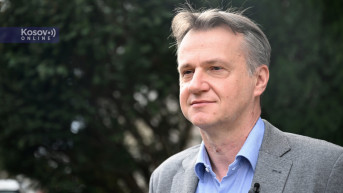
Senior research fellow at the Institute of International Politics and Economics, Aleksandar Mitic, says that the official visit of Serbian President Aleksandar Vucic to China is fully in line with the four basic cornerstones of China–Serbia cooperation: intensive political cooperation at the highest level, economic cooperation, a culture of remembrance, and a shared vision of a “new era”, that is, the process of multipolarization.
Intensive political cooperation at the highest level, as Mitic explains, implies the highest institutional level of relations that Beijing has with any European country, as well as an agreement on meetings between the leaders of the two states at least once a year.
“The second cornerstone is economic cooperation through Serbia’s pioneering role in the implementation of Chinese technology in Europe, in infrastructure, energy, and the defense industry. The third is related to the culture of remembrance, which connects us not only through the shared victory in the Second World War, but also through the sacrifice during the NATO aggression in 1999, which was a prelude to the process that led to the ‘unilateral declaration of independence of Kosovo’, which Beijing sees as an extremely dangerous precedent and a model for provoking tensions and conflict in the case of Taiwan. Finally, the fourth cornerstone is a shared vision of a ‘new era’, that is, the process of multipolarization. In this process, which both Beijing and Belgrade see as an opportunity rather than a threat, the two countries share a common view on the necessity of preserving the international system based on the UN Charter,” Mitic said for Kosovo Online.
As he explains, both China and Serbia believe that UN reform is inevitable and necessary, but they not only see no alternative to such a system, but also openly oppose deviations that have led to its crisis.
“In that regard, the fight against double standards regarding the territorial integrity of states is fundamental, and the issue of Kosovo and Metohija is a fundamental example,” he notes.
In order to defend the system and reform multilateralism based on the UN, China has, Mitic adds, launched a series of activities, consultations, and processes since last year.
“Some are being held during China’s presidency of the UN Security Council, and a very important role is also played by the Global Governance Initiative proposed by President Xi Jinping in September 2025, which Serbia immediately supported. This initiative advocates sovereign equality of states and the defense of the foundations of the UN. In that context, the talks between Presidents Xi and Vucic in Beijing, as well as the participation of Foreign Minister Marko Djuric at the UN Security Council session in New York, should also be seen,” Mitic says.
Criticism coming from, or as he says will inevitably come from, Brussels regarding cooperation between Belgrade and Beijing is unavoidable.
“However, Brussels should rather deal with the fact that a large number of EU member states are still flagrantly violating international law and the UN system by recognizing the so-called ‘unilateral declaration of independence of Kosovo’. On the other hand, when it comes to cooperation with China, the recent activities of the EU and some of its leading member states, which are intensively visiting Beijing, in the context of Brussels’ disagreements with Washington on numerous issues, are one of the best examples of hedging policy, that is, a multi-vector policy. Therefore, criticism of Serbia for cooperation with China is, to put it mildly, hypocritical,” Mitic concludes.


0 comments