
Marinkovic: Kurti does not abandon the policy of forced integration of the Serbian community in Kosovo
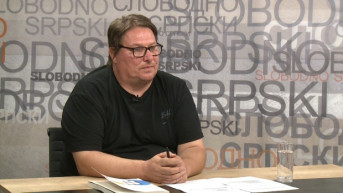
Linking the full implementation of the Law on Foreigners with the status of educational and health institutions is particularly problematic, as it confirms that the Self-Determination movement led by Albin Kurti has not abandoned its policy of forced integration of the Serbian community in Kosovo, Miodrag Marinkovic from the Center for Affirmative Social Action (CASA) assessed in a statement to RFE/RL.
Marinkovic told RFE/RL that the Law on Foreigners is perceived by the public as a “potential circumvention mechanism” through which the Government of Kosovo could begin closing tertiary education and healthcare institutions that operate, in Serb-majority areas of Kosovo, within the system of Serbia.
According to him, such an approach by the Kosovo authorities does not contribute to stability; on the contrary, it deepens mistrust and the sense of legal insecurity among members of the Serbian community.
Kosovo’s caretaker Prime Minister Albin Kurti stated on 16 January that the process of integrating Serbian healthcare and education would be carried out in coordination with the European Union and that the concerns of non-majority communities would be taken into account.
However, it has not been clarified which integration models are being considered, nor whether the process would take place within the framework of the Association of Serb-majority Municipalities, as insisted upon by Belgrade.
Marinkovic said that the most favorable model for the integration of healthcare and education for the Serbian community already exists and has been internationally agreed.
“This concerns a functional form of self-governance, defined within the European plan for the normalization of relations, which provides for the preservation of institutional autonomy in the fields of education and healthcare, as well as mechanisms for the collective protection of the rights of the Serbian community,” he said.
He emphasized that the main problem lies in the refusal of the Government of Kosovo to implement the agreement on the path toward normalization of relations, which, inter alia, provides for the establishment of the Association of Serb-majority Municipalities.
According to him, attempts have also intensified to replace the EU-facilitated negotiation process with “unilateral decisions.”
“Such an approach leaves no room for genuine integration; on the contrary, it creates additional insecurity and deepens mistrust. Under these circumstances, comprehensive dialogue with the Government of Kosovo is possible only with strong and sustainable engagement by international mediators. Responsibility for this lies primarily with the European Union, but also with the United States, which has recently become more actively involved in this process,” Marinkovic said.
In his assessment, without effective pressure mechanisms, the government led by Albin Kurti will not accept compromises.

comments