
Markovic: Major powers are “moving” from the UN to other forums to resolve problems
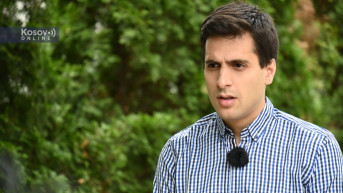
Historian Vukan Markovic told Kosovo Online that the role of the United Nations has been actively declining for the past two decades and that the UN is no longer the place where major global problems are resolved through diplomacy. Instead, he says, great powers are “moving” away from this organization to other forums such as the G20, the Shanghai Cooperation Organization, or the G7 to address issues.
“The original role of the United Nations, to provide a grand forum that would not only bring together all the sovereign states of the world but also define international law, since every UN decision represents international law, has not existed since the beginning of this century,” Markovic said.
He sees two major reasons for the UN’s declining role: the attitude of the great powers toward the UN, as well as their relations with one another, and the UN’s internal problems.
“When major powers use the UN as a forum and medium both to pursue their own interests and to control the interests of rival powers, the UN functions as a true arena for resolving great issues through diplomacy. That is no longer the case. I would say the turning point was the Iraq War, though in this region many would say it was the 1999 bombing. The Iraq War was a signal to the other major powers that what the international community says no longer matters. Since 2003, all the major powers have been actively vetoing and blocking the UN, and what’s even more problematic, they have shifted to other forums, G20, the Shanghai Group, G7, to resolve problems. In short, the UN no longer has that kind of prestige. That is the first reason,” Markovic explained.
The second, he said, lies in the balance of power in the Security Council. He reminded that the UN was created in a world dominated by the victors of World War II, while today the Global South has risen, yet it lacks anything close to the representation and prestige of the five permanent members of the Security Council.
There are, he added, many other differences, financial, budgetary, and interest-based, but the main issue is the relationship among the great powers.
“Unless the Security Council admits countries of the Global South, primarily India, Brazil, and some of the major African states, the UN cannot maintain in the 21st century the relevance it had during the Cold War,” the historian emphasized.
According to him, reform of the Security Council is particularly significant because of the veto, since whoever holds a veto can block anything from becoming international law.
“The more powers hold the veto, the more it reflects the world we actually live in. Also, the way the Security Council rotates reflects the distribution of power in the world. That is why the Security Council is a good indicator of UN reform. It is not the only one, the International Court of Justice, too, is losing relevance for the major powers. But once reform of the Security Council begins, that signals the UN is changing its structure and framework. It would be unrealistic to expect that the General Assembly, that is, every state, could equally influence global affairs,” Markovic said.
Reforming the Security Council, he stressed, requires the current five permanent members to give up part of their authority, admit potentially rival powers, and grant them the same level of prestige.
“The Security Council is the necessary indicator if the UN is to adapt to the new distribution of power in the world. Of course, this doesn’t mean that existing great powers will continue to respect the will of the United Nations. Since 2003, we have seen that we live in an era of unilateral decisions by great powers. No power will endanger its own interests simply because international law prohibits it. We have seen countless examples of this,” Markovic concluded.
The General Debate of the 80th session of the UN General Assembly begins tomorrow. In this jubilee year, the theme of the general debate is “Better Together: 80 Years and Beyond for Peace, Development, and Human Rights.”


0 comments