
Mazreku: By refusing to recognize Kosovo, Serbia has an extremely destructive role in the Western Balkans
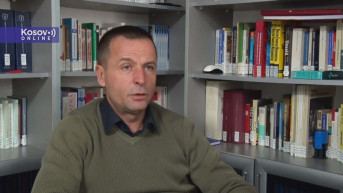
The security of the Western Balkans depends on the countries themselves, says Professor of European Law at the University of Pristina Avni Mazreku.
He told Kosovo Online that no country from the Western Balkans rejects membership in NATO or the EU, except for the Republic of Srpska and Serbia.
“Serbia is neutral when it comes to NATO membership, but it is not neutral when it comes to its choice of weapons. The logical question would be: why is so much being invested in the armament of Western Balkan countries? Against whom will this weaponry be used? There are some indications being presented to citizens or officials of these countries, including Kosovo and beyond, regarding the motives of states for investing in the military sector. In Eastern Europe, we have seen statements by leaders of certain countries, such as Poland, Estonia, Lithuania, Belarus, and Russia, that are pro-war. This situation across Europe is happening for the first time since the end of World War II. We have not seen such sharp rhetoric and specific actions linked to instability in Europe in general,” Mazreku said.
He went on to remind that the First World War also began in the Western Balkans.
“That shows that the interests of certain military powers, at specific historical moments, have been used for particular purposes to promote instability. I’m not entirely sure what Ms. Osmani meant in this case when referring to Serbia and its role. What I want to say is that Serbia has had, and still has, the opportunity to demonstrate constructiveness in maintaining friendly relations with Western Balkan countries, which in this case have constructive relations with Albania, as well as between Serbia and North Macedonia. But Serbia’s refusal to recognize Kosovo plays an extremely destructive role for the Western Balkans. As long as there exists a state that considers another state to be an integral part of itself, in other words, when a certain leader declares that this particular state, in this case Kosovo, is an integral part of my own state, that is, in other words, a declaration of war,” Mazreku said.
The professor further emphasized that, “in this context, Serbia can be described as playing a destructive role in relation to peace in the Western Balkans.”
“And as long as Serbia is not constructive, it will be viewed as a conflict-prone state, one that has generated conflicts and stands apart from Europe. In this sense, I would agree that this region should be referred to as Southeastern Europe rather than the Western Balkans, given the connotation. Therefore, Serbia must demonstrate a commitment to sustainable peace, and that can only be achieved by recognizing Kosovo and moving closer to the so-called transatlantic umbrella. The idea is for Serbia to become a full member of the EU, but also a full member of NATO, since NATO has, since 1949, been the only guarantor of peace and security on European territory,” he stated.
Mazreku added that history has shown what can happen when a European country is left exposed to certain risks.
“For example, had Ukraine been a NATO member, this conflict would not have occurred. If Ukraine had been part of NATO, like the Baltic states, we would not be talking about war in Ukraine today. Therefore, the lack of NATO membership for the Western Balkan countries and the EU creates potential preconditions for failing to utilize what is known as Europe’s security guarantee. Because neither Kosovo, nor Albania, nor Serbia, nor North Macedonia, nor Montenegro invented these guarantees,” Mazreku concluded.



0 comments