
Mijacic: Impossible to form a Government without the Serb List; Albanian parties unwilling to cooperate
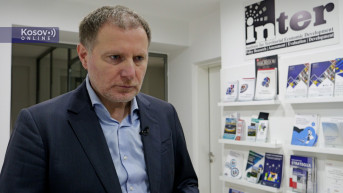
The Coordinator of the Working Group for Chapter 35 of the National Convention on the EU, Dragisa Mijacic, stated today that without the votes of the nine deputies of the Serb List in the Kosovo Parliament, the Albanian parties cannot form a government.
Speaking to Tanjug, Mijacic emphasized that under the current circumstances, no Albanian party is willing to cooperate with the Serb List, as such cooperation would, in the eyes of the Kosovo public, be branded as a betrayal of Albanian interests.
“We have therefore reached a deadlock, where no one can form a government,” Mijacic said, adding that Kosovo’s institutions have long been in a state of institutional crisis.
He pointed out that the current composition of the Kosovo government has been serving in a caretaker capacity for almost a year.
“There is no prospect of resolving this situation, no indication that a new government will be elected. There are signs that new elections are likely, but the results of the second round of local elections, which are being held tomorrow, will be awaited first. Under such circumstances, forming a new government is almost impossible — especially without the Serb List deputies, as the numbers simply don’t add up for either side,” Mijacic explained.
He stressed that it is tragic that the caretaker government continues to make decisions affecting Serbs in Kosovo, which it is not constitutionally permitted to do.
“When one minister made a decision regarding fiscal cash registers, the Constitutional Court ruled that a minister cannot make such decisions during a technical mandate. Yet when decisions are made that affect the survival of the Serbian people, the Court remains silent,” Mijacic noted.
He added that such unconstitutional practices, particularly under the government of Albin Kurti, are becoming commonplace.
Mijacic warned that if the Kosovo Assembly is now constituted without electing a deputy speaker from the Serb List, this could become a dangerous precedent.
“The same thing happened when Albin Kurti, in the previous government, appointed Nenad Rasic as a minister, even though under the Kosovo Constitution he had no right to do so. The Serbian representative in the government must be approved by the largest Serbian political entity — the one that received the most votes in the elections,” he explained.
“The Serb List said it had filed a request for a constitutional review of that act. However, the Constitutional Court stated it had not received such a request, and the matter simply faded over time. Now, Kurti has again proposed Rasic, even though the Constitution doesn’t allow it — and no one is objecting,” Mijacic added.
He emphasized that the Serbian community in Kosovo is under great pressure and that it is essential for Serbian elected representatives to act within Kosovo’s institutional framework.
When asked about possible cooperation between Albanian parties in the second round of local elections, Mijacic replied that it is too late for any kind of agreement.
“The polarization between political entities is so deep that, at this point, any cooperation would be politically disastrous for all involved,” he said.
Mijacic pointed out that among Albanian parties, only Vetëvendosje (Self-Determination) remains strong at the central level, while all others have become localized.
“You have the LDK (Democratic League of Kosovo), which is mostly strong in urban centers, the PDK (Democratic Party of Kosovo) in areas where the KLA was historically influential, and Haradinaj’s AAK strong in Metohija,” Mijacic concluded.



0 comments