
Mijacic: Sorensen has a clear mandate, establishing the CSM is the first step
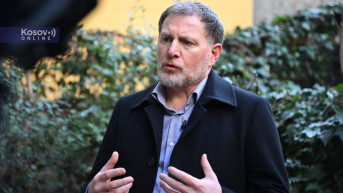
Dragisa Mijacic, coordinator of the Working Group of the National Convention on the EU for Chapter 35, stated that the new EU Special Envoy for the Belgrade-Pristina dialogue, Peter Sorensen, has a clear mandate and that his first steps will follow immediately after the formation of the new Kosovo government, focusing on the establishment of the Community of Serb Municipalities.
"Sorensen has arrived with a clear mandate, which is to facilitate the implementation of the Agreement on the Path to Normalization and its Ohrid Annex. Both short-term and long-term steps should be sought within these foundations. His task, after the formation of the Kosovo government, is to bring both sides to the negotiating table and enable the implementation of the agreement, with the first step being the formation of the Community of Serb Municipalities," Mijacic told Kosovo Online.
He emphasizes that establishing the CSM is fundamental to any normalization of relations between Belgrade and Pristina.
"It is also a prerequisite for Kosovo's membership in international organizations such as the Council of Europe. Sorensen will have a major and difficult task in initiating the implementation of these activities," he specified.
Commenting on Kosovo Prime Minister Albin Kurti’s claim that if he secures a new mandate, he will not establish the CSM, Mijacic warnes that such a stance would return the dialogue to a "vicious cycle."
"This means that if Kurti remains at the helm of the government, we will once again enter a vicious cycle of activities that will not lead to normalization but rather to the deterioration of interethnic relations and overall relations between Kosovo and Serbia," Mijacic stressed.
The Belgrade-Pristina dialogue under Peter Sorensen’s leadership will largely depend on the "wavelengths" between Washington and Brussels, as he says.
"A key question here is how Washington will position itself regarding these negotiations led by Sorensen, whether it will support him in this process, whether Washington and Brussels remain on the same wavelength, or if each will pursue its own policy. At this moment, no one can say for sure," Mijacic noted.
However, he adds that Brussels and Washington agree on one thing.
"They have expressed dissatisfaction with Albin Kurti’s unilateral actions, and there is an expectation that such actions will not occur in the coming period. That is the key to further activities and success: coordinated actions agreed upon by both sides, along with Brussels and Washington. Otherwise, the process will lead to sanctions and punitive measures, which no one from this region wants," Mijacic emphasized.
He points out that lifting the EU measures against Kosovo is a complex issue because "it was easy to impose them, but difficult to remove them" due to the required consensus of all member states.
He believes that local elections, expected in the fall, will be a determining factor.
"There will likely be no consensus on lifting sanctions until new local elections are organized, expected around October this year. This means that sanctions will likely remain in place throughout the year. If the Kosovo government does not take decisive steps toward forming the CSM, I believe these sanctions will continue," Mijacic stressed.
He notes that beyond punitive measures, the European Union also has "other mechanisms" to pressure Pristina into fulfilling its obligations.
"Rather than directly targeting the Kosovo government, they will primarily marginalize Kosovo in relation to the other six Western Balkan countries and certain integration processes," Mijacic explained.
He is convinced that many uncertainties will be clarified on February 9 with the results of Kosovo’s parliamentary elections.
"I’m not saying that February 9 will provide all the answers, but it will provide many. We will see how things unfold if Albin Kurti’s government remains in power – whether he will maintain the same discourse or change his narrative. Knowing Mr. Kurti, no one expects him to soften his stance in the negotiation process, which means new difficulties, primarily for the Albanian society in Kosovo, but also for all citizens of Kosovo due to his unilateral actions," Mijacic said.
He emphasized that an additional challenge for the new government, if led by Kurti, will be its relationship with the new US administration.
"We have seen Richard Grenell’s statements, and he will certainly play a role in the US administration regarding Kosovo-Serbia relations. His stance on Kurti's statements has been extremely negative. This presents a limiting factor for Kurti – whether he will pursue self-isolation, for which he will be solely responsible, or whether he will engage in integration, regional, and European processes, which are expected not only in Pristina and Belgrade but also in Brussels and beyond Europe," Mijacic concluded.


0 comments