
Kasolli: The first moves of the new European negotiator will depend on who forms the new Kosovo government
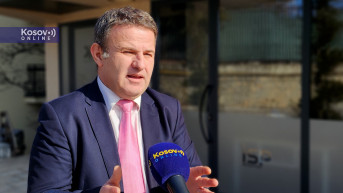
Analyst Afrim Kasolli believes that the first steps of the new European envoy, Peter Sorensen, in the Belgrade-Pristina dialogue process will depend on many factors, including who will form the next Kosovo government.
"The EU has made it clear that Kosovo's first step in this direction should be to send the draft Statute to the Constitutional Court for review of its constitutionality, as a fundamental step toward establishing the Community of Serb Municipalities. This will also depend on who will lead the Kosovo government. Prime Minister Kurti has recently neglected this obligation," Kasolli told Kosovo Online.
He specifies that most Albanian parties avoided taking a stance on the formation of the CSM during the campaign. The exceptions were the leader of the Self-Determination Movement, Albin Kurti, who stated that it is not within the government's jurisdiction, and the Alliance for the Future of Kosovo (AAK) candidate for prime minister, Ramush Haradinaj, who declared that he would send the draft Statute of the CSM to the Constitutional Court immediately upon assuming office.
"Since this issue does not bring electoral benefits, the Democratic League of Kosovo (LDK) and the Democratic Party of Kosovo (PDK) did not express their positions on it, stating that they would not implement any of the obligations Kurti accepted during the negotiations in Brussels and Ohrid," Kasolli said.
He emphasizes that the success of the new European envoy in the dialogue, Peter Sorensen, will depend on many factors, including conditionality with the integration agenda and Euro-Atlantic integration.
"Progress in the dialogue will also depend on what leverage the EU decides to use. Either it will apply more pressure, or it will offer incentives that can be gained if obligations are fulfilled," Kasolli stressed.
He also warns that the new European negotiator will be influenced by internal EU issues and the future relationship between Brussels and Washington.
"It seems that the EU will be more focused on handling this newly emerging situation and on how Trump will manage his new administration rather than dealing with other sensitive geopolitical issues, such as the Western Balkans," the analyst believes.
Another serious issue, according to Kasolli, is the potential "trade war" between the US and the EU, as well as political crises in the most powerful European countries, which played a key role in reaching the agreements in Brussels and Ohrid.
"France and Germany have their own internal political and electoral challenges. Institutional formations are pending, who will head the government, who will be the chancellor. These are the two main drivers of the project that is binding for both Kosovo and Serbia, and they are expected to be active in pressuring both sides to implement the agreed obligations," Kasolli pointed out.
Therefore, he predicts that much in the further negotiations between Belgrade and Pristina will not depend on the will of the new EU mediator.
"All these factors, regardless of his personal willingness, could obstruct his success. Ultimately, this issue will also depend on the consensus of EU countries. Before the departure of the previous representative, Miroslav Lajcak, who announced after the September 24 attack that the EU sanctions on Kosovo would be lifted, nothing of the sort happened because EU member states failed to reach a consensus. In that sense, the EU itself is in an unclear position, it is not unified in its promises to these two countries in the integration process," Kasolli stated.
An additional issue, he notes, is the intention of the new US administration to have "exclusivity" in resolving global conflicts.
"We have seen that the EU was excluded from attempts to establish contact between President Putin and Trump regarding the resolution of the Ukraine crisis. The plan to resolve the conflict is exclusively American, putting the EU in an unfavorable position and, consequently, the EU negotiator for the Kosovo-Serbia dialogue as well," Kasolli concluded.



0 comments