
Milenkovic: Citizens in the north now have legitimate representatives
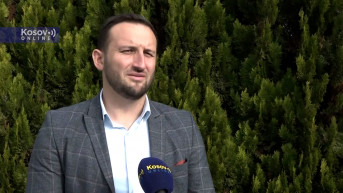
Marko Milenkovic, associate of the non-governmental organization New Social Initiative, told Kosovo Online that the fact that Serbs will once again head the four Serbian-majority municipalities in northern Kosovo means that citizens will now have legitimate representatives who will take their views into account.
“This will be a key change, given that the previous officials in those municipalities lacked legitimacy, as they had received only around a hundred votes — a situation entirely different from the current one. In that sense, I expect a positive shift: that citizens’ opinions will be heard and that communication between citizens and local self-government will be restored,” Milenkovic said.
He noted that the illegitimate authorities in the north, who have been in office since 2023, made a series of problematic decisions that may be difficult to annul or reverse their effects.
“Nevertheless, with a serious and dedicated approach to such issues, positive changes are possible. The situation will be more challenging if there is no political change at the central level, since it is the central level that determines the approach and dynamics at the local level. If we see a change of government in Pristina, there could be a positive shift. However, if that does not happen, or if the process of forming institutions remains blocked, I believe we will continue to face a certain level of tension between the central and local authorities — resulting in ongoing problems, communication difficulties, and conflicting positions,” Milenkovic explained.
He added that much will depend on how Self-Determination and other political parties choose to view the north.
“Will they continue to see it as a platform for their electorate, or as a battleground — as they say — against Serbia? Or will they accept these results and recognize these political representatives as legitimate, realizing that in the coming period they will have to cooperate with them? That would also improve relations between communities in Kosovo,” he emphasized.
With the change of power in northern municipalities, Milenkovic pointed out that the central authorities will now lack the local mechanisms they previously used to push through certain decisions, controversial positions, and behaviors of local representatives.
“They will have to organize everything from the central level, as they will likely not have direct communication with local representatives in that regard. Essentially, everything depends on what kind of government we will have in Pristina and how much influence it will have on the local level. But I expect better civic representation, that citizens will once again trust their local authorities, and that the situation we have had for nearly the past three years will not be repeated,” he said.
Milenkovic also observed that Self-Determination is not pleased with the results of the local elections.
“Last night, nearly all opposition parties declared some form of victory in certain municipalities, while Self-Determination remained restrained. If we compare the results with the previous local elections, the situation is somewhat similar for Self-Determination, as they have never had much influence in many municipalities. On the other hand, compared with their performance in the parliamentary elections, we can say that Self-Determination has failed to translate its parliamentary strength to the local level. This is most evident in Pristina and South Mitrovica — where Self-Determination had its strongest focus — and both of those municipalities are now heading to a second round,” Milenkovic noted.
He concluded that Self-Determination does not focus on local issues, citizens’ problems, or everyday life, but rather on nationalist rhetoric — which is likely why their results at the local level were not as strong as they had expected.


comments