
Milenkovic: No concrete pressure from the international community aimed at resolving the political crisis
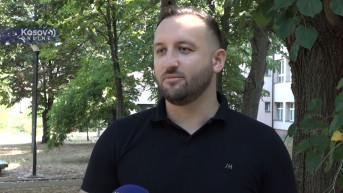
Marko Milenkovic from the NGO New Social Initiative in North Mitrovica told Kosovo Online that there are some opinions suggesting that with a change of government, Kosovo might re-establish better cooperation with the international community, but he emphasized that at this moment it is difficult to assess what the interests of Kosovo’s allies actually are.
He observed that there are no concrete activities or pressures from the international community directed toward resolving the political crisis in Pristina.
“We occasionally have statements, primarily calling on political entities to focus on resolving the situation and to reach compromise, but nothing concrete. There are calls from the international community saying that pressures on the Constitutional Court are inappropriate and that tensions must be reduced and institutions unblocked,” Milenkovic said.
He believes it is important to recognize that the Self-Determination Movement government has to some extent undermined relations with the international community, and that perhaps since 2008 Kosovo’s status within the international community has never been more critical.
“The relationship between the international community and Kosovo is under certain strain because the previous government undertook many unilateral actions and did not want to make compromises,” he assessed.
With a possible change of government, he believes some change would likely occur, whereas if Self-Determination remains a key actor in the coming period, he does not expect significant changes.
“We have seen that they do not view cooperation with the international community as a key factor in advancing Kosovo’s positions internationally. We know that Kosovo still lacks progress towards membership in international organizations, as well as in terms of international recognitions. Self-Determination has contributed to the fact that the international community is no longer so actively engaged in advocating for Kosovo. Even allies who were once active in this regard have not been so in the past few years—primarily the U.S. administration, where we saw a change of government,” Milenkovic said.
At this moment, he noted, it seems everyone is waiting to see whether the new U.S. administration will engage more actively on the Kosovo issue, recalling the example of the Washington Agreement from Donald Trump’s previous mandate, when an initiative suddenly appeared without much room for negotiation, rather by imposing a certain agreement or solution that political actors at the time had to accept.
“On the other hand, we have the European Union, which is rather inactive, probably preoccupied with other issues, primarily between Ukraine and Russia, but also with its own internal problems. We do not have the strength of the EU as a stabilizing factor capable of producing a solution or influencing political decisions in Pristina, since the relationship between the Self-Determination government and the EU has not exactly been ideal. There were disagreements then, and there are disagreements now,” he noted.
For the opposition to get a chance to take initiative, he explained, Self-Determination would need to unblock the process, since it still holds the situation in its hands. He believes that institutions would be unblocked if the Constitutional Court proposed that parliament nominate a candidate for Speaker from the opposition ranks.
“In such a situation, Self-Determination might be forced to compromise, because in recent weeks and months we have seen they are unwilling to do so, as they are certain they cannot form a government, and for them that would mean losing their position of power. With a change of conditions, we would likely reach a situation where the opposition plays a more active role in resolving the crisis,” Milenkovic said.
He believes that the PDK, as the party that won the most votes after Self-Determination, along with the LDK, might be able to reach a compromise and change the situation in the institutions.
“However, I think we are still closer to new elections than to any political compromise,” Milenkovic concluded.


0 comments