
Milic: Osmani less controversial for the West, appeared more independent of Kurti’s policies in the US
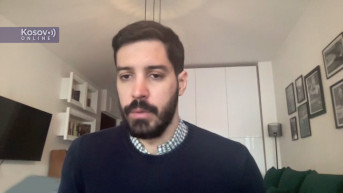
Program Director of the organization New Third Way, Dimitrije Milic, assessed that the meetings Kosovo officials had in the US were largely ceremonial, while Kosovo’s President Vjosa Osmani appeared more independent of the policies of caretaker Prime Minister Albin Kurti.
“I would say that Osmani comes across as more independent of Kurti’s policies, given that Kurti’s government, through its policies, has largely brought about a kind of political isolation by Western states. Osmani is therefore less controversial and less directly associated, from the perspective of Western leaders, with those policies. This is primarily due to her position, which is different from the head of the executive branch of government who bears the greatest responsibility, and therefore also the greatest accountability for the negative consequences of policy,” Milic told Kosovo Online.
Commenting on Osmani’s meeting with Trump, and her subsequent statement that she had important discussions in the interest of Kosovo at the reception for President Trump in New York, Milic said it was a ceremonial encounter that produced a photograph.
“Considering the large number of leaders present at that event, if we look at the time the American president could devote to each individual leader, it was very little. I would rather say the meeting was ceremonial in this case, but from the perspective of the Pristina government it is still very important to appear at international events and meet world leaders, because that sends a message that they are recognized by certain relevant states,” Milic noted.
He emphasized that due to the “history of the 1990s” and the “political investment in the Kosovo issue,” most Kosovo leaders can expect a “relatively decent reception” in the US.
“The question is how to get out of the current position of the Kosovo government, which involves doubts among Western actors due to various escalatory measures that have triggered crises,” Milic explained.
As another key issue, he pointed out the problem of small, unrecognized states.
“There is always the problem that they must fight for relevance in today’s world. When there are many crises and many troubled regions, the greatest risk for them is to become irrelevant. In other words, the biggest problem for the Pristina government would be to become politically invisible to the US,” Milic stressed.
He added that this risk is heightened by the wars in Gaza and Ukraine, as well as the US’s “Pacific issues” concerning China.
“In competition with those topics, it is not always easy to assert oneself as relevant. That is perhaps the greatest objective challenge, one that is not necessarily tied to the actions of a particular government. However, the actions of the previous (Kosovo) government did contribute to greater isolation and reduced political recognition by Western leaders,” the analyst argued.
Asked how shaken Kosovo’s international position is, Milic underlined that for Pristina the greatest risk is becoming “less relevant” to the states that have recognized it and failing to present itself as an “important issue.”
“If Kosovo becomes less relevant as a topic, and other issues such as the war in Gaza, the war in Ukraine, or the US-China confrontation in the Pacific become more important, then the Kosovo issue cannot rise high on the agenda, and Western officials cannot devote much focus to it, nor provide much support. Beyond this element, which is the objective relevance of the issue in the current global context, there is the second element – Kurti’s previous government’s policies, which were a burden for Western states when speaking about the stability of our region. That second element influenced Kosovo’s reputation and stability,” Milic concluded.

0 comments