
Milic: Possible gradual thawing of the dialogue until May; the CSM is the most problematic for Pristina

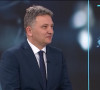
Political scientist Dimitrije Milic believes that after the meetings of Western Balkan leaders in Skopje, although the gathering was mostly focused on the economy and the Western Balkans' approach to the EU, there could be a "gradual thawing in the dialogue, likely until May of this year". This is considering that, as he assesses, a certain part of the EU's diplomatic capacities will be directed towards it.
Milic assesses that the talks with representatives of the United States and the EU held on the sidelines of the official meeting of regional leaders in Skopje, were of exceptional importance for the issue of normalizing relations between Belgrade and Pristina.
"The meeting was dedicated to economic topics and the question of how Western Balkan countries can achieve higher growth rates and boost their economies with European assistance, both in terms of reforms and direct financial aid linked to the pace of reforms. We receive assistance in line with the implementation of reforms. So, that emerged as the central message of the gathering, rather than the issue of resolving relations between Belgrade and Pristina," Milic said for Kosovo Online.
He assessed that the most beneficial aspect for Serbia had been that Serbian President Aleksandar Vucic had had a meeting with the Assistant Secretary of State for European and Eurasian Affairs James O'Brien, who was a new member of the US administration and an important figure dealing with the Western Balkans issue.
O'Brien, Milic emphasizes, will be particularly influential if the US Democratic Party renews its mandate, including the current President, in November of this year and remains in power for the next four years.
"Nevertheless, the central message of the Western Balkan leaders' meeting pertains to economic issues and the ongoing approach of the Western Balkans to the EU," Milic says.
Commenting on Pristina's announcement to abolish payment transactions with Serbia, Milic believes that the meeting between O'Brien and Serbian President Aleksandar Vucic in Skopje and Davos will yield results on that matter.
He expressed confidence that discussions on this issue between Belgrade and Washington would continue, and the US would make efforts to contain the new crisis.
"This is a question about which I expect more discussions between Belgrade and Washington in terms of how to overcome the mentioned crisis, considering that it is extremely important for Washington that the Serbian community in Kosovo has a clearly defined position, as it is a guarantee of stability throughout the Western Balkans," Milic said.
He points out that it is not in the interest of the United States for this region to be unstable, emphasizing that it is only a matter of form in resolving the problems.
"So far, for some issues, the US has been more efficient than other Western countries, primarily European ones such as Germany and France. Therefore, Mr. O'Brien is the best interlocutor for this topic because reaching some higher circles of US foreign policy, such as Secretary of State Antony Blinken or the President or Vice President, is quite challenging unless the crisis is extreme or approaching a state of war. When it comes to Blinken, he is quite focused on the issue of Ukraine, relations with China, and the Middle East. So, O'Brien is the most important interlocutor with whom one can currently discuss from this region, given the major crises in the world," Milic noted.
When asked to comment on Kosovo Prime Minister Albin Kurti's message to separate Kosovo's European integration from the normalization process with Belgrade, and whether this could be interpreted as Kurti's announcement that he would continue to block the dialogue, Milic believes that this initiative will not bear fruit. This is because, as he says, the EU has conditioned these two processes for both Serbia and Kosovo for a reason.
He emphasizes that Kurti is trying to implement this idea to avoid forming the CSM.
"I think the idea is that this approach, from their perspective in Pristina, allows for European integration to proceed, for negotiations to start, and for candidate status to be obtained, while on the other hand, the formation of the CSM is not implemented. The CSM is the most problematic aspect for Pristina in the normalization of relations between Belgrade and Pristina. If it is integrated within the framework of negotiation chapters, then you cannot avoid implementing it if you want to progress in the sphere of European integration. So, in that regard, I think that is Kurti's desire, which I, of course, think is not realistic. Brussels has not decided without a reason to tie the implementation of the points of the Ohrid Agreement to the negotiation process; they did this precisely to avoid political games by Western Balkan political actors," Milic concluded.


0 comments