
Milic: The Western Balkans are important in the geopolitical positioning of the EU
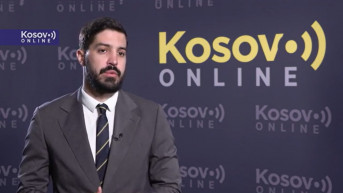
Dimitrije Milic, Program Director of the organization "New Third Way," believes that the new European Commission will have the task of implementing a more efficient EU foreign policy in the geopolitical positioning of Europe, which is why it will focus on strengthening its influence "in its own backyard," namely in the Western Balkans.
"Ursula von der Leyen already announced in the previous European Commission that it would be a geopolitical commission, meaning that it would not only deal with technical and bureaucratic issues but also with a more efficient foreign policy aimed at positioning the European Union on the global stage. It is difficult to expect the EU to be more influential outside its immediate region if its internal backyard, represented by the Western Balkans, is not fully pacified, relationships are not fully normalized, and those states do not become EU allies, if not full members," Milic stated for Kosovo Online.
He assessed that the war in Ukraine has renewed the EU's focus on the Western Balkans, but the region's importance was highlighted by the migrant crisis.
"Certainly, the war in Ukraine has brought to the forefront the issue of the EU's foreign and security policy, including towards our region. However, I would say that migration is the issue that has most emphasized the importance of our region," Milic stresses.
He recalls that the migrant crisis, which began in 2014, reached its peak after four years and continues to this day.
"If our regional states had not cooperated in this area, it would have appeared much more chaotic and problematic for the EU. In terms of migration and security, the Western Balkans are very important to the European Union," Milic emphasizes.
He adds that the economy will remain at the top of the cooperation agenda because the EU is the largest economic partner for all the Western Balkan states.
"In all the countries of our region, the EU is the main economic partner. Due to geographic proximity, they are naturally oriented toward the EU, and that is why it is difficult to politically ignore the Union if you are economically tied to it by nature and geography," Milic reminds.
He believes that the issue of EU assistance to the Western Balkans is simultaneously a matter of political communication between regional leaders and EU officials.
He is confident that, despite negative attitudes toward the newly re-elected President of the European Commission, the region's leaders will find a way to establish good cooperation with her and with all members of the new European administration.
"Despite potentially negative views on Ursula von der Leyen, they will have to find a way to work with her and with other members of the European Commission who will be in office for the next five years," Milic concludes.


0 comments