
Milivojevic: CEI is an important mechanism that enables the EU integration processes to move faster
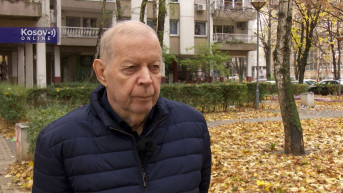
A meeting of the foreign ministers of the Central European Initiative was held in Belgrade, and according to former diplomat Zoran Milivojevic, it remains an important mechanism that enables EU integration and transition processes to move faster and more efficiently, with concrete projects and engagements. He assesses that Serbia’s chairmanship was successful in every sense, and says that Serbia, as a member of the presiding trio, will in the coming period help the region gain momentum in EU integration and enable the CEI to play the role it has and deserves.
Milivojevic recalled that the CEI was among the first initiatives established after the fall of the Berlin Wall, at the initiative of Italy and Austria, in order to assist the processes of change and transition that arose with the fall of the Berlin Wall and the disappearance of the Soviet Union.
It was precisely the CEI that played a key role so that, from 1991 when it was founded, a large number of states joined the EU, including as many as ten countries in 2004, former members of the Warsaw Pact, Milivojevic told Kosovo Online.
"Today as well, the Central European Initiative has that function and represents one of the mechanisms that puts regional cooperation based on concrete projects in the foreground, projects meant to provide infrastructure, a favorable economic and market environment, so that the conditions for competitiveness can be created for a faster and easier accession to the EU. It also has the role of creating a favorable political environment, bearing in mind what was inherited after the fall of the Berlin Wall, especially in the Western Balkans after the wars of the 1990s," Milivojevic explained.
He notes that compared with other initiatives, such as the Open Balkans and the Berlin Process, the CEI has a significantly broader reach, because it includes all the countries of Central and Southeastern Europe, including Ukraine, as well as because of the role it plays in EU integration.
According to him, the CEI has greater potential to prepare the space and groundwork for easier accession to the European Union. Within it, a more favorable economic and political environment is created, along with conditions for different countries to cooperate with one another through different mechanisms of regional cooperation.
In that sense, he mentions examples of trilateral cooperation, such as the one Serbia has with Romania and Bulgaria.
"In that regard, the Central European Initiative has no competition. It also functions as an international organization in the international-legal sense because it has a parliamentary assembly, while the Berlin Process and the Open Balkans are initiatives based solely on the will of a smaller group of states and strictly on projects tied to that scope. Meanwhile, the CEI’s reach extends across the entire EU space according to the principle of concentric circles. The effects of cooperation can also extend to other areas, because the initiative covers a significant part of the EU and eurozone market," our interlocutor notes.
The cooperation among CEI member states, he says, can always be further improved, especially now that EU enlargement policy is "returning through the front door" and geopolitics is dominant, that is, when the interests of member states of the initiative align with those of countries that are not in the EU.
This particularly applies, he adds, to our region and to the EU’s eastern policy, since Ukraine and Moldova are CEI members.
In the CEI’s statutory documents, Milivojevic notes, there is room to enhance cooperation along all lines. Regional cooperation dominates, and it is only a matter of political will, concrete projects and financial structure.
"Now that the EU has an interest in non-member countries as well, the CEI may gain in importance and dynamism. Its policy and philosophy of existence and action fully align with the interests of the EU. It is precisely in this context that Serbia’s chairmanship is important, because it strengthened Serbia’s capacity for accession negotiations and opened space for strengthening regional cooperation, which is, after all, a priority of its foreign policy," Milivojevic says.

0 comments