
Milivojevic: Continuation of dialogue with Belgrade key to Kosovo’s European path
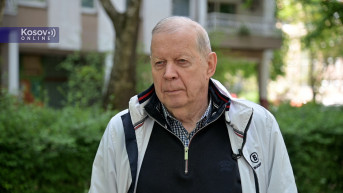
Former diplomat Zoran Milivojevic stated that conditions have been created for the continuation of talks between Brussels and Pristina on Kosovo’s European future after the European Union lifted measures against Kosovo, but emphasized that the unblocking of the dialogue with Belgrade will be crucial for that process.
“This has created the conditions, in procedural terms at the level of the European Commission, for the accession process to continue. It should be recalled that the Commission signed a Stabilisation and Association Agreement with Kosovo, because the EU itself cannot do so, as five member states do not recognize its unilaterally declared independence,” Milivojevic told Kosovo Online.
Another limitation Kosovo faces, he said, relates to its political system—namely last year’s institutional blockages and the possibility of new elections if a new president is not elected by April 28.
“On that depends whether the political system functions in formal and legal terms, as well as the potential opening of negotiations, because the questionnaire is a step that precedes the start of negotiations and entails a comprehensive screening of the political system of a state, entity, or any candidate. The questionnaire is the most important procedural step toward opening negotiations,” he explained.
The political context in this situation remains a major issue, he added, stressing that the continuation of the Belgrade–Pristina dialogue is key when it comes to Kosovo’s negotiations with the EU.
“The dialogue is blocked. Positions are diametrically opposed. Serbia firmly maintains that no substantive negotiations are possible unless Kosovo fulfills its obligation under the 2013 Brussels Agreement, namely the establishment of the Association of Serb-majority Municipalities. The Self-Determination authorities are not prepared to fulfill this, nor were previous ones, but the current government is not ready,” Milivojevic said.
He recalled that the European Union emphasizes the need to consider the statute of the Association of Serb-majority Municipalities before the Constitutional Court of Kosovo, which is a condition both for accession to the Council of Europe and for unblocking the dialogue. Milivojevic added that he is not optimistic about the possibility of continuing the dialogue due to the lack of readiness of the authorities in Pristina to engage on this issue.
According to him, there is a tendency to accelerate the process with Kosovo for geopolitical reasons. He added that in this context one should also take into account the assessment of Marta Kos that Kosovo has made progress.
“This means that there is a geopolitical context that places both this region and the Kosovo issue within the broader intentions of eastern policy, concerning Ukraine and Moldova, that is, to accelerate these processes ahead of a major outcome in the war in Ukraine. There is a strong current within the EU pushing the Kosovo issue—both toward the Council of Europe and in terms of European integration—and in the short term. This grouping is led by Germany. It also has the support of some other countries, the so-called hard wing, which is tied to geopolitics, the Russian issue, and the political conditions that now dominate,” he noted.
Within that framework, Milivojevic says, Albin Kurti and the current authorities in Pristina are attempting to position themselves by making concessions to Brussels.
“They are making concessions of various kinds. They are fully aligning with everything Brussels demands, and Mr. Konjufca’s stance should be viewed in that context. They are trying, through an active policy of sidelining Serbia and by using the geopolitical context, to ensure that the Kosovo issue remains on the agenda,” the diplomat pointed out.
As he added, Kosovo is currently in the background in the context of ongoing developments on the international stage.
“In this process, the American line is absent—there is no such support when it comes to Kosovo—and this is an obstacle to accelerating the process, regardless of EU efforts. I repeat, the most important criterion and the key to unblocking and accelerating the process is the continuation of the Belgrade–Pristina dialogue, but at this moment there are no conditions for that. Another issue is that the EU is biased. Mr. Sorensen, based on everything we have seen so far, as well as the foreign policy service—namely Ms. Kaja Kallas and Ms. Marta Kos—all three are aligned in recognizing Kosovo as a state and act from that position. I believe this will be a key obstacle to the continuation of substantive dialogue,” Milivojevic concluded.

0 comments