
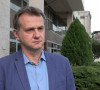
Milivojevic: It's high time for the UN Security Council to speak out; we expect an objective approach

Diplomat Zoran Milivojevic emphasized that Serbia's request for an emergency session of the United Nations Security Council (UNSC) reflected the complexity of the situation in Kosovo, which was more challenging than ever, pointing out that today's move – the attack by the Kosovo Police on enclaves in the southern part of Kosovo – demonstrated the clear intention of Kosovo Prime Minister Albin Kurti regarding the ethnic cleansing of the Serbs. He adds that it is high time for the UNSC to speak out and that he expects an objective approach, even though the current presidency is held by a country that has recognized Kosovo.
Stressing that the security of the Serbs in Kosovo is entirely jeopardized, Milivojevic assesses that there should be no issues, and members, despite the majority having recognized Kosovo's independence, are expected to accept Serbia's call for a discussion in the UNSC. According to him, an additional motive for the session is that KFOR and UNMIK 'must wake up'.
"By today's move, the attack on enclaves in the southern part of Kosovo and Metohija shows a clear intention of ethnic cleansing of the Serbs. These are enclaves with fewer than a thousand inhabitants who exclusively live on aid from Serbia, and the intention of the Pristina authorities, led by Kurti, to carry out ethnic cleansing is clear," Milivojevic said for Kosovo Online.
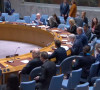
He recalls that the Security Council is primarily responsible for security and the normal state of life in those areas. Therefore, he assesses that the request for a session is entirely justified, aligning with the UN Charter, the tasks of the Security Council, and the provisions of Resolution 1244.
Therefore, it is high time for the Security Council to speak out.
"There should be no issues even though the majority of the current permanent and temporary members of the Security Council have recognized Kosovo. However, the situation is such that it is simply expected that they accept the discussion in the Security Council," Milivojevic believes.
Milivojevic emphasizes that this session is politically important for Serbia because it signals that Kosovo is under the authority of the UN in the Security Council, that Resolution 1244 is in force, and that the primary responsibility for preserving the Serbs in Kosovo and preventing further escalation on the ground lies with the UN Security Council.
It is high time, he emphasizes, for UNMIK and KFOR to wake up.
"So what is unnatural, both in terms of the situation on the ground and the behavior of a part of the international community with responsibility on the ground, since they practically control KFOR through NATO, their absence on the ground and silence is precisely the motive for why the Security Council must take a certain stance," Milivojevic said.
The diplomat also points out that Serbia is facing the most difficult situation so far regarding the protection of its state and national interests.
It is natural, he believes, for Serbia to address the competent authority and make it clear that Kosovo is not a state, that it is an entity under the UN protectorate, and that it is necessary for the UN to reach an agreement on this.
"I simply expect there not to be a dispute. I have in mind that I have statements, especially the statement of the State Department, which is sharper than the EU statement and shows that despite the support for Kosovo from Western centers of power, there is still an element of understanding the realpolitik on the ground, understanding that the situation could escalate, that the political climate and environment in Kosovo and Metohija are in danger, and that there is an understanding for Serbia's positions at this moment, and I would say understanding for Serbia's arguments when it comes to the behavior of the Kosovo side," Milivojevic stated.
According to his assessment, it should be taken into account that this is the first sign of distrust by some Western centers of power, primarily the United States, towards the policy pursued by Kurti.
The situation in Kosovo, he points out, distances Western centers of power from their interest in reaching a solution through dialogue that would suit everyone's interests and lead to some normalization in favor of resolving the Kosovo issue.
Serbia, Milivojevic recalls, can certainly count on two Security Council members - China and Russia, and can count on those states that have not recognized Kosovo.
"However, the country currently presiding over the Security Council has indeed recognized Kosovo, but we count on an objective assessment of the situation on the ground, and I would say we count on a somewhat different approach to this issue that we have seen through statements from Brussels and Washington. So, an understanding that it is not in their interest to escalate this matter to a higher level and that this may be an instrument for them to act towards Kurti," Milivojevic stated.
He emphasizes that the instruments of the international community against Pristina have so far proven ineffective, on one hand, due to the lack of political will from Western centers of power that have recognized Kosovo, and on the other hand, due to Kurti's exclusivity in implementing measures and actions.
This is an opportunity for Western centers of power to use this mechanism to find a way to return the matter to the political and diplomatic arena and to resume dialogue, considering that this definitely separates all of us from a genuine dialogue and political solution.
"I think that, at this moment, escalation is not in the interest of Western centers of power either," Milivojevic stated.
When asked whether holding a Security Council session along with personalized letters to all leaders is sufficient to inform the global public about all the problems of the Serbs in Kosovo, the diplomat believes that it is an important element in any case.
"It's never enough, I must say because the situation there has escalated, but this is the beginning of the message that Serbia will be determined to defend its state and national interests, will no longer make any concessions to the Pristina side, and it is the last moment for the broader international community, not just this part that supports Kosovo's independence, to be informed about the situation on the ground. It is one of the elements of Serbia's approach in the coming period, in addition to relying on international law and the arguments derived from it," Milivojevic concluded.

comments