
Whose interest is it to prevent a discussion in the UN Security Council about the situation in Kosovo from being heard?
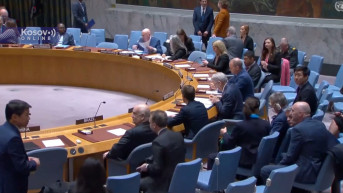
Since 2018, when Great Britain, during its presidency of the UN Security Council, omitted the regular report on Kosovo from the agenda under the pretext that "there are more important issues", efforts have been ongoing by certain countries to sideline the Kosovo topic from the table of the "world government". The regular reports of the UN Secretary-General on UNMIK's work are no longer submitted four times but only twice a year. If tomorrow's session on Kosovo at the UN Security Council is held behind closed doors, as some Kosovo Online interlocutors believe, it will be another attempt to conceal the facts of what the Serbs in Kosovo are going through.
The possibility of tomorrow's UN Security Council session, during which the UN Secretary-General's report for the period from March 19 to September 18 will be discussed, being closed to the public was announced by Antonio Guterres himself. He stated that a change in format would allow for a "more candid discussion".
In New York, Serbia's positions will be presented by Prime Minister Ana Brnabic, while Kosovo will be represented by President Vjosa Osmani.
Closed sessions of the UN Security Council are not unusual, but when it comes to Kosovo, the practice in the last 15 years has been to keep them at least partially open to the public. This is why Guterres' announcement raises questions about who would benefit at this moment from the discussion of the situation in Kosovo not being heard outside the East River hall.
The obligation to hold UN Security Council meetings on the situation in Kosovo arises from UN Security Council Resolution 1244, which requires the UN Secretary-General to "report at regular intervals" on the implementation of this resolution.
Sociologist Vladimir Vuletic says for Kosovo Online that one of the reasons behind such a possibility is the desire to avoid making disagreements between the United States and Great Britain, on one side, and Russia and China, on the other, regarding the need to keep the Kosovo issue on the UN agenda, as well as to prevent the public from gaining insight into the facts of the terror imposed by the Pristina authorities on the Serbs.
"It should be noted that the United States and Great Britain have been trying for some time to dilute, if not remove the Kosovo and Metohija issue from the agenda. What is expected is significant disagreement on this issue between Russia and China on one side and the United States and Great Britain on the other," Vuletic said.
He adds that closing the session for the public aims to avoid greater publicity and the display of this disagreement, especially when Western media have been consistently stating that the matter is closed, and there is nothing more to discuss.
"In that sense, the closing is an attempt to, at least concerning the public, keep this issue closed," Vuletic believes.
At the same time, he points out that the UN has a certain interest in concealing the fact that this is another issue where there is no agreement in these challenging times when there is no consensus on many issues in the world, and when the UN is losing its significance.
"This would further undermine the integrity of the UN if they still have it at all," he adds.
In his opinion, closing the session to the public would be more beneficial for Pristina than for Belgrade.
"And just like Western allies, Pristina does not want to emphasize this issue and let it be known how much terror this regime is actually inflicting on the Serbs," Vuletic says.
As he adds, the only new information that could be heard concerning what is happening in Kosovo are the figures related to the current Pristina authorities' terror against the Serbs.
"Numbers and facts are the only things that are new and not some kind of speculation or beliefs, but facts, and that's what should be somehow hidden from the public," he believes.
Long-time diplomat and former ambassador to the United Nations, Branko Brankovic, tells Kosovo Online that UN Security Council meetings have been closed to the public many times, particularly during crisis situations. However, he does not recall any UN Security Council session on Kosovo that has been closed to the public up to now.
Brankovic explains that during open sessions, besides the media, representatives of various UN missions are present. In crisis situations, UN Security Council members may sometimes want to discuss the most crucial matters among themselves, and then decide whether to publish the stenographic records.
He explains that the decision to hold an open or closed session is made at the beginning of the meeting. It requires a majority to agree and vote "in favor of" closing the session.
"It's a procedural matter. It requires nine 'in favor' votes, and there are no vetoes for this. Before the session starts and before everyone gathers in the meeting room, there is a large room next to it where daily consultations are held. In that room, everyone tries to reach a common denominator beforehand to avoid a debate during the session. They discuss whether or not the session will be closed. Whether the session will be closed remains an open question, as well as who will propose it and whether it will have nine 'in favor' votes for it to pass," our interlocutor says.
Brankovic notes that a closed session means no press, no representatives of any mission, and then a decision is made on whether the stenographic records, which contain the speeches of the representatives, the discussions, and everything else, will be printed and made available to everyone in all six official languages or not. He says that stenographic records are made not only for the Security Council but for the sessions of any UN body, in a single copy provided to the Secretary-General. The Security Council decides whether to distribute them or not.
"I don't know who will request that this session be closed to the public, but I have the impression that it will be those who do not want the public to hear once again everything that Serbian President Aleksandar Vucic said at the UN General Assembly and the truth about Kosovo,“ Brankovic assesses.
Brankovic also notes that he wouldn't be surprised if the session were postponed.
"Don't be surprised if, at the last minute, a request is made to postpone the session. I wouldn't be surprised because it's still too fresh, and someone from our side might want to reveal to the whole world what's happening in Kosovo," he stated.
Brankovic is convinced that three countries – Great Britain, France, and the United States, would be eager to postpone all this. However, as he adds, they can propose it, but the proposal needs to be voted on.
"It remains to be seen, besides the two votes from Russia and China, how the remaining nine will vote," Brankovic said, pointing out that there was a division concerning Israel when the Russian resolution received five "in favor" votes, four "against" votes, and six Security Council members abstained.
He adds that even if the session is closed or postponed, there will be stenographic notes, and the distribution of those notes will be decided by voting, without the right of veto on that decision.
0 comments