
Milivojevic: Serbia prevented a “chain reaction” of Kosovo recognitions in Africa
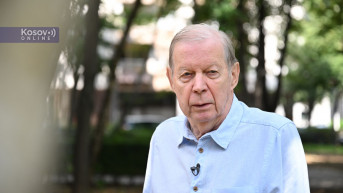
Former diplomat Zoran Milivojevic stated that Serbia, thanks to its active “engagement,” prevented a “chain reaction” of Kosovo recognitions in Africa, adding that this part of the world is a component of Belgrade’s foreign policy strategy.
“Visits to these African countries are not only in the interest of Kosovo and Metohija, but also strategic in nature. It should be borne in mind that these visits also serve to strengthen what is Serbia’s foreign policy strategy: returning to areas where, as a state, we have ‘credit’ from the past. That was the foundation of the Non-Aligned Movement,” Milivojevic told Kosovo Online.
Commenting on the recent “African tour” of Serbian Foreign Minister Marko Djuric, as well as Kosovo’s recognitions earlier this year by Kenya and South Sudan, Milivojevic said that this part of the world is a “global subject of interest.”
“Africa is a continent now on the rise and of interest globally. For Serbia, it is a continent of special importance. The majority of countries that have not recognized Kosovo and Metohija are precisely from Africa,” Milivojevic said.
He particularly emphasized the “Mediterranean line” formed by Morocco, Tunisia, and Algeria, as well as other countries such as Egypt, Nigeria, and South Africa.
“Egypt at one point recognized Kosovo, but behaves entirely differently,” he said.
The former diplomat sees Serbia’s interest in Africa as stemming from a foreign policy approach based on political independence and military neutrality.
“The practical philosophy of non-alignment is something inherent to Serbia’s conduct, and it leads to contacts and the development of cooperation with those countries,” Milivojevic explained.
At the beginning of the year, Kenya and South Sudan recognized Kosovo, but Milivojevic says that thanks to the engagement of Serbian diplomacy, the “chain reaction effect” that Pristina had hoped for was prevented.
“(Kosovo) received one recognition, and another one that has not been fully verified. I mean South Sudan. That remains an open question as to what exactly happened. But most of Africa is on our side, and that is why these visits and investments in engagement in Africa make sense,” Milivojevic asserted.
He stressed that no new recognitions of Kosovo should be expected in this part of the world.
“There is no chance that countries that have not recognized it will change their position. The climate globally is shifting. Therefore, even this new recognition, especially that of Kenya, has none of the expected effects, and there is no chain reaction. On the contrary, these visits in a way prevent that and disprove the possibility of such a process,” Milivojevic emphasized.
He noted that many African countries understand the Kosovo issue.
“A good number of those countries know the essence of the problem. Those that have not recognized it certainly take it into account because they act according to their own interests. Also, Africa is experiencing a new process of decolonization; some countries are freeing themselves from the influence of foreign powers, and this is especially true for sub-Saharan Africa, the area where Djuric recently visited. He was in Ghana, Benin… countries that understand the meaning of independence, that understand the principles of international law and the protection of sovereignty and territorial integrity. In that sense, I think Africa is a favorable ground and an area in which future investment is essential, and the choice of Africa and these countries is no coincidence,” the analyst explained.
He emphasized that Africa and Central America are the two “most important regions” for Serbia.
“After Central America, these are the two most important areas when it comes to projecting and defending our state and national interests. The choice of those countries and that continent is an absolute answer to that issue,” the former diplomat concluded.


0 comments