
Milivojevic: Serbia will no longer negotiate on the issue of Kosovo's status
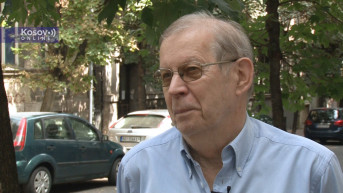
Former diplomat Zoran Milivojevic has assessed that the events in Banjska were expected, and Belgrade had long warned that something like this could happen. The main message afterward is that Serbia will no longer negotiate on the issue of Kosovo's status, RTV reports.
Milivojevic stated that he had the impression that the interests of the Pristina side and a foreign factor that had had an interest in extricating Kosovo Prime Minister Albin Kurti from a difficult situation had coincided with the events in Banjska.
He emphasized that the United States would not decide on Kosovo because Kosovo was a matter of the state of Serbia, not the US.
"It concerns a part of our territory. We will either recognize it or not, and since we won't, Serbia will no longer discuss Kosovo's status. Let that be clear, and that is the message. What President Aleksandar Vucic said still holds. Such will be the stance in future negotiations, whatever they may be. Therefore, even the Ohrid Agreement, if it implies de facto recognition, should be forgotten," Milivojevic says for Tanjug.
He added that in the coming period, Serbia would reactivate an issue relevant to Kosovo, which was UN Security Council Resolution 1244.
"There is no question of the US or Germany deciding on it. Time and the right conditions will decide when Serbia will give it up. Cyprus has not controlled the north for 50 years, but they have no intention of giving it up," Milivojevic said.
As he stated, just because Serbia was facing forceful actions didn’t mean it should give up on itself.
He stated that it did not mean giving up Kosovo but giving up one's own state.
"Serbia is a full-fledged member of the UN in internationally recognized borders, including Kosovo and Metohija. From now on, we will only talk that way, at least I hope so. We've reached the end. What should we talk about if someone shoots our people? The main message after all this is that Serbia will not give up its national interest and its people. However, the Serbs will not accept another Operation Storm," Milivojevic concluded.
He pointed out that Belgrade had long warned that the escalation happening in Kosovo could have unforeseeable consequences, and unfortunately, this had happened with the shooting in Banjska. The reasons for this were twofold.
"The Pristina side took measures and actions to serve specific interests that, on the one hand, created tensions on the ground through repression and elements that jeopardized the safety of the population in Kosovo and Metohija. The other aspect is that there were no reactions from the foreign factor on the ground, which is largely responsible for stability and security on the ground, I mean primarily KFOR but also EULEX, as well as the political structures that have an influence on Pristina," Milojevic explained.
All of this created an environment where some kind of resistance was inevitable, he stresses.
"Daily arrests, without any rights or mechanisms for protection, pushed the patience of the Serbs to the limit, and this is the result. Now we have a situation where it will be very difficult to get out of. This has rendered irrelevant many things that were relevant, such as dialogue and the political process, and now it's a completely new situation," Milojevic said.
He added that we still did not have a complete picture of what had happened in Banjska because we were only informed from one side, from the Pristina side.
"We are entering a period where it is very important to establish some form of control on the ground, determine the factual situation, and prevent new incidents because now we have dead people there. It's not the same story anymore, especially when it comes to the Serbs," Milojevic concluded.
He does not believe in Pristina's investigation and believes that the essence was to create some sort of balance and that Serbia should be put in a position of being responsible for the situation.
He reminds that the events in Banjska were preceded by unsuccessful negotiations in Brussels and criticism of Kurti, who was on the defensive.
Then, he adds, there was New York, where Serbia, at the meeting of the United Nations General Assembly, received full confirmation of the principles and positions it advocates in defense of its interests regarding Kosovo, verifying its political stance. Both of these elements elevated Serbia's position for future negotiations and the political context in which the dialogue was supposed to continue.
"And then, two days later, this happens in Banjska. I have the impression that there is a strange coincidence here, but that at one point the interests of the Pristina side and a foreign actor with interests in extracting that Pristina side from its previous position somehow aligned. The essence is to save Kurti, that concept that implies cooperation between Kurti and the foreign factor, and to verify Kosovo's statehood. In other words, to put Serbia in a situation where it has to recognize Kosovo," Milivojevic says.



0 comments