
Milivojevic: Without the CSM and the release of the arrested Serbs, there will be no peace in the north of Kosovo
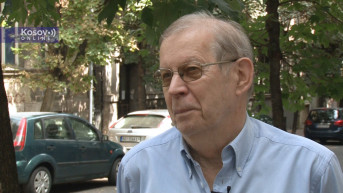
Former diplomat Zoran Milivojevic believes that the release of some of the arrested Serbs from northern Kosovo is the result of US pressure on Pristina and that Washington sees the release of the Serbs who have been detained in recent months as one of the de-escalation measures, Blic reports.
"I think that Washington sees, among other things, the release of the arrested Serbs as one of the measures for de-escalation. In addition, a few days ago, the US Envoy for the Western Balkans, Gabriel Escobar, spoke about the need for Pristina to form the CSM, and this was repeated by the German Envoy for the Western Balkans, Manuel Sarrazin," Milivojevic says.
That is why, as he says, de-escalation in the north of Kosovo could go in two directions.
"One is the formation of the CSM, and the other is the release of the arrested Serbs. I think that both Washington and Brussels, that is, EULEX, realized that the measures of arresting the Serbs, which have no basis in criminal law, must be reconsidered and that the CSM must be put on the agenda. Without that, there will be no peace and stability or local elections in the north of Kosovo," Milivojevic analyzes.
He adds that "Time is running out for the West".
"It is in the interest of Washington and Brussels to bring the Serbs back to the negotiating table and to discuss the Ohrid Agreement. The West wants to resolve at least the first phase of the Kosovo issue this year because next year, the US and EU elections are also on the agenda. At the same time, Washington and Brussels do not want to jeopardize Kosovo's statehood on that path," Milivojevic concludes.
The President of the Board of Directors of the Forum for Ethnic Relations, Dusan Janjic, points out that the Prime Minister of Kosovo, Albin Kurti, is "holding back and giving in".
"Kurti is slowly taking proactive steps towards de-escalation, but also in order to confirm the new reality in the north of Kosovo, which he established to some extent by sending the Kosovo Police and Albanian mayors to the buildings of Serbian municipalities. In this way, he shows that he is preparing not only for local elections in the north but also for parliamentary elections in Kosovo. The opposition in Pristina understood this too," Janjic assesses.
As he says, the problem for the Serbs is that they have become the subject of an international confrontation between Kurti and the opposition.
"The reduction of the presence of 25 percent of the Kosovo Police in and around the municipal buildings in the north of Kosovo and the release of the arrested Serbs on bail are signs but not good enough to de-escalate the situation. The security crisis is still present," Janjic analyzes.
He adds that the release of the remaining arrested Serbs depends on many things.
"This technology was not previously agreed upon because it is a fallacy of the Kumanovo Agreement. For comparison, in 2012 our police arrested Kosovo policemen who crossed the administrative line and entered central Serbia and then quickly released them because they treated it as a misdemeanor. However, when three Kosovo policemen were arrested this year, criminal charges were filed against them and that was obviously a response to Kurti's moves. So that also depends on the relationship between Belgrade and Pristina, but I believe that over time and the remaining Serbs should be freed," Janjic concludes.



comments