
Miller: EULEX not involved in operations in the north; closing institutions could destabilize the situation

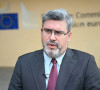
Head of the Media and Public Relations Office at EULEX, Nicole Miller, stated that EULEX is not involved in the operations carried out by Kosovo institutions in the north, adding that the mission acts only as an observer and, if any irregularities are noticed, reports them to the competent authorities, Teve 1 reported. She emphasized that the issue of institutions operating within Serbia’s system must be resolved properly through dialogue, as mishandling it could destabilize the situation in the north.
When asked how she assesses some of the actions taken by Kosovo institutions in northern municipalities to close “Serbian parallel structures,” Miller explained that EULEX’s mandate is to conduct robust, systematic, and thematic monitoring of selected cases throughout the entire chain of the criminal justice system, including the police, in order to evaluate whether Kosovo institutions respect their human rights obligations.
“That’s the summary. You mentioned that we were involved in this. EULEX is not involved in operations taking place in the north. We are present in some of them, not all, in an observer capacity. And if during our monitoring we notice any shortcomings, what do we do? We refer the matter to the competent authorities,” Miller told Teve 1.
She added that the EU has repeatedly stated that all issues related to “parallel structures” must be resolved through EU-facilitated dialogue.
“This must be kept in mind, it is very important,” Miller underlined.
Asked how EULEX assesses the situation in the four northern municipalities, she said that the situation is stable and calm, but fragile, as has been evident in recent years.
Therefore, Miller explained, EULEX continues to monitor developments to ensure the safety of all communities in Kosovo, which remains a top priority.
“I would like to explain in a bit more detail how we operate, because EULEX does not act in a vacuum. We are part of Kosovo’s security mechanism, which consists of three pillars. The Kosovo Police is the first, responsible for security in Kosovo. EULEX is the second, and KFOR is the third. That’s what I mean when I say we don’t act in a vacuum. EULEX is ready to intervene if requested and if necessary to ensure the maintenance of public order, but as I’ve said before, the security of all communities remains our priority,” she explained.
When asked about the recent increase in gendarmerie presence, Miller recalled that in September EULEX accepted the deployment of the Reserve Formed Police Unit (RFPU), which effectively doubled its patrolling capacity.
“We have a Formed Police Unit consisting of 105 Polish officers who patrol 24 hours a day, mainly in the north. With the RFPU, we have now doubled our patrol capacity. Why are they here? They arrived just before the local elections, on October 12. They came from EUROGENDFOR, the gendarmerie forces based in Vicenza, and through the EU member states they can contribute to missions such as EULEX. The RFPU includes officers from France, Italy, the Netherlands, Poland, and Portugal. So, it’s quite mixed, and this is the sixth RFPU deployment in recent years. It is nothing new; we also had them earlier this year, during the general elections in February,” she clarified.
Asked if that means the number of gendarmerie officers has increased, she confirmed that it has, but only temporarily.
“Duties are being carried out as usual. We assess the security situation, patrol 24 hours a day. The reserve police unit is ready to assist if requested or needed. This ensures that the security situation remains as it is. It is also a clear message, by deploying both primary and reserve units, EULEX shows that we are not here only to advise and monitor, but are also prepared to intervene if requested and necessary,” Miller said.
Commenting on whether any signs of destabilization have been observed during patrols in the four northern municipalities, she repeated that the situation remains calm and stable, but fragile.
“I can give an example. The closure of parallel structures, especially in education and healthcare, could lead to destabilization in the north. As we have already said, it is important that the closure of parallel structures be handled properly, that is, through EU-facilitated dialogue,” she said.
When asked how ready EULEX is to respond in case of increased tensions, Miller said the mission is prepared to assist since it patrols around the clock.
“We are ready to help. But, as I said earlier, we do not act in a vacuum. EULEX cannot decide to intervene on its own. We operate within a responsible three-pillar security system, the Kosovo Police, EULEX, and KFOR. We act with our partners, we coordinate with them, that is very important. And this coordination is not only necessary, it is excellent,” Miller said.
She added that if cooperation were not excellent, the three-pillar security system would not function.
“If everyone acted according to their own agenda, it wouldn’t work. But we are here for the safety of all communities, that remains our priority. The three-pillar security mechanism is vital,” she added.
When asked about the Banjska case, Miller said it is important that everyone responsible, not only for what happened in Banjska, but for all incidents, be brought to justice.
“We regret the loss of every officer on duty. As you know, proceedings regarding the Banjska case are ongoing. At this moment, we will allow justice to take its course. What’s important to us is that all those responsible, not only for the Banjska attack but for everything else that has happened, are brought before justice. That is very important to us. Everyone must be held accountable, not just for Banjska. But since judicial proceedings are underway, we will let the authorities do their job and let justice take its course,” Miller concluded.

0 comments