
Kostic: Announced lifting of sanctions on Kosovo sends a positive signal to Pristina
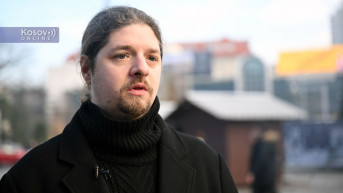
Mijat Kostic, an associate of the New Third Way, told Kosovo Online that the European Union is not in a position to choose sides when it comes to relations between Belgrade and Pristina. He emphasized that the announced lifting of EU sanctions on Kosovo can be interpreted as the sending of positive signals in the continuation of the European integration process.
Kostic assesses that everything contained in yesterday’s final resolution of the EU–Western Balkans Summit in Brussels indicates that Brussels has “woken up” to the region.
“Perhaps a somewhat greater focus is now being placed on the region than in previous years and decades. The main reason for this is, of course, the consolidation of the European Union as a whole, particularly in geopolitical terms at a time when there is increasing talk of confrontation with Russia. More and more European leaders are even openly stating that an open conflict between Russia and European countries is possible. In this context, the Western Balkans are important not only as an economic space enabling the EU to complete its market, but also as a geopolitical space that would allow it to territorially round out the Union and deter Western Balkan countries from moving closer into Russia’s embrace,” Kostic said.
He added that one of the Summit’s key focuses was the common foreign and security policy.
“We see that a somewhat more proactive diplomatic offensive points in that direction. This is evident from what is written in the joint statement adopted at the end of the Summit—the focus is on the common foreign and security policy, which certainly relates to the stance toward Russia. All other elements related to the common market and an accelerated process of integration into that market are essentially overshadowed by the geopolitical and security dimension,” he noted.
Asked whether the lifting of sanctions on Kosovo, announced yesterday by President Vjosa Osmani, represents a boost for Albin Kurti and whether the EU has thus chosen a side, Kostic stressed that Brussels is not in a position to choose sides at all.
“The EU views relations between Belgrade and Pristina as something that needs to be normalized on a bilateral basis, as the European Union sees it. Essentially, they keep repeating the same messages: support for dialogue and support for regional integration. In that sense, the lifting of sanctions can be seen as a way of sending positive signals and as an incentive for Kosovo and the Western Balkans more broadly, conveying the message that they will receive support for accelerated integration,” Kostic said.
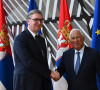
He drew a parallel between statements made by António Costa and Ursula von der Leyen regarding Serbia and assessed that, when compared to the European Parliament’s resolution, those statements were conciliatory.
“Representatives of the European Commission are taking a much more positive approach toward Serbia than the European Parliament. This may be part of an executive diplomatic offensive—an attempt to provide positive feedback to Western Balkan countries in order to keep them on course and to send a political message that the European Union is now more prepared for enlargement than it was a few years ago. In conclusion, I would not describe this as bias, but rather as a form of diplomatic action aimed at encouraging the other side to continue reforms within its system and to proceed with the European integration process,” Kostic concluded.
0 comments