
Miskeljin: Osmani’s messages from the US are baseless political marketing
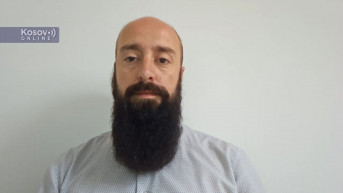
The visit of Kosovo President Vjosa Osmani to the United States was primarily aimed at creating political capital that could benefit her on the domestic political stage, according to Marko Miskeljin, associate of the Center for Social Stability. He told Kosovo Online that the real chances for economic cooperation with Washington are limited, mainly due to a lack of political stability.
"Vjosa Osmani wants to use her visit to the US to build political capital, primarily with the aim of advancing her political career – by presenting supposedly strong relations with the new administration, she is trying to project her own political weight," Miskeljin said.
He believes this is more about pre-election promises, especially given the political situation in Kosovo.
"The provisional institutions are struggling to form. For any kind of agreement of that nature, a broader political consensus is needed, as well as political stability. So, at this moment, these should primarily be interpreted as political messages that resonate well with voters," Miskeljin explained.
Commenting on Pristina’s attempts to get closer to Washington through economic channels, he noted that it is difficult to assess whether those efforts have any real foundation.
"But we shouldn’t expect too much, because aside from the political stability we mentioned, it’s hard to see any economic capacities that would interest the United States, except perhaps accommodation facilities for illegal migrants, which has been speculated on in recent months," he added.
He said that Kosovo could interest potential investors with certain mineral resources, but that this cannot compare to Serbia’s economic offerings.
"When we talk about US interest in Serbia and in economic cooperation, the scope is much broader, whether we’re talking about energy, mineral wealth, capacities for serious production, or the potential for creating a larger and more serious economic exchange with the US. Resources such as a highly educated workforce are something American companies greatly need, so there really is a wide range of potential there," Miskeljin emphasized.
Asked how Pristina’s economic positioning might affect dialogue with Belgrade, he mentioned the Washington Agreement.
"If we remember the Washington Agreement, it essentially provides the answer. It was primarily about economics, and the focus was indeed on economic matters. However, since it was signed, we have seen constant tensions and escalation on the ground from the Pristina side, while even the guarantor in Washington has changed. Under the Biden administration, there has been no insistence on that agreement," he noted.
He concluded that if there were genuine willingness on Pristina’s part to focus on peaceful coexistence through economic cooperation, it could be a positive signal, but he doesn’t believe that’s the case.
"That should be everyone’s primary goal, but at this moment, and based on what we see on the ground, it appears to be nothing more than a message for purely political purposes," Miskeljin concluded.



0 comments