
Mitic: Germany has destabilized the region in recent years, while the U.S. is trying to maintain balance
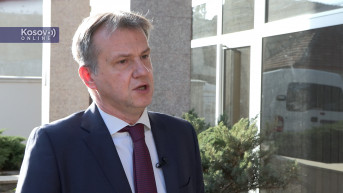
Aleksandar Mitic, a research fellow at the Institute of International Politics and Economics, believes that if Republican Donald Trump were to become U.S. president, it could shift U.S. policy on Kosovo in favor of the Serbian side. However, if Germany and the EU increase their influence in the Western Balkans following the U.S. election, it would likely mean continued support for Kosovo’s Prime Minister Albin Kurti, who, Mitic points out, is exerting constant pressure on the Serbian population.
Mitic highlights a report by the German Council on Foreign Relations, which states that the U.S. role in the Western Balkans will be reduced regardless of the election outcome, emphasizing America's intent to withdraw from the region and Germany's role as a stabilizing factor.
“What we know, and I agree with the analysis here, is that after the election, we won’t have a Biden administration that has been, unfortunately, negatively linked to this region. The reality is that under Biden, there has been serious destabilization in Kosovo to the detriment of Serbian interests, a situation for which Germany's administration holds the most responsibility,” Mitic told Kosovo Online.
He notes that Germany has, in recent years, contributed to regional instability by supporting Kosovo’s former Prime Minister Ramush Haradinaj and current Prime Minister Albin Kurti, which has been detrimental to the Serbs and in favor of Albanians. Similarly, Germany has influenced Bosnia and Herzegovina by exerting pressure on the Republic of Srpska through High Representative Christian Schmidt and other measures.
According to Mitic, a Trump victory in the upcoming U.S. presidential election would not be favorable for Germany.
“The analysis clearly anticipates a potential Trump administration, which certainly wouldn’t suit Germany. We know the historical conflicts the Trump administration, and specifically Richard Grenell, had with Germany. Many of the disagreements between Germany and the U.S. over Balkan policy during Trump’s time in office centered on conflicts between Germany and Grenell, the former U.S. ambassador in Berlin,” Mitic explained.
He adds that although Grenell was not ideal as Trump’s representative, he acknowledged some Serbian interests and contributed to stabilizing relations and promoting economic normalization.
“We haven’t seen anything like that under the Biden administration; instead, we witness a unilateral threat to Serbian interests, a policy of support for Kurti, which he enjoys and exploits to the fullest,” Mitic observed.
The Germans, he notes, fully support Kurti, while the U.S. tries to maintain a balance so as not to completely “lose” its connection with Belgrade.
However, looking at recommendations from the German Council’s report, Mitic expresses doubts about any significant reasons for optimism.
“Their recommendations include a whole set of mechanisms for applying further pressure on Belgrade—strategies like using Kaja Kallas, as Borrell’s deputy, to push a more aggressive policy toward Belgrade, leveraging the Western Balkans Growth Plan as a tool to pressure Belgrade, and using the Berlin Process and a special envoy to compel Serbia to make even more concessions than it has already,” Mitic noted.
According to Mitic, the only positive development for the Serbian side within the triangle of the U.S., either administration, and Germany would be a Trump victory, which could introduce a different dynamic in U.S. policy toward the region.
“Under a potential Harris administration continuing Biden’s policies, there won’t be significant shifts despite Harris’s lack of experience and interest in the region. The U.S. administration and State Department will not abandon the Balkans or pressure on Serbia, even if interest from the White House decreases,” Mitic stated.
He observes that both U.S. and EU policies have generally been unfavorable to Belgrade.
“It’s essentially a choice between two evils. Looking at the situation in Kosovo and Metohija, the lack of interest in improving conditions for Serbs, and the policy of both implicit and sometimes open support for Albin Kurti’s actions, alongside the Quint’s harsh pressure and ultimatums on Belgrade regarding Ohrid, really raises the question of which is better,” Mitic emphasized.
Mitic adds that it would be extremely unfavorable for Belgrade if Germany were to lead EU policy. On the other hand, he observes that the current U.S. policy has been inconsistent, sometimes playing the “good cop, bad cop” routine.
“A shift with Trump’s administration coming in could potentially change that dynamic, and from this perspective, the U.S. role could be important in terms of putting pressure on Kurti, because who will pressure Kurti? The last administration to do so was Trump’s, with Grenell. Since then, everyone has let him do as he pleases. From this angle, a stronger U.S. role could be valuable as a means to exert pressure on Kurti,” Mitic suggests.
However, the outcome of the elections remains uncertain.
According to Mitic, the U.S. can afford to reduce its involvement in the Balkans and pay less attention to Kosovo, effectively lowering its level of engagement.
“The EU cannot afford that, and Germany doesn’t want to; it wants to play that crucial role and has certain mechanisms to do so. However, if Germany doesn’t change its approach and continues with the policies we’ve seen under Scholz and Baerbock, it will be extremely detrimental to Serbian national interests. We should certainly do everything we can to prevent this continuity and push for a policy change as much as possible,” Mitic concluded.


comments