
Mitic: The UNSC session will have positive results for Belgrade and the Serbs in Kosovo
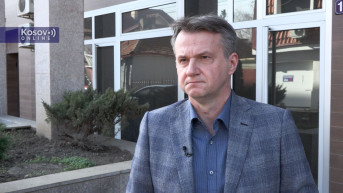
Aleksandar Mitic, a research associate at the Institute for International Politics and Economics, assessed that last night's UNSC session will certainly have positive results for both Belgrade and the Serbs in Kosovo.
"This session has shown that there is a clear division in the Security Council between those who support the Republic of Serbia and its territorial integrity, Resolution 1244, which is something we expected. On the other hand, we noticed that there are some nuances even among the recognizers primarily. The fact is that we had sharp criticism from France, I would say we had a moderate approach from the United States, which did criticize Pristina while emphasizing that the UN and the Security Council should not be a place to discuss Kosovo, which is their position that will not change, yet the United States were milder than Great Britain, which seems to have been the most stringent, or least critical of Pristina. It's as if they were the ones behind supporting Kurti to implement such a decision. For them, as well as for some other countries, such as Switzerland, the main problem was communication, meaning that it was not sufficiently communicated to the Serbs in Kosovo," Mitic said for Kosovo Online.
He emphasized that the tone had been such that the focus had shifted to the idea that "this is not something that should have been done this way, but that Pristina had the right to make such a decision".
"This is the stance adopted by the recognizers, and there is a danger for Belgrade and Kosovo Serbs, namely that we are entering a period in which we will negotiate and in which Kurti will communicate as he said he would address citizens of Serbian nationality in Kosovo in Serbian and tell them that it won't be so bad if the possibility to use the dinar is abolished. We have a story that is strategically a long-term victory for the Quint and Pristina in the sense that they have managed to elevate this to a level where we will have to negotiate at some point about something that was their unilateral step. On the other hand, I think this was an important tactical, and potentially strategic, victory for Belgrade. There is a conflict between these two strategic goals - on one hand, Pristina's and the Quint's aim to somehow put this issue of the dinar on the agenda, to discuss it and to legitimize it through some future process through negotiations," Mitic says.
On the other hand, as he emphasizes, there is potential for Belgrade and the Serbs to win in the sense that this way the position and vulnerability of the Serbs, ethnic cleansing, are brought to the attention of the entire world public.
"It is interesting that a large part of the Security Council members spoke about it; some countries like Mozambique used the clear term 'crime' against the Serbs. It was clear that there was serious argumentation used by the Russian Federation with a lot of details, precise and sharp formulations, and criticisms, even those that Belgrade sometimes cannot diplomatically address towards Western countries, which in my opinion is very useful. China was somewhat shorter but very precise regarding the essence of yesterday's issue, as well as the status of Kosovo and Metohija," he emphasizes.
If we consider everything, as he says, given the composition of the Security Council where we have 10 recognizers and five non-recognizers, he believes that yesterday's session showed a serious understanding of the problems facing the Serbs in Kosovo.
"However, we should be cautious about the tactic employed by both Kurti and the Quint countries, which is to gradually impose new topics on us with escalatory moves, thus each time we increasingly enter into the legitimization and legalization of what he calls the territorial integrity of Kosovo," Mitic warns.
He adds that it was impossible to expect any resolution or concrete conclusion from last night's session.
"I don't think that's realistic. What is certain is that we heard a firm and clear stance from the Russian Federation, and a sharp stance from Algeria, which spoke precisely about specific problems, which may have been a bit surprising. I would say that the course of the session itself showed that the recognizers, especially those who support escalatory tensions, found themselves in a kind of defensive position. Pristina was indeed on the defensive during the session, and the fact that practically no member spoke without at least requesting a decision to be postponed speaks to that, but that shouldn't encourage us too much," he says.
He emphasizes that this session will certainly have positive results for both Belgrade and the Serbs in Kosovo.
"In front of the global public, the issue of Serbs in Kosovo and Metohija has been brought to light, the situation has become more visible than before, and this could lead to some positive shifts. The pressure on recognizers and those who sponsor Kurti and push him into escalatory moves will be greater, as they cannot 'under the radar' participate in what they are doing without the spotlight of the global public. They are trying, and this is a tactic that has been around for a long time, to pressure the Serbs in Kosovo by creating impossible conditions, in order to press Belgrade to accept all the provisions of the Franco-German plan that are absolutely unacceptable. This plan largely implies Serbia's relinquishment of Kosovo, which is unacceptable. There will be a positive effect in terms of a positive delay; perhaps some modus operandi will be found for the functioning of financial transactions in the near future, but I don't think it will lead to a particularly positive solution in the long run. We see that Western countries continue to insist that this decision is justified and legitimate for them, and they will certainly pressure Belgrade to find a compromise," he said.
Reflecting on the speeches of Serbian President Aleksandar Vucic and Albanian Prime Minister Albin Kurti, the interlocutor of Kosovo Online says that their messages were addressed to both domestic and international audiences.
"We saw Kurti's messages, which were mostly focused on well-known stories about how Albanians were constantly oppressed, how it was a process of decolonization, which he wanted to convey to the Security Council, as well as that they are great historical victims, Milosevic, Russian malign influence; it's the standard narrative he tries to use to influence Western public opinion, but that argumentation doesn't resonate. We've seen how some of his arguments are shallow and disconnected, sometimes appearing absurd. On the other hand, Serbia's positions were quite coherent and well-organized, and I believe they managed to show the essence - the systemic oppression of the Serbs that led to the onset of ethnic cleansing with the potential to intensify, which could indeed have tragic consequences not only for the Serbs but also for regional stability," Mitic concluded.

0 comments