
Mitrovic: The opening of the Bridge will depend on Kurti's assessment of whether a new escalation benefits him
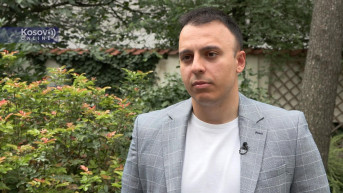
The opening of the main bridge on the Ibar would be another in a series of unilateral moves by Pristina that would lead to further provocation of the Serbs in the north, said Sava Mitrovic from the Center for European Policy to Kosovo Online, adding that he doesn't see anything positive coming from unilateral actions that haven't been agreed upon in dialogue.
Regarding the latest argument by Kosovo Prime Minister Albin Kurti—that the bridge should be opened because the government wants to respect freedom of movement and that it will help trade, the economy, and cooperation—Mitrovic says that Pristina has demonstrated in many instances that the principle of freedom of movement for people and goods is not its highest priority.
"There is no objective traffic or infrastructure reason why this bridge must be opened for vehicular traffic. It is open for pedestrian traffic, people freely cross from one side of the Ibar to the other, and vehicular traffic has its routes over the Ibar. Pristina has repeatedly refused to participate in the Mini-Schengen initiative, later the Open Balkan initiative, which was launched from Belgrade and advocated together with Tirana and Skopje, despite committing in the Washington documents to be part of this initiative. Moreover, Pristina has taken unilateral measures that are entirely contrary to CEFTA arrangements concerning goods coming from central Serbia, showing that the principle of freedom of movement for people and goods is not its highest priority," says Mitrovic.
Whether the Kosovo government will actually open the bridge during the summer, as previously announced, despite the EU's position that such a decision should be made within the framework of dialogue, according to Mitrovic, will depend on the political assessment of Albin Kurti, who faces parliamentary elections.
"It will depend on his assessment of whether some escalation in the north benefits him politically, whether it benefits him to show his primarily Albanian voters that he is consistently fulfilling his promises. I would remind you that according to the Self-Determination program, North and South Mitrovica should become one municipality, thereby effectively reducing the influence of the Serbs, limiting them to three municipalities in the north where they would retain a majority, while Mitrovica, as an important city and crossroads, would be entirely under Albanian control," Mitrovic emphasizes.
While bridges in epic tradition and literature typically symbolize connection and freedom, the bridge on the Ibar is, according to Mitrovic, specific because it symbolizes discord and separation between the Albanian and Serbian people.
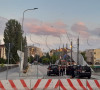
He emphasizes that it is also a symbol of the resistance of the Serbs from northern Kosovo, who erected the first barricades there in 2011, protesting against Pristina's unilateral moves to establish control in northern Kosovo.
"This is yet another in a series of unilateral moves by Pristina, which I don't know the reasons for, but in any case, it leads to further provocation of the Serbs in the north and a continued feeling that something is wrong. And all of this is happening in a context where the Serbs don't have their elected representatives, where Albanians with really limited legitimacy manage the municipalities in the north. Here we are primarily talking about the municipality of North Mitrovica, where the regional police commander, who should effectively implement this decision, is an Albanian, even though according to the letter and spirit of the Brussels Agreement, this must be a Serb, appointed by the Ministry of Internal Affairs," says Mitrovic, who believes it is very important for the Serbs to return to the institutions to enable dialogue with the local community.

0 comments