
Mojanoski: Turkey has special power in the Balkans, NATO members are arming, but so are non-members
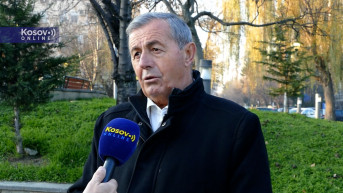
Countries in the Western Balkans that are members of NATO follow the Alliance’s policy when it comes to armament, but countries that are not part of NATO also have a need for appropriate armament, Cane Mojanoski, a university professor from Skopje, told Kosovo Online.
Mojanoski recalls that we are also witnessing increasingly louder announcements within the European Union that it needs to build its own European army.
“After World War II, and especially during the 1990s, a thesis began to develop that the world could live and exist as a peaceful community by reducing armaments, particularly after the fall of the Berlin Wall, when conditions were created for the arms race to be relegated to images of the past, but we are obviously too optimistic in that regard. In recent years, we have witnessed increasingly louder announcements within the European Union that it needs to build its own European army, because NATO capacities are significant, but European identity is probably also linked to armies and military capacities,” Professor Mojanoski believes.
He further says that with the arrival of a new administration in the United States and America’s turn inward, or toward its own interests, the question has been opened of Europe’s and European countries’ concern for their own defense.
“We are also witnessing that a significant number of European countries, especially those that are the backbone of the European Union, have earmarked a significant amount of funds this year and in the budgets for next year for building their own military capacities. In that context, these developments should be viewed. This is further influenced by the war in Ukraine and Russia’s aggression in that country, as well as differing concepts and approaches of European countries and the United States regarding finding a peaceful solution, that is, ending the war in that country.”
When it comes to the Balkans, countries that are part of NATO follow the Alliance’s policy and behavior with regard to armament, Mojanoski says.
“Here we can include Macedonia, Albania, Bulgaria, Greece, and if you wish Turkey, on the one hand. But on the other hand, you have a number of countries such as Serbia, Kosovo, and Bosnia and Herzegovina that are outside the NATO alliance and which, according to their own assessments, have a need for appropriate armament. Particularly significant here is the policy and behavior of neighboring Serbia, which is investing heavily in the military and defense preparations. According to Global Power, the four countries with the greatest military strength in the world are the United States, Russia, China, and India. Serbia is somewhere around 62nd place. On the Balkan Peninsula, Turkey has particular power, ranking ninth in the world in terms of armament. Then Greece is in 30th place, followed by Romania in 51st place, Hungary in 55th place. Croatia is in 74th place, Albania in 68th place, Macedonia in 112th place, and Montenegro in 127th place,” he recalls.
Professor Mojanoski also believes that we are witnessing that, in addition to the purchase of weapons, some possible military alliances were publicly declared last year, for example between a NATO member such as Croatia, Kosovo, and Albania.
“This was more or less read as a verbal announcement of a threat to Serbia’s sovereignty and, in general, military confrontation, which in one way or another reflects the global trend present in Europe. We should say that attempts by the United States to find a solution directly with Russia for the war in Ukraine more or less return to Europe narratives and discourses, and if you like strategic policies, that were characteristic of the early 20th century and the period between the two world wars. Armament should be viewed in the context of possible strategic shifts that may arise in Europe and possible strategic interests of individual countries within Europe itself. Modern states, although modern in many respects, nevertheless retain old characteristics of the state in certain aspects. And that is territorial sovereignty and military power, military power that expresses the strength or overall ability of a given country to influence or penetrate a certain area,” he states.
Asked whether this is only preventive strengthening of defense capacities or showing muscle to neighbors, he says that there are two dimensions.
“It is preventive in terms of the capacities of countries, especially countries that are in a defense alliance, the NATO alliance, and they follow the policy of that Alliance. But the fact is that Europe is an area with many different interests, and within those interests certain remnants of policies that we call the manifestation of muscle-flexing can be recognized. This also includes the emergence of certain desires to realize great-state dreams in the Balkans, which exist on almost every inch of its territory and which, through historical periods, unfortunately ended very tragically for security, for lives, and for the material goods of the peoples who live there,” Mojanoski points out.



0 comments