
Muhaxhiri: EC report is a warning for the Kosovo Government, no substantial progress toward EU without agreement with Serbia
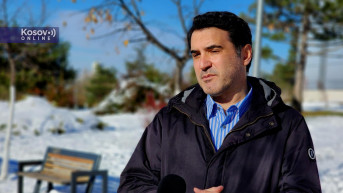
Sociologist and political analyst from Pristina, Artan Muhaxhiri, emphasized that the phrase "limited progress" was most frequently mentioned in the European Commission Report on Kosovo, representing a kind of warning for the Kosovo Government. He believes that dialogue with Serbia is essential for Kosovo's progress toward the EU.
"The European Commission reports show two elements. First, they are entirely realistic and based on objectivity, and it is very challenging to refute them. Then, they show indicators for the European orientation of countries in our region, the conditions they should meet, standards, criteria, and adjustments to progress on their European path. This report is good because it reflects the situation, and it should be an additional motivation for the government to work even harder. The phrase most often repeated is 'limited progress,' and that is the reality. Even though Kurti's party had a significant advantage after the elections, in the context of parliamentary majority, government composition, and the presidency, extraordinary progress has not been achieved. But in many areas, certain shifts can be observed. This report is a welcome reminder for Prime Minister Kurti to work even better and more dynamically in the next term," Muhaxhiri stated for Kosovo Online.
As he pointed out, without reaching an agreement with Serbia, there will be no substantial progress, and therefore, it is crucial for the international community to motivate the parties through the very well-known method of "carrot and stick."
"Efficient dialogue between Kosovo and Serbia is the foundation of European progress and the main condition and prerequisite to move forward because, without reaching an agreement between Serbia and Kosovo, there will be no qualitative progress in the region. Kosovo and Serbia are politically and emotionally connected to neighboring countries: Albania, Bosnia and Herzegovina, and Montenegro. The effect of an agreement between Kosovo and Serbia would be very influential geopolitically, and that is why it is significant for the international community to insist – 'carrot and stick' – to motivate the governments in both Pristina and Belgrade to engage as concretely as possible. Any slowing down of progress on the path will be very harmful for Kosovo, Serbia, and the entire region," Muhaxhiri added.
When asked whether Kosovo politicians have a reason to be dissatisfied because Bosnia and Herzegovina received the green light to start EU accession negotiations while Kosovo has not yet started negotiations to gain candidate status, Muhaxhiri says that the situation between Kosovo and Bosnia and Herzegovina is entirely different.
"Kosovo and Bosnia and Herzegovina cannot be compared. Bosnia and Herzegovina has progressed on the European path; Kosovo has a problem with five EU countries that have not yet recognized it. Bosnia and Herzegovina is a member of the United Nations, and Kosovo is not, and so on. Therefore, I believe it is not realistic for Kosovo to progress with that comparative dynamic; it needs to be maximally engaged in the dialogue. The gain from the dialogue should be achieved in such a way that, after its completion, both Serbia and Kosovo have a European integration agenda as their main orientation because, without that, political normalization in our region will not be established," Muhaxhiri said.
Our interlocutor believes that it is not realistic to expect that Kosovo can get EU candidate status until five EU member states recognize Kosovo's independence and that any progress toward the EU is linked to the dialogue process.
"I think the statement of Deputy Prime Minister Besnik Bislimi is not realistic because we know how slow things go in the process of European integration. The idea is that Kosovo must fulfill many other tasks and efficiently finish the dialogue because, without completing the dialogue, there will be no further concrete discussions on this issue. The dialogue is the alpha and omega of any progress. Politicians can make pompous and pretentious statements about the European future, but in reality, everything is connected with the dialogue. Nothing significant on Kosovo's European path, but also Serbia's, will be possible without this process. The sooner the dialogue is finished as a very important historical stage, the more realistic the European future of the two countries will be," Muhaxhiri concluded.


0 comments