
Raseta: Kosovo has a long way to go to the EU; criticisms from Brussels in the latest progress report expected
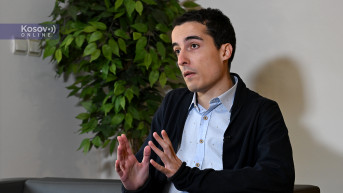
Analyst Dragoslav Raseta from "New Third Way" says that the statement of Kosovo's Deputy Prime Minister Besnik Bislimi that Kosovo does not need recognition from five EU member states to gain candidate status is a message for domestic use, and he points out that this year's European Commission progress report on Kosovo, which included numerous criticisms regarding key reforms, lack of cooperation in the dialogue with Belgrade, and the treatment of Kosovo Serbs, was expected.
He adds that the Kosovo Government, led by Prime Minister Albin Kurti, is creating numerous crises, both political and security, with its moves to cover up failures in many other reform areas.
"When you look at what the opposition is saying and the European Commission report on Kosovo, there is a certain stagnation when it comes to progress and achieving the necessary European standards, primarily in the judiciary, and also constitutional reform is needed. But economically, we see that the government of Albin Kurti has recorded modest economic growth in the last few years, leading to the strengthening of the opposition in Kosovo. Both sides use escalatory methods to draw attention away from some internal problems. This is a modus operandi for both Pristina and Belgrade," our interlocutor emphasizes.
He points out that Banjska and September 24 reminded Europe that the outbreak of an armed conflict could easily occur, regardless of whether it is ultimately determined that "the state of Serbia had control over it, or perhaps even worse, that it did not."
"Now that we have a war in Ukraine and see what is happening in the Middle East, the Balkans can quickly catch fire, and that is why great emphasis is placed on focusing primarily on the agreement reached in Ohrid, and the European integration of both Kosovo and Serbia will be closely linked to the progress they achieve in the normalization of relations," Raseta says.
He notes that "Kosovo's goal now is to achieve visa liberalization, which was expected to take effect from the new year."
"But, after the events in Banjska, and even before that, we had, I remind you, problems with license plates, and there is resistance from certain EU countries, even those that recognize Kosovo's independence, such as the Netherlands and France, to play out so quickly," Raseta notes.
Regarding the European Commission report on Kosovo, which does not recommend that it be granted candidate status, unlike Bosnia and Herzegovina, for which it is proposed to start accession negotiations, he says that the document places great emphasis on the alignment of foreign policy with Brussels, which brought a somewhat positive assessment, but on the other hand, numerous criticisms are mentioned.
"It is said that little has been done in the reform of electoral laws, in the judiciary. These are the main criticisms for both Bosnia and Kosovo, but when we look at Chapter 31, Bosnia and Herzegovina is still far ahead of Kosovo. Even achieving candidate status is more symbolic when we look at the geopolitical circumstances in which Europe finds itself, this acceleration of enlargement, looking to preserve both Ukraine and Moldova. It is a long way from gaining candidate status to starting negotiations, let alone making progress in those negotiations," Raseta emphasizes.
He reminds that Bosnia and Herzegovina submitted a request for candidate status almost ten years ago and received it only last year.
"Kosovo has a long way to go. Above all, it is impossible because the procedure itself dictates that, based on the recommendation of the European Commission, it must be unanimously agreed upon by the European Council, that is, all member states. It is difficult to see in today's circumstances that countries like Spain and Cyprus would agree to that, even some countries that recognize Kosovo. Serbia can lobby with Hungary or some others, as there are certain factors. Europe must also align within its own tracks and make a certain reform, especially when it comes to the issue of vetoes, in order to achieve any enlargement at all. So I think that Kosovo and statements like the one given by Bislimi serve to raise tensions to force Europe not to give up on visa liberalization. Bosnia and Herzegovina is far ahead of Kosovo, and the main candidates and the closest to meeting the standards required by the EU are Montenegro and right behind it, Serbia," Raseta concludes.

0 comments