
Muhaxhiri: Transparency is key for successful reception of prisoners and migrants in Kosovo
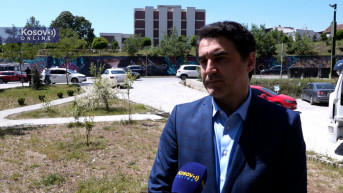
Political analyst Artan Muhaxhiri stated that the United Kingdom's decision to potentially designate Kosovo as one of the foreign “return centers” for migrants would demonstrate a partnership between London and Pristina. However, he emphasized that transparency is essential in this process, and that much will depend on institutional capacity.
“This issue has two aspects: political and institutional. As far as the political aspect is concerned, it is very welcome because it is good for Kosovo that the United Kingdom sees it as a partner in foreign affairs. However, when it comes to institutional capacities, there is a big question mark,” Muhaxhiri told Kosovo Online.
He pointed out that it is unclear how prepared Kosovo’s institutions are for such a project, and the second issue is its transparency.
“Realistically, we don’t know how ready our institutions are, but we hope there will be transparency regarding this matter. That could be used as a positive aspect, but everything depends on how professionally prepared, or how prepared, our institutions are, because this could be a very good opportunity, but it could also turn into a missed chance if not handled properly,” Muhaxhiri said.
He noted that Pristina should not repeat the mistakes made following the agreement to accept prisoners from Denmark.
“There was a significant lack of transparency. The government did not inform the public how it would be handled, what the capacities are, and so on. It created a very negative context. That must not be repeated. And if the government wants to make the most of this agreement, then it must be fully prepared, because this is a very delicate issue that must not be mishandled,” Muhaxhiri stressed.
Nevertheless, he does not believe that the arrival of migrants would endanger the security of Kosovo or the Western Balkans.
“They will be under strict control,” the analyst emphasized.
He added that the same applies to prisoners from Denmark, especially in regard to the financial challenges of such an agreement.
“The Government of Kosovo will need to reassure citizens that financial resources won’t be diverted to this project at the expense of, for example, leaving Kosovo’s own prisons in poor condition. So, it must prove that it can take on the additional responsibility,” Muhaxhiri explained.
On the other hand, he is confident that the United Kingdom will do everything to check every last detail before implementing the agreement.
“If Kosovo can do it, it will be a great acknowledgment for the government. However, if it fails to do so or if problems arise, then it will be a missed opportunity,” Muhaxhiri concluded.



0 comments