
Djurovic: Agreement with Denmark opened Pandora's box, many see Kosovo as a center for housing asylum seekers from the EU
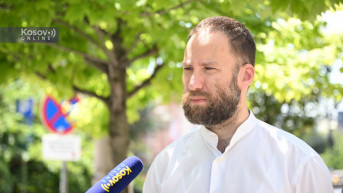
Rados Djurovic, Director of the Asylum Seekers Assistance Center, stated that the agreement on accepting prisoners from Denmark has opened a Pandora's box, as many EU countries are now considering using Kosovo as one of the centers for housing migrants whose asylum applications have been rejected.
"I would say that the agreement with Denmark on sending convicted individuals to serve their sentences in Kosovo has actually created space for many countries to think that instead of prisoners, they could also place migrants and refugees there. This has opened Pandora's box. However, it's questionable whether the Kosovo authorities or others in the Balkans would so easily agree to such arrangements when it comes to migrants," Djurovic told Kosovo Online.
He explained that setting up reception camps for migrants outside the territory of destination countries, including the EU, aims to send a “clear message” to all those wishing to come to Europe that they will face numerous problems and that “they won’t be able to stay so easily.”
“I’ll remind you that Europe chronically has a problem with returning people who have even been rejected in the asylum process. So, people who have no reason to stay in Europe often cannot return to their countries of origin due to technical and legal issues, meaning that only about 20 percent of those who were ultimately rejected and ordered to leave the EU have managed to return to their countries of origin. I would say that these measures, involving camps and relocating people outside the territories where they might seek asylum, into neighboring countries, are actually a message that people should not hope, unless they are true refugees, that they will be able to stay in Europe,” Djurovic emphasized.
He warned that this form of migrant reception involves many specific challenges, the key one being that migrants placed in such centers cannot stay there permanently.
“There needs to be some solution to this situation. One option would be to return people to their countries of origin. I don’t believe Kosovo has the capacity or the readmission agreements to implement such decisions,” Djurovic said.
He highlighted this aspect as crucial for implementing the idea of “return centers” outside the EU zone.
“In the future, when we talk about these return centers, not only in Kosovo but in the EU’s neighborhood, that would require the capacity to return people from those centers to their countries of origin, meaning that countries hosting such centers must have the ability to organize readmission,” he explained.
Another example he cited was the agreement between Albania and Italy regarding the acceptance of migrants.
Still, he doesn’t believe that even if Kosovo were to reach a similar arrangement, it would be a case of exploitation. Rather, it all boils down to differing interests, from economic to geopolitical.
“I wouldn’t speak of exploitation, because for such agreements on accepting migrants to be made, both sides must agree. And that is definitely how it works in practice. So, there must be an interest on the part of the receiving country that organizes such reception centers. That interest may be financial, economic, political, geopolitical, or otherwise. But those host countries must be motivated to enter into such agreements. I don’t see this as something that could be imposed,” Djurovic said.
He sees a key security issue in such agreements in the influx of a large number of people who cannot be returned to the countries they fled or any other place to start a new life.
“In such situations, there are never enough capacities to accept everyone and keep them permanently detained. That’s not even legally possible. That could mean releasing those people, followed by renewed attempts to cross borders along the Balkan route, involving smuggling, everything in order for those same people to reach the countries from which they were expelled and sent to the Balkans,” Djurovic explained.
He also warned that in such a situation, the only beneficiaries would be human traffickers.
“As a consequence of these policies of shifting responsibility to neighboring countries from destination countries, smuggling is only growing stronger. Definitely, along with the ‘pushbacks’ occurring toward Western Balkan countries or with such arrangements, smuggling is only getting stronger. It simmers because the needs of smugglers are increasing. These people haven’t been returned to where they could begin their lives anew, they have only been stopped along a path that isn’t final,” Djurovic concluded.



0 comments