
Munsch: KFOR is carefully monitoring the situation in the north of Kosovo, we call on all participants to refrain from provocations
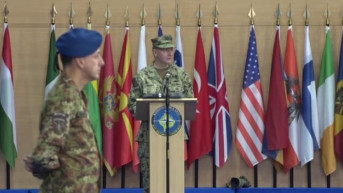
The commander of NATO forces in Southern Europe, Admiral Stuart Munsch, told FoNet today that the Alliance fully respects Serbia's proclaimed policy of military neutrality and the right of each country to choose its own path, and called on all participants in Kosovo to be in close coordination with KFOR and to refrain from provocative actions and demonstration of force, Danas reports.
According to him, more than 3,700 KFOR members from 27 countries continue to provide a safe and secure environment and freedom of movement for all communities in Kosovo, in accordance with the mandate based on Resolution 1244 of the United Nations Security Council.
"KFOR is carefully monitoring the situation in the north of Kosovo. Since October, we have been increasing our presence by adding forces, as well as patrols in the north of Kosovo this week," Munsch said.
He expects all actors to be in close coordination with KFOR and to refrain from provocative demonstrations of force, in order to maintain the safety and security of all communities.
"We call on all parties to act constructively, in order to ensure security and freedom of movement in Kosovo," said Munsch, stressing that KFOR will continue to fulfill its mandate and assessing that solutions must be sought through dialogue.
Regarding Russia's influence in the Western Balkans, Munsch said that NATO called on Moscow to play a constructive role in the region.
"Unfortunately, we regularly witness that Moscow does the opposite. Hacker activities, disinformation, intimidation and other destabilizing activities are noticeable," Munsch pointed out.
He stated that last year Russia and China acted together in the UN in order to undermine the goals of the international community to extend the European Union Althea mission in Bosnia and Herzegovina. This, he adds, is just another example of the increasingly harmful influence of Russia and China in the West of the Balkans.
Stating that NATO fully respects the sovereign right of each country to choose its own political and security arrangements, Munsch said:
"We call on Russia to do the same. It is a basic principle of European security, to which we have all committed ourselves, including Russia".
Regarding Belgrade's refusal to impose sanctions against Moscow, Munsch stated that he would not comment on Serbia's political decisions, but that NATO welcomed its support for two UN General Assembly resolutions condemning Russia's aggression against Ukraine.
Munsch assessed that Russian President Vladimir Putin made major strategic mistakes, underestimating the determination of the Ukrainian people to defend their country, homes and families, as well as the unity of NATO and its Alliance partners.
"It caused incalculable costs to the Kremlin. The illegal invasion of Ukraine led Russia to become poorer and more isolated," Munsch believes.
Speaking about the role of the Alliance in the Western Balkans, Munsch stated that NATO had a long history of supporting peace and stability in the region. As he emphasized, a new Strategic Concept, approved in June at the summit in Madrid, reaffirmed the strategic importance of the region for NATO.
"We are unanimous in our position regarding the importance of our long-term presence in the region, which is reflected in a number of different engagements, as well as through the contribution to the regional stability of the newest members of the Alliance, Montenegro and North Macedonia. In Bosnia and Herzegovina, we continue to support the Althea operation. Our headquarters in Sarajevo is included in a series of activities supporting the process of reform and modernization of defense and security structures of Bosnia and Herzegovina", Munsch said.
He also emphasized that the NATO Military Liaison Office in Belgrade facilitates cooperation between Serbia and the Alliance in several areas, according to the Partnership for Peace program.
"Our cooperation with the EU and other like-minded partners is of key importance. We will continue to work together to preserve stability and support reforms in the region, because security and stability in the Western Balkans are important for NATO, as well as for peace and stability in Europe", Munsch concluded.
Serbia has the sovereign right to create its own foreign policy and choose security arrangements freely, without any interference from the outside, Munsch said, noting that NATO and Serbia have been partners for a long time.
"We worked together to be better prepared for emergency situations, such as floods and forest fires. We are helping Serbia in the reforms of its security forces and institutions," said Munsch, adding that the Alliance trains Serbian soldiers for peacekeeping missions, Munsch said.
As he pointed out, NATO invested millions of euros to help Serbia destroy hundreds of tons of obsolete ammunition.
"We have a long scientific cooperation with Serbia through the Science for Peace and Security program, including the fields of energy and environmental security, the fight against terrorism and cyber defense," Munsch said, stating that Serbia and NATO also worked together on the training of Iraqi military doctors.
We can have strong relations with our partners, as we have with Austria and Switzerland, without them becoming members of NATO, Munsch stated.


0 comments