
Mustafa: Kurti causes an escalation of the situation in the north of Kosovo
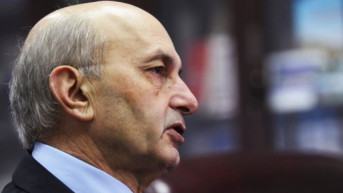
LDK MP Isa Mustafa said that Prime Minister Albin Kurti was provoking the escalation of the situation in Kosovo and the reaction of the international community, in order to get points for de-escalation, RTV 21 reports.
Mustafa believes that there was no need to tighten the situation in the north and "install" mayors of northern municipalities in offices with Special Police units.
"The problem is that Kurti is escalating the situation, but it's not just creating tension in the north, it's provoking an international reaction, and then in some form, he wants to get points for de-escalation for a situation that shouldn't have been escalated," Mustafa says.
He adds that the situation in the north became more complicated last year when license plates were discussed, and then, according to him, with the adoption of various measures that were not coordinated with international allies.
"That is the practice in the north of the country; there were large interventions, and they were done with the agreement or coordination with the Americans and the countries of the Quint, but without coordination with NATO and KFOR. Kurti cannot avoid the implementation of the agreement through various actions of escalation in the north of the country, as he has done so far," Mustafa points out.
As he adds, the 2015 CSM agreement is Kosovo's obligation to ratify the first CSM agreement from 2013.
According to Mustafa, the Ohrid Agreement reached on March 18 between Kosovo and Serbia is much more serious.
"I believe that the Ohrid agreement is much more serious than the one from 2013, which was ratified in the assembly in 2015. Now the setting of the "Community" has been changed to "self-government of the Serbian community". What the self-government of the Serbian community is, is unclear to me, if it is some kind of autonomy or association turned into self-government. To me, it looks more like a kind of autonomy of the Serbs in Kosovo, than an association. The status of the Serbian Orthodox Church is also serious, which is stipulated in the seventh point of the Ohrid Agreement," Mustafa adds.
Regarding the draft of the statute of the CSM of Albanian Prime Minister Edi Rama, Mustafa says that it was not Rama's duty, but Kurti's.
According to him, Kosovo is respected by the European Union, but the question arises whether, if the EU withdraws measures, Kosovo will have the position it had before the introduction of sanctions.
"The problem is that sanctions were introduced against Kosovo for the first time. Regardless of what the European Union says, these are sanctions, because measures have been taken that sanction Kosovo in some form, either in financial aid that Kosovo should receive, or in participation in various international institutions, or meetings. For me, the important question is what will happen when the international community is satisfied with Kosovo's behavior and withdraws sanctions, whether we will be in the same situation as we were before," Mustafa adds.
Mustafa calls the statement of the Minister of Foreign Affairs, Donika Gervalla, who called the European Union a "paper tiger" two weeks ago at the Dubrovnik Forum, completely wrong.
He points out that Kosovo cannot progress without the EU.
"I think the reactions of the Minister of Foreign Affairs were completely wrong. Gervalla cannot express herself in such a way towards the institutions of the European Union, we must be aware that we cannot move forward without the EU. We have to respect the EU," Mustafa concluded.

0 comments