
Nikolic: Kurti’s law on foreign nationals is an attempt to dehumanize Serbs
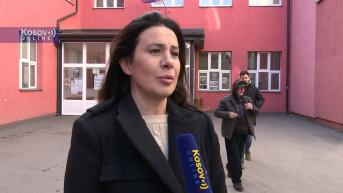
The President of the Committee for Kosovo and Metohija of the National Assembly of Serbia, Danijela Nikolic, stated today that the Law on Foreign Nationals in Kosovo, which is set to enter into force on 15 March, represents an attempt to dehumanize and delegitimize the Serbian people. She emphasized that the law jeopardizes the right to freedom of movement, the right to work, identity, and civil liberties, RTV reported.
Speaking to Tanjug, Nikolic said that Albin Kurti seeks, through this law, to draw a “red line” and assert his sovereignty, while in reality pursuing a vision of Kosovo without Serbs.
“This is an identity issue—everyone living in Kosovo and Metohija will be treated as foreigners. Kurti wants to erase our autochthonous population and claim that we are foreigners in our own country; that is the essence of this law. Anyone who wishes to enter without so-called Kosovo documents will have to report to a police officer and state the reasons for their arrival. If the purpose of arrival in Kosovo and Metohija is employment, one will be required to present confirmation from an accredited institution,” she said.
Nikolic stressed that this is an attempt—outside the framework of the Brussels Agreement, the Association of Serb-majority Municipalities, and all outcomes of the Brussels dialogue—to draw education and healthcare into the Kosovo system and subject them to accreditation.
She added that the law also constitutes an attack on the Serbian university and students studying there, as well as on all children attending school, arguing that it demonstrates Kurti’s intention to label Serbs and the Serbian community in Kosovo as “newcomers.”
Asked from whom in the international community a reaction to the implementation of this law could be expected, and whether Brussels is unable or unwilling to respond, Nikolic said that despite expectations of reactions in many other situations involving the erosion of democracy, democratic values, the rule of law, and civil liberties, parts of the international community have effectively endorsed such developments. As a result, she does not expect a stronger rebuke in this case either.
According to her, it is now up to Serbia, the Office for Kosovo and Metohija, and the Serb List to invest daily efforts to halt this process and to find a solution that would be acceptable for the Serbian people.
“The most important thing is for the international community to truly recognize the Serbian people in Kosovo and Metohija for who they are—to acknowledge that Kosovo and Metohija are the historical and cultural heritage of the Serbs there, that Serbs live there and are not foreigners in their own country. The moment the international community recognizes that the Serbian community has lived there for centuries, we can begin a genuine dialogue. Until then, they will always side with Kurti today and someone else tomorrow,” Nikolic said.
She further stated that the international community has effectively allowed and opened the door for Kurti to pursue a policy aimed at removing Serbs from Kosovo.
Commenting on the fact that the Supreme Court of Kosovo accepted six appeals related to the results of the snap parliamentary elections held in December—after the completion of the recount process and the publication of results by the Central Election Commission—Nikolic said it is evident that the Constitutional Court is the only remaining institution in Kosovo and the last bastion that Kurti has been unable to control.
She asserted that there were numerous manipulations during the elections and added that Kurti’s current result does not reflect the real situation among Albanians in Kosovo or his actual level of support, given that he received backing from 300,000 to 400,000 people living abroad who do not live under his governance and do not see the realities on the ground.
“Albanians living in Kosovo do not view things in that way. Manipulations occurred everywhere; the fact is that this is not a realistic result—no one expected 57 seats. Nenad Rasic did not win a sufficient number of Serbian votes, but secured one mandate through Albanian votes, effectively taking it from our list. In any case, the situation is far from good. It is up to us to fight for our people. Kurti cannot do anything without the Serb List, which is why it represents a barrier to all his interests,” Nikolic said.
She assessed that regardless of Kurti’s efforts to push the Serb List into a position that would irreversibly harm the Serbian community, he will not succeed because the Serb List enjoys the full support of the Serbian people.
Responding to a question about whether Kurti will be able this time to secure a majority to form a government, Nikolic said that although they have 57 seats, along with the support of non-majority communities and Nenad Rasic, Kosovo is likely to return to a situation similar to last year’s. If a president is not elected, new elections will follow.
“The deadline is 4 March, but since the mandate of the so-called President of Kosovo, Vjosa Osmani, expires on 5 March, the process then shifts to the election of a new president. The matter is far from resolved. At least 80 votes will be required to elect a president, which necessitates the support of minority representatives—support that the Serb List will not provide. The core issue is whether the international community clearly states whether it wants Kosovo and Metohija without Serbs, or Kosovo and Metohija with Serbs deprived of their rights,” Nikolic concluded.

0 comments