
Nikolic: UNMIK report does not sufficiently address the exodus of Serbs, more than 700 attacks in four years
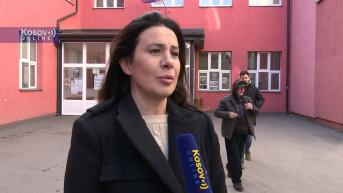
The Chair of the Serbian Parliament’s Committee for Kosovo and Metohija, Danijela Nikolic, stated, regarding the session of the United Nations Security Council at which the six-month report on the work of United Nations Interim Administration Mission in Kosovo was considered, that “the situation is difficult and fragile,” emphasizing that security risks are present on a daily basis. However, she stressed that the quiet exodus of Serbs is not sufficiently addressed in international reports.
Nikolic told RTS that the security situation is unstable and burdened by frequent incidents.
“During 2025 alone, 137 ethnically motivated attacks have been recorded, and when looking at the past four years, that number exceeds 700,” Nikolic said.
As she added, such data indicate that security risks are “present at every step and at every moment,” which further influences people’s decisions to leave Kosovo.
A quiet exodus as a key issue
Nikolic pointed out that the UNMIK report does not sufficiently address the emigration of Serbs, which, in her view, represents one of the most serious problems.
“Every institutional threat to Serbs represents a potential exodus,” Nikolic said, adding that the sense of insecurity is further deepened in situations where basic rights and identity are called into question.
Speaking about the Security Council session, she assessed that divisions among member states are clearly visible.
She noted that one part of the international community insists on respecting international law and United Nations Security Council Resolution 1244, while others support the positions of Priština, including requests for membership in the United Nations.
The UNMIK role and disputes over its mandate
Commenting on initiatives to reduce or abolish UNMIK, Nikolic emphasized that the presence of the mission is still necessary.
“Regardless of the positions of certain states, the fact is that security and institutional conditions on the ground are not such that UNMIK’s role could be considered finished,” Nikolic said.
She added that Serbia insists on strengthening the role of the mission, as well as on consistent respect for international agreements.
Nikolic stressed that the establishment of the Community of Serb Municipalities is a key issue in the Belgrade–Pristina dialogue.
“For us, it is the issue of all issues,” she said, adding that without concrete steps in that direction, no substantial progress in the dialogue can be expected.
She pointed out that it is up to the European Union to encourage Pristina to begin the process of establishing the CSM, since, as she noted, it is an obligation that has already been undertaken.
Prospects for continuing the dialogue
Speaking about the engagement of the European Union Special Envoy for the dialogue, Peter Sorensen, Danijela Nikolic assessed that his approach is somewhat different compared to the previous period and opens space for more constructive talks.
“His role as a mediator is different compared to Miroslav Lajcak, and discussions with him appear more constructive,” Nikolic said.
She emphasized that representatives of Belgrade, in talks with Sorensen, pointed to the necessity of establishing the CSM and to unilateral moves by Pristina which, in her view, further complicate the dialogue.
Referring to the daily life of Serbs in Kosovo, Nikolic pointed to increased pressure, especially ahead of major holidays.
She cited the removal of Serbian flags in Gracanica as an example, assessing that such actions further deepen the sense of insecurity and vulnerability.
“When you are denied the right to your name, script, flag, and identity, it is clear what kind of situation a people are in,” Nikolic emphasized.

0 comments