
UNSC Session on Kosovo; Due: It is important to build on what has been achieved and implement all agreements, including the CSM
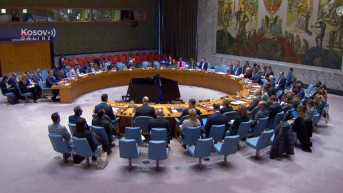
At today’s session, the United Nations Security Council considered the regular six-month report on the work of UNMIK, which was presented for the first time by the new head of the mission, Peter Due. Due stressed the importance of Belgrade and Pristina continuing to build on the progress achieved and implementing all agreements reached, including the Community of Serb Municipalities.
Presenting UNMIK’s semi-annual report, Due expressed hope that a high-level meeting within the dialogue would take place in the near future.
He pointed out that he took up his post three months ago, and that prior to that he had served in Pristina from 1999 to 2009 and in Belgrade from 2013 to 2015, returning to a region that has made enormous progress through dialogue and reforms aimed at overcoming mistrust.
“But the most significant challenges remain. I arrived in Pristina at a moment of optimism, when it was expected that Kosovo could move forward following elections conducted in a peaceful and inclusive atmosphere, marked by the participation of all communities. The swift constitution of the Assembly and Government pointed to a trajectory of progress, but a deadlock occurred over the election of the speaker,” Due emphasized.
He noted that on March 23, the Constitutional Court ruled that the Assembly had 30 days to elect a speaker, and expressed hope that differences could be overcome and new elections avoided.
Due said that democratic processes often have a very direct impact on people’s lives at the local level.
In that regard, he praised the participation of all communities in the local elections and the timely establishment of local authorities.
He stressed the importance of the return of Serbs to institutions, but noted that the process had not been without challenges.
Due said he had heard concerns about language barriers affecting the efficiency of work for the benefit of communities.
He welcomed efforts to strengthen cooperation between the central institutions in Pristina and local leaders in northern Kosovo.
He underlined that local self-government remains key to building trust.
Due also welcomed the efforts of the Kosovo Police to revitalize its services in northern Kosovo.
Since the beginning of his mandate, he said, he has focused on UNMIK’s efforts in support of dialogue and the everyday lives of people.
“I have focused on supporting dialogue, especially when it comes to everyday life. I hope for regular and continuous dialogue with the authorities in Belgrade and Pristina, despite their differing views on the work of UNMIK,” Due said.
According to him, the January meeting of the Commission on Missing Persons marked an important step forward, and he encouraged the parties to continue working on that issue.
Due also praised the EU for identifying a constructive way to implement the Law on Foreigners, which should contribute to building dialogue and trust.
“This shows that progress is possible through sustained engagement,” the head of UNMIK said.
He also recalled the UN Secretary-General’s call that the perpetrators of the Banjska attack must be brought to justice, and urged all parties to contribute to that effort.
He also referred to the media situation in Kosovo and expressed confidence that attacks on journalists would be investigated swiftly.
Due said that members of minority communities had voiced concern over inequality in access to justice, and that property rights issues remain sensitive and require special attention.
“Recent steps to strengthen the use of official languages in court proceedings are encouraging. I would also welcome the appointment of a Language Commissioner after one year,” Due said.
Djuric: Under Kurti’s policies, Serbs in Kosovo and Metohija are being marked as ‘the others’; the report does not mention their silent exodus
Serbia’s Minister of Foreign Affairs Marko Djuric stressed that, under the policies implemented by Albin Kurti, Serbs in Kosovo are increasingly being marked as “the others,” and that their identity is being used as a basis for restricting their rights, limiting their movement, and targeting their homes, property, and religious sites, while arrests, attacks, and administrative pressure are not isolated incidents, but constitute a systematic pattern of marginalization that must not be ignored.
He pointed out that it is concerning that the UNMIK report fails to mention the quiet but continuous exodus of Serbs.
He underlined that UNMIK’s role must not be diminished, but strengthened, and that UNMIK is not only relevant, but irreplaceable on the ground.
In addition, he noted that KFOR must remain the only legitimate and credible security force on the ground, fully in line with its mandate.
Konjufca: UNMIK report is one-sided; time for UN member states to recognize Kosovo
Kosovo’s Minister of Foreign Affairs and Diaspora, Glauk Konjufca, at the UN Security Council session accused UNMIK of submitting a report containing controversial and one-sided elements that do not reflect the situation on the ground, and called on member states of the world organization to recognize Kosovo and for the UN mission to be transformed into an office that would work on Pristina’s admission to the UN.
Brooks: The only way forward is normalization of relations between Serbia and Kosovo; UNMIK is no longer needed
The U.S. Deputy Representative to the United Nations, Ambassador Tammy Bruce, stated at the session that the only way forward for Serbia and Kosovo is the normalization of relations, and stressed that UNMIK is no longer needed, because the situation on the ground shows that Kosovo today is not the same as it was in 1999, when the mission was established.
Bruce said that the United States remains committed to supporting stability in Kosovo and in Serbia, because “peace and stability are important for both countries and for the future of a more prosperous Western Balkans.”
“We know and appreciate the fact that the peoples of Kosovo and Serbia are our friends; they deserve a future based on security, economic opportunity, and good-neighborly relations, not political tensions. Our message to Minister Djuric and Minister Konjufca is simple — the only real way forward is normalization,” Bruce said, adding that U.S. President Donald Trump and the American people are listening closely for a clear commitment to joint work and prosperity.
She added that she hoped Kosovo Prime Minister Albin Kurti and Serbian President Aleksandar Vučić, that is, both sides, would “lower the temperature, avoid escalation,” and remain engaged at the negotiating table.
“The United States is committed to close cooperation with leaders who look to the future rather than the past,” she added.
She also said that the American people are likewise watching what the Security Council will do with UNMIK, given that UN body has a fundamental responsibility toward Kosovo.
“UNMIK no longer meets the conditions. It was established in 1999, through Resolution 1244, after the conflict in Kosovo. That was a different moment, a different mission, and a different Kosovo. The reality on the ground today does not justify treating Kosovo in 2026 as if it were Kosovo in 1999,” Bruce assessed.
She added that KFOR helps maintain security in the region, while EULEX and the OSCE work to uphold the rule of law and strengthen Kosovo’s institutions. She also recalled that EU Special Representative Peter Sørensen is leading the normalization dialogue.
“UNMIK no longer has a significant role in governance or mediation. It does not deal with active crises in peacekeeping, is not a guarantor of security, and does not contribute to normalization. Most of the functions it has on paper are better carried out by other organizations. At a time when there are many crises in the world requiring great attention, from Ukraine to Iran, the American people have the right to ask a simple question — why exactly are we continuing to fund UNMIK,” Bruce said.
She added that a mission without an end is not a success.
“UNMIK has reached the end of the road. If we want to be serious about credibility, institutions, and reform, then we must act accordingly,” Bruce added.
Sun Lei: China supports dialogue between Belgrade and Pristina; the UN presence is a guarantee for resolving the Kosovo issue
China’s Deputy Permanent Representative to the United Nations, Sun Lei, stressed that China supports dialogue between Belgrade and Pristina, adding that in finding a solution acceptable to all sides, Serbia’s sovereignty and territorial integrity must be fully respected.
He said that the harmonious coexistence of communities is in the common interest and that a solution to the issue should be found as soon as possible.
“Dialogue and consultations are the right way to resolve outstanding issues,” Sun Lei underlined.
He praised the EU’s efforts and in particular the progress regarding missing persons, and called on the parties to continue engaging pragmatically in resolving outstanding issues.
He recalled that the 2013 Brussels Agreement provides for the establishment of the Community of Serb Municipalities and underlined that the Kosovo authorities should implement that agreement as soon as possible.
He pointed out that China had taken note of the agreed measures concerning the implementation of the laws on foreigners and on vehicles, and said that the Kosovo authorities should take into account the interests and concerns of the Serbian community.
“The UN presence is a guarantee for resolving the Kosovo issue. UNMIK has for many years been important in achieving reconciliation, and the UN should maintain its focus on this and provide the necessary resources to the Mission,” Sun Lei requested.
He underlined that China’s position on Kosovo is clear and consistent.
“We support the parties in seeking, within the framework of Resolution 1244, a solution acceptable to all. In that process, Serbia’s sovereignty and territorial integrity must be fully respected,” China’s diplomatic representative said.
Lambrinidis: Agreements reached must be implemented
The Head of the EU Delegation to the UN, Stavros Lambrinidis, stressed that normalization of relations is a key condition for the European path of Kosovo and Serbia.
“That includes the full implementation of the agreements reached in the dialogue,” Lambrinidis explained.
He emphasized that the EU is fully committed to the European perspective of the Western Balkans.
He stressed that the EU welcomes the engagement of Belgrade and Pristina in the dialogue and added that the agreement reached regarding the implementation of the Law on Foreigners represents a significant step forward.
Lambrinidis said that all measures concerning healthcare and education in northern Kosovo must be in line with agreements reached in the dialogue and with Kosovo’s laws.
He stated that the EU expects Kosovo and Serbia to participate constructively in the trilateral meeting with the Union’s High Representative Kaja Kallas when it is scheduled.
He called on Serbs to return to the judiciary and the police.
Lambrinidis said that the EU regrets that Serbia has still not taken the necessary steps to bring those responsible for the Banjska attack to justice.
Nebenzya: Pristina continues to sabotage the establishment of the CSM
Russia’s Permanent Representative to the United Nations, Vasily Nebenzya, pointed out that the situation in Kosovo is steadily deteriorating, and that the latest example of “Kosovo-Albanian nationalism are the so-called laws on foreigners and vehicles,” which have put Serbs before a choice — either to accept Kosovo citizenship or leave.
Nebenzya said that the “ultranationalist regime of the self-proclaimed Prime Minister Albin Kurti is accelerating the cleansing of the non-Albanian population in the northern part.”
“The methods remain the same as before: economic strangulation, expansion of the network of police stations in northern municipalities, violence carried out by Kosovo security forces, campaigns of intimidation against civilians, and the criminal prosecution of Serbs on fabricated charges aimed at depriving them of their property,” Nebenzya said.
As one of the “vivid examples of Kosovo-Albanian nationalism,” he cited the so-called laws on foreigners and vehicles, which, as he said, placed Serbs before a difficult choice — “either to accept so-called Kosovo citizenship or to leave Kosovo.”
He also noted that Pristina had made a symbolic concession regarding the continued functioning of Serbian healthcare and educational institutions in the form of postponing the implementation of “this discriminatory so-called law,” which, he added, is in no way an achievement of the EU Special Representative, but rather an attempt to conceal complicity in the gradual takeover of structures that ensure the survival of the Serbian population in Kosovo.
He also mentioned the Community of Serb Municipalities, envisaged by the 2013 agreement, stressing that Pristina continues to sabotage the establishment of the CSM.
He also spoke of violations of the basic rights of Serbian political representatives, and warned that Pristina is considering options for deploying security forces in northern Kosovo, recalling the “alleged mistake of a KSF column” in October last year as another attempt by the local authorities to act without coordination with the NATO-led Kosovo force command. He added that media reports about Albin Kurti’s alleged plans to replace NATO forces in the buffer zone with the KSF had caused concern.
“International forces are the only legitimate military formation in the province, as envisaged by the Kumanovo Agreement and UN Security Council Resolution 1244. We are convinced that replacing the international presence with Pristina’s military forces could lead to a serious deterioration in the security situation. This must not be allowed,” Nebenzya said.
France: Implementation of agreements reached is essential
France’s representative, Jérôme Bonnafont, stressed that Kosovo and Serbia have a shared European future and that the path toward EU integration is complex, but beneficial for citizens.
He called on the parties to continue engaging in the normalization of relations through dialogue.
He also assessed that the agreement reached regarding the implementation of the Law on Foreigners was a step in the right direction.
“Further important steps are needed. It is essential that both sides implement the agreements reached,” Bonnafont added.
He stressed that the Security Council should encourage UNMIK to continue monitoring the dialogue and added that the Mission’s mandate is linked to the normalization of relations.
United Kingdom: Agreements reached should be implemented and outstanding issues resolved through dialogue
The United Kingdom’s representative, Jennifer Clot, called on Kosovo and Serbia to implement the agreements reached and resolve outstanding issues through dialogue.
She stressed that the United Kingdom continues to support the Euro-Atlantic path of Kosovo and Serbia and that, as one of the first countries to recognize Pristina, it encourages all states that have not yet done so to recognize Kosovo.
She pointed out that the International Court of Justice clearly stated that the declaration of independence was not a violation of international law, and that recognition is key to sustainable stability.
Speaking about UNMIK, she said that with growing pressure on the UN budget, resources must be redirected where they are needed and that a strategic review of the Mission’s role in Kosovo is necessary.
Denmark: Dialogue key for progress on the European path
Denmark’s diplomatic representative, Christina Markus Lassen, stressed that dialogue remains key to the progress of Kosovo and Serbia on their European path.
She said that this year began with encouraging news, with the establishment of the Commission on Missing Persons, as well as the agreement on the implementation of the Law on Foreigners.
She underlined that Denmark supports holding a trilateral meeting with High Representative Kaja Kallas.
“It is crucial that the parties continue working toward results. Full implementation of the Brussels Agreement is important, and for Kosovo that includes the establishment of the CSM, while for Serbia it includes refraining from preventing Kosovo’s participation in international organizations,” she stressed.
She said that Denmark supports UNMIK’s efforts, whose work is particularly important for young people in Kosovo, but added that it is important to ensure that the mandate delivers efficiency.
Greece: Establishment of the CSM remains key to stability in northern Kosovo
The unconditional establishment of the Community of Serb Municipalities remains key to stability in northern Kosovo, as does the implementation of the agreements reached, Greece’s representative to the UN Security Council, Aglaia Balta, underlined.
She stressed that UNMIK continues to contribute to reconciliation and stability, as well as to strengthening dialogue in Kosovo.
“The only sustainable path to normalization is dialogue, and that is why Greece supports the efforts of EU Special Representative Peter Sørensen. We encourage both sides to engage constructively in the dialogue and implement the Brussels and Ohrid agreements,” she underlined.
Greece’s representative stressed the importance of holding a high-level meeting.
She added that all steps toward the integration of institutions must be carried out in coordination with the Serbian community and in compliance with agreements reached in the dialogue.
She declared herself in favor of the continuation of UNMIK’s mandate on the basis of Resolution 1244, but with dialogue on increasing efficiency.
Latvia: Full normalization of relations through dialogue
Latvia’s representative, Oļegs Ilģis, stressed that constructive engagement in dialogue is key to the full normalization of relations between Kosovo and Serbia.
He said that sustainable peace and regional cooperation can be achieved only through mutual recognition, reconciliation, and dialogue.
He called on both sides to refrain from unilateral rhetoric and measures that would undermine trust.
As regards UNMIK, he stressed that the Mission’s mandate must reflect the reality on the ground and that its future work needs to be considered.
Pakistan: Full implementation of the Brussels Agreement contributes to peace and stability in the region
The unconditional full implementation of the Brussels Agreement can contribute to peace and stability in the region, Pakistan’s representative to the UN, Asim Iftikhar Ahmad, stressed.
Ambassador Ahmad condemned the desecration of religious sites and called on the Kosovo authorities to take measures to prevent it from happening again.
Somalia: UNMIK has an important role
Somalia’s Ambassador Abukar Dahir Osman said that UNMIK’s role is important and that it is necessary to maintain focus on development in the region.
He stressed that dialogue is the key framework for resolving outstanding issues.
He called on all sides to refrain from unilateral actions and rhetoric that would lead to tensions.
Panama: Implementation of agreements is crucial; UNMIK’s work is important
Panama’s Ambassador Ricardo Rodrigo Moscoso called for the implementation of agreements reached in the dialogue, stressing that this is of crucial importance.
He also supported UNMIK’s work in Kosovo.
Colombia: Progress toward a solution for the benefit of all communities in the region
Colombia’s Ambassador Leonor Zalabata Torres stressed that progress in resolving the Kosovo issue is key for the entire region.
She supported UNMIK’s work and emphasized that it remains relevant in supporting Kosovo’s development.
“The parties in the dialogue should advance toward achieving a solution for the benefit of all communities in the region. Progress should be made in fulfilling the obligations under the Brussels Agreement,” Torres underlined.
DR Congo: Principles of the UN Charter are the basis of international law
The Ambassador of the Democratic Republic of the Congo, Zenon Ngay Mukongo, said that his country considers the principles of the UN Charter, which include respect for the sovereignty and territorial integrity of states, to be an important foundation of international law, as reflected in Resolution 1244.
“That is the legal framework and the basis for UN action,” he underlined.
He said that the DR Congo supports UNMIK’s efforts, as it remains an important factor in enabling dialogue, building trust, and establishing a more stable environment.
He stressed that international missions cannot be artificially reduced, and that hasty reconfiguration risks destabilization.
Liberia: Agreements must be implemented without delay
Liberia’s Ambassador Lewis Garseedah Brown II said that his country supports dialogue between Kosovo and Serbia and that the agreements reached must be implemented without delay.
He encouraged all parties to make efforts to achieve further concrete results.
As regards UNMIK, he said that the Mission should adapt in order to continue supporting stability, dialogue, and institution-building.
Bahrain: Agreements should be implemented with the aim of establishing relations
Bahrain’s Ambassador Jamal Fares Alrowaiei called on Kosovo and Serbia to engage constructively in dialogue and implement the agreements already reached.
He expressed regret over reports of the desecration of religious sites and underlined the importance of the peaceful coexistence of all communities.
Bahrain, he added, underlines the importance of relations between Kosovo and Serbia and their cooperation.
Today’s session was the first regular UN Security Council session on Kosovo this year.
0 comments