
Nikovski: Ankara's initiative has multiple dimensions, the key one being a greater Turkish role in the region
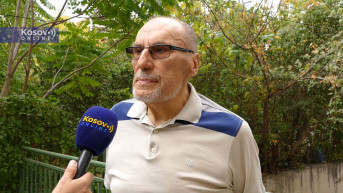
Former ambassador and analyst from Skopje, Risto Nikovski, stated that Turkey’s initiative, the “Balkan Peace Platform,” has multiple dimensions, with the key one being Ankara’s desire to play a larger role in the Western Balkans.
“This initiative of theirs has several dimensions. Let’s start with the strangest and most amusing one. Turkey has been an EU membership candidate since 1987. Negotiations started in 2005, and the six countries gathered in Istanbul are all, along with Turkey, in the EU waiting room, so we could call it a gathering of those who are waiting. That is one dimension,” Nikovski said for Kosovo Online.
The second dimension of the platform, he says, is the fact that Ankara is “fully aware there will be no EU enlargement.”
“Maybe they will make an exception, which also doesn’t seem very likely, and that is why Turkey is trying to launch a new initiative, a platform for some kind of Balkan peace. But this is just the beginning, a ministerial visit to Istanbul, and the real goal is to hold a summit chaired by Erdogan. And that is the third de facto dimension. It is Turkey’s ambition to play a larger role in the region,” Nikovski said.
The first meeting under the Turkish initiative “Balkan Peace Platform” was held in Istanbul late last week.
The meeting brought together foreign ministers from the region, and Turkish Foreign Minister Hakan Fidan stated that they discussed Balkan-based solutions to regional problems and emphasized that the need to strengthen regional dialogue mechanisms is greater than ever.
Nikovski points out that this is not the first initiative addressing open issues in the Western Balkans.
The former Macedonian ambassador noted that Turkey is already present in the Western Balkans as one of the biggest investors and maintains good relations with all regional countries still in the EU “waiting room.”
“They even have balanced relations with both Kosovo and Serbia. That is a logical outcome, I would say, of their engagement in the Balkans,” Nikovski stated.
He sees a fourth dimension in Turkey’s attempt to “play a larger role on the international stage.”
“They are doing this generally successfully, although some aspects, such as their involvement in Syria, can be debated. Overall, Erdogan can be satisfied with an aggressive, active, and omnipresent foreign policy. So in general, these are Turkey’s ambitions and goals,” Nikovski emphasized.
Although he believes that any initiative leading to agreements and peaceful resolution of problems in the Western Balkans is positive, given that the region is facing a “mess of problems, misunderstandings, and mistrust”, he is skeptical that Turkey’s initiative will succeed.
“I think such an initiative has no chance of success because it will first confront the European Union, which is present here and wants to play the leading role. The Americans are also present and still dominant in the Balkans, especially among the six countries still outside European integration. There is also the Berlin Process… Essentially, all those frameworks for mediation, new opportunities, and mechanisms for resolving problems have overlapped and been exhausted. We’re aware, for example, that the Open Balkan initiative, which had a promising platform, failed. So I think this one will have a similar fate,” Nikovski stated.
When asked whether Turkey could be a successful mediator in resolving open issues in the Western Balkans, the analyst said it is possible, due to the fact that Turkey was present in the region for 500 years and understands the temperament of the local peoples.
“In that sense, they are somewhat more qualified, with a better understanding of the mentality, to find solutions and mediate. However, overall, it is unlikely that this initiative will succeed. Among other things, consider the fact that in our media, for example, there was no news about this initiative. The participation of our foreign minister in the meeting in Istanbul was only briefly mentioned, as if the whole initiative is being ignored, and that is telling. What exactly it means is hard to say at this point. But in any case, it is a significant indicator,” Nikovski explained.


0 comments